

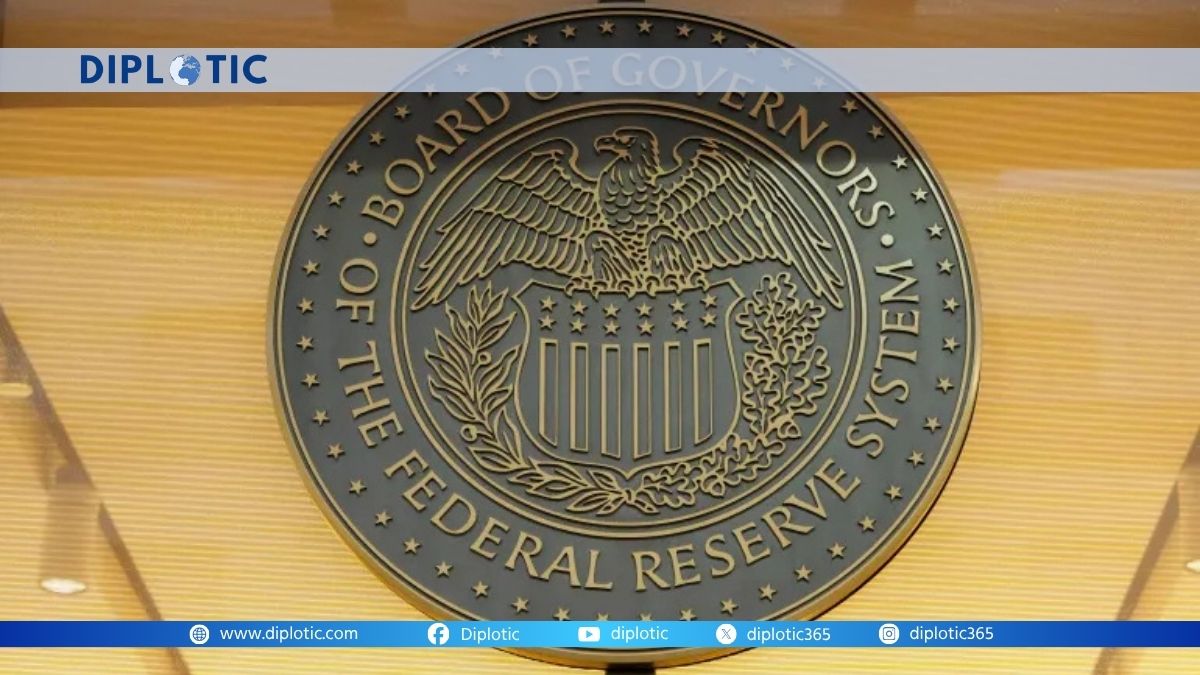
The U.S. Federal Reserve is often described as the most powerful central bank in the world. Its decisions shape global interest rates, capital flows, and market confidence far beyond American borders. That is why U.S. President Donald Trump’s decision in January 2026 to nominate Kevin Warsh as the next chair of the Federal Reserve has drawn careful attention, even though markets did not panic. On the surface, the announcement looked calm and controlled. Stock markets moved only slightly, bond yields stayed steady, and the dollar stopped falling. Yet behind this quiet reaction lies a deeper uncertainty about the future of the Fed, its independence, and the role politics may play in U.S. monetary policy during Trump’s second term.
Jerome Powell’s term as Fed chair will end in May. Powell, who was originally appointed by Trump, has faced years of public criticism from the president for refusing to cut interest rates as aggressively as Trump wanted. The nomination of Warsh, a former Fed governor with strong academic and market credentials, appears to be a strategic choice. Trump has praised Warsh in glowing terms, calling him a future “great” chairman. But the real question is not about praise. It is whether Warsh will protect the Fed’s traditional independence or become another instrument in a White House that wants cheap money and faster growth at almost any cost.
Why Kevin Warsh Was Chosen at This Moment
Kevin Warsh is not an unknown figure in U.S. economic policy. He served as a Federal Reserve governor from 2006 to 2011, a period that included the global financial crisis. After leaving the Fed, he built a career as an academic economist and investor, maintaining close ties to financial and political circles. He was also considered for the Fed’s top job once before, in 2017, but was not selected at that time. His return now is not accidental. It reflects Trump’s long-running frustration with Powell and the limits of presidential influence over monetary policy.
From Trump’s point of view, Warsh represents a compromise. Other names discussed earlier, especially White House economic adviser Kevin Hassett, worried investors because they were seen as too willing to follow presidential instructions. Warsh, by contrast, is viewed as someone who might offer Trump some short-term relief through lower interest rates while still respecting the Fed’s institutional role. This perception explains why markets did not react sharply. Investors appear to believe that Warsh would not immediately tear down the Fed’s policy framework.
Still, the timing matters. The Fed is facing a difficult economic picture in early 2026. Inflation has come down from earlier peaks but remains stubborn in some sectors. Employment growth has slowed, creating pressure to support the economy with easier credit. In 2025, the Fed cut interest rates three times, trying to balance these competing goals. Trump, however, has made it clear that he wants faster and deeper cuts. Warsh’s nomination comes at a moment when the Fed’s next moves will shape economic conditions heading into a politically sensitive period.
Warsh’s background adds another layer of complexity. During the 2008–2009 crisis, he was known as a policy hawk, often arguing against aggressive rate cuts and large-scale stimulus even as unemployment surged. At that time, critics said his approach was too rigid for a deep recession. More recently, however, Warsh has signaled greater openness to lower rates, even with inflation still present. This shift raises an important question: has his thinking genuinely evolved, or is it shaped by today’s political environment?
The Federal Reserve Under Political Pressure
The Warsh nomination cannot be separated from the broader conflict between Trump and the Federal Reserve. Over several years, Trump has repeatedly attacked Powell for not acting fast enough to boost growth. These attacks have moved beyond words. In January 2026, the U.S. Justice Department served Powell with a subpoena, a step that alarmed many observers who saw it as an attempt to intimidate the central bank. Trump has also tried to remove another Fed governor, Lisa Cook, who opposed his calls for sharp rate cuts. Her case is now before the U.S. Supreme Court.
These actions have fueled concerns that the White House is testing the legal and political limits of Fed independence. By law, the Federal Reserve is designed to operate at arm’s length from elected officials. This structure exists to prevent short-term political goals from undermining long-term economic stability. When presidents interfere too directly, markets often respond with fear, expecting higher inflation, weaker currency, or financial instability.
So far, the reaction has been muted. That does not mean the risk is gone. Instead, it suggests that investors are waiting to see how far Trump will go and how Warsh would respond if confirmed. The Fed’s independence is not protected only by law. It also depends on norms, traditions, and the personal resolve of its leaders. If those norms weaken, formal rules alone may not be enough.
Warsh’s own views on the Fed’s role add to the uncertainty. He has long argued that the central bank tries too hard to fine-tune the economy. In a 2017 essay, he called for a “regime change” in how the Fed operates, suggesting it should focus more narrowly on price stability and less on managing growth and employment. This philosophy aligns with a more rules-based approach. Yet Trump’s priorities often move in the opposite direction, favoring flexible and politically useful policies.
This tension could define Warsh’s chairmanship if he is confirmed. Will he act as a buffer between the White House and the Fed, or will he adapt his views to suit presidential demands? The answer matters not just for the United States, but for global markets that rely on the Fed as an anchor of stability.
Senate Politics and the Risk of Institutional Change
Even before Warsh can take office, his nomination faces political hurdles. Senate confirmation is required, and at least one Republican senator, Thom Tillis, has promised to block any Fed chair nominee until the Justice Department’s investigation into Powell is resolved. This threat introduces uncertainty into the process and raises the possibility of a prolonged leadership vacuum at the Fed.
The confirmation battle is about more than one person. It reflects a broader struggle over the future structure of the Federal Reserve. Traditionally, when a Fed chair steps down, they also leave their role as a governor. Powell, however, has a term as a governor that runs until 2028. He could choose to stay, especially if he believes the Fed’s independence is under threat. That would create an unusual situation where a former chair remains on the board under a successor appointed by a hostile president.
There is also the unresolved question of Lisa Cook. If the Supreme Court allows her removal, Trump would gain another opportunity to appoint a governor aligned with his views. Over time, this could shift the balance of the 12-member board toward a more dovish and politically responsive stance. Such a change would not happen overnight, but it could reshape U.S. monetary policy for years.
This gradual approach may be part of a larger strategy. Rather than directly controlling interest rate decisions, the White House could influence the environment in which those decisions are made. By changing who sits at the table, it changes how debates unfold. Warsh’s role in this context would be central. His leadership style, willingness to resist pressure, and ability to manage internal disagreements would determine whether the Fed remains a credible, independent institution.
For markets and foreign governments, these internal dynamics matter deeply. The Fed’s credibility rests on the belief that it will act based on economic evidence, not political orders. Any sign that this belief is weakening could have lasting effects on investment, exchange rates, and global financial stability.
What Warsh’s Fed Could Mean for the Future
If confirmed, Kevin Warsh would take over at a moment when the Federal Reserve’s choices carry unusual weight. Inflation is not fully defeated, growth is uneven, and political pressure is intense. In this environment, even small policy signals can have large effects. Warsh’s recent openness to rate cuts suggests he may support some easing, which could please the White House in the short term. But easier money also carries risks, especially if inflation proves harder to control than expected.
Warsh’s past statements about reforming the Fed suggest he may seek structural changes as well. These could include clearer policy rules, less emphasis on short-term market reactions, and a narrower interpretation of the Fed’s mandate. Supporters would argue that such changes could strengthen the institution over time. Critics would worry that reform talk could mask an effort to limit the Fed’s ability to act independently during crises.
The broader implication is that the Warsh nomination is not just about interest rates. It is about the balance between democratic control and technocratic independence in economic policy. Central banks were designed to be insulated from politics for a reason. History shows that when governments push central banks too hard, the result is often higher inflation, weaker currencies, and lower trust.
Trump’s choice of Warsh may avoid immediate market panic, but it does not remove these deeper risks. Much will depend on how Warsh defines his role if he takes office. Will he be a steady guardian of the Fed’s independence, or a careful negotiator between economic principles and political demands?
As the confirmation process unfolds, the world will be watching closely. The Federal Reserve’s future direction will shape not only the U.S. economy, but also global confidence in the idea that sound monetary policy can stand apart from politics. In that sense, the Warsh nomination is a test. It will show whether the Fed’s long-standing independence can survive a period of intense political pressure, or whether a new chapter is beginning, one where central banking and presidential power move closer than ever before.




