

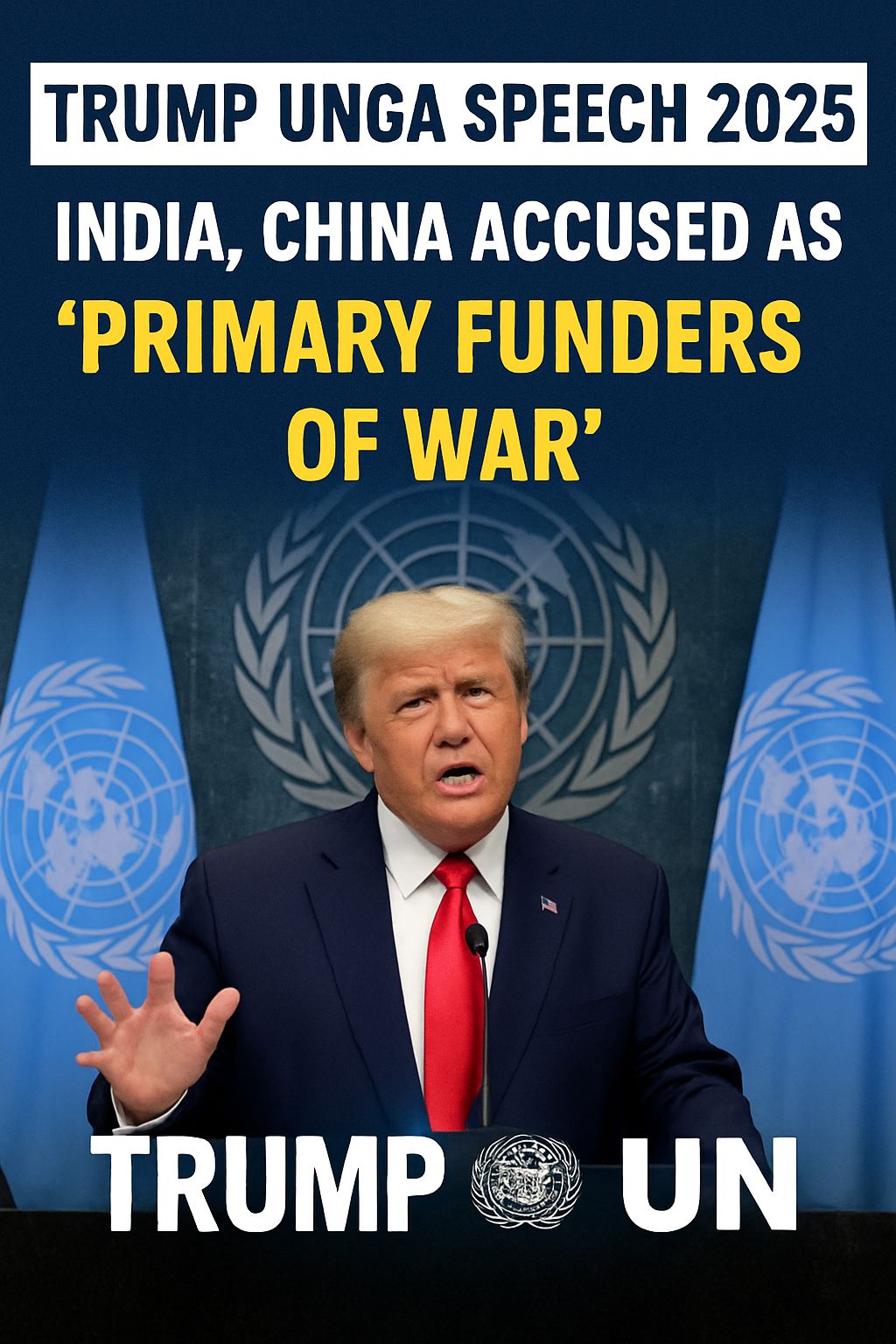
The United Nations General Assembly (UNGA) is usually a stage for leaders to call for peace and cooperation. But this year, Donald Trump turned it into a battlefield of words. In a fiery speech, the former U.S. President accused India, China, and their allies of being the “primary funders of war.” His words weren’t just sharp—they were explosive, shaking both the marble halls of the UN and the fragile balance of global diplomacy.
A Speech That Stole the Spotlight
The world listens to Trump whenever he talks, sometimes in agreement and other times in shock. His most recent participation at the UNGA was no exception. He avoided the customary diplomatic chitchat and went right to the point. He bellowed, “China and India are the main sources of funding for war.” Gasps echoed through the crowd. The delegates looked at each other anxiously. Shocked faces were captured by cameras that zoomed in on them. Trump just accused two of the largest economies in the world of escalating international strife in a setting intended for discussion and peace.
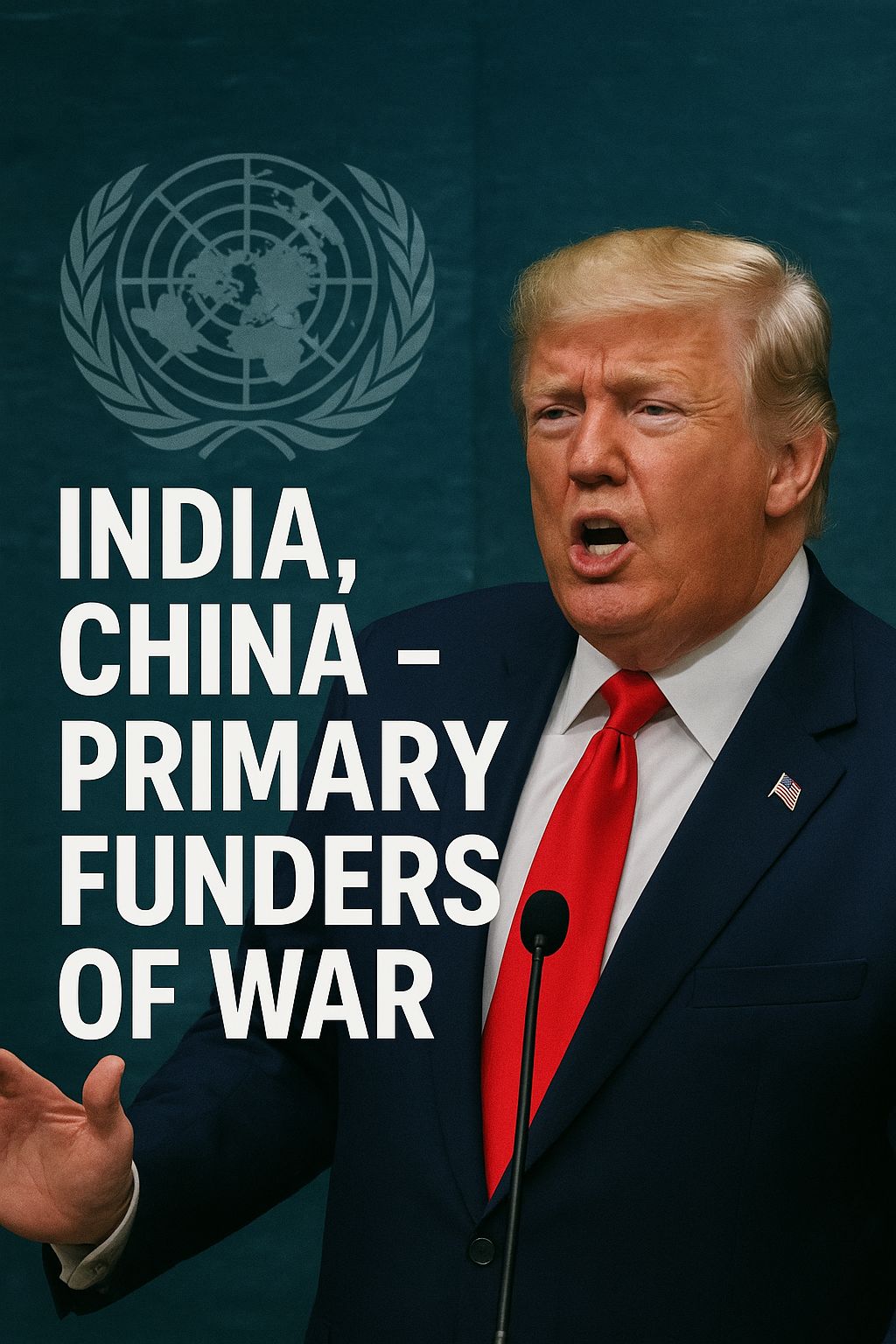
Why Did Trump Call Them Out?
Trump has always loved framing the U.S. as the world’s protector—a nation that spends its resources to safeguard others while getting little in return. His accusation wasn’t random; it was political theater with a purpose.
- China has long been Trump’s favorite target, from trade wars to accusations of backing rogue regimes.
- India, though often considered a U.S. partner, has tested Washington’s patience by buying Russian weapons and refusing to align with Western sanctions fully.
By lumping India and China together, Trump painted them as part of a bigger problem: rising powers that benefit from global security while allegedly fueling instability elsewhere.
The Room’s Reaction: Awkward Silence
The reaction inside the UNGA hall spoke volumes. World leaders are used to Trump’s bombastic style, but this felt different.
- India’s delegation reportedly exchanged whispers but avoided a direct response. Back in New Delhi, analysts dismissed the speech as “political noise for U.S. elections.”
- China’s officials barely flinched. They’re used to Trump’s words. Beijing later brushed off the claims as “baseless, irresponsible, and unworthy of the UN.”
- Europe and U.S. allies looked uneasy. Many privately admitted that Trump’s tone was reckless, even if some quietly agreed that money flows from Asian giants do empower conflicts.
The Trump Playbook: Shock and Fire
This wasn’t the first time Trump used the UN stage to shock the world.
- In 2018, he slammed Germany for “making itself a captive of Russia.”
- In 2019, he attacked China over trade.
- And now, in 2025, India finds itself in his crosshairs.
For Trump, it’s all part of the same playbook: speak bluntly, dominate headlines, and rally his base by showing America as the victim of unfair global arrangements.
India’s Dilemma: Friend or Target?
Trump’s swipe at India is tricky. Washington has long courted New Delhi as a strategic counterbalance to China. But Trump’s words expose the tension in this relationship.
- India buys Russian oil and weapons, even while claiming to be America’s partner.
- India avoids sanctions and alliances that would tie it too closely to Washington.
- India’s rise as a tech and manufacturing giant also threatens U.S. industries.
In short, India is both an ally and a competitor—and Trump just reminded the world of that reality.
China’s Familiar Role: The Villain
Unlike India, China is used to being Trump’s villain. His “funders of war” remark fits neatly into his narrative of Beijing as the world’s greatest threat.
- Washington’s mistrust is fuelled by China’s close links to North Korea, Iran, and Russia.
- Its global Belt and Road projects often involve regimes accused of authoritarianism.
- And its rapid military expansion makes the “war-funder” label stick for Trump’s audience back home.
For Beijing, Trump’s words are more annoying than surprising.
The Bigger Picture: U.S. vs. the World?
Trump’s words may have been aimed at India and China, but the implications are global.
- Allies are nervous – If Trump can turn on India, who’s next?
- Adversaries are emboldened – Russia and Iran may welcome the distraction.
- The UN’s credibility is tested – When world leaders use the stage for finger-pointing instead of peace, its role comes under fire.
Critics vs. Supporters: Two Narratives
The speech has split audiences as always.
- Critics say: Trump is reckless. By alienating India, he risks undermining the US policy in Asia and pushing India closer to China. His rhetoric impedes cooperation in an already divided globe.
- Supporters argue: Trump is bold. He speaks the truth others won’t admit—that Asian giants indirectly bankroll wars by doing business with sanctioned states. For them, it’s refreshing honesty, not recklessness.
What Happens Next?
We won’t soon forget this speech. It strengthens Trump’s reputation as a straightforward individual among his domestic audience. It serves as a warning to world leaders that Trump’s diplomacy rewrites the rules rather than adhering to them. Expect further conflict with China if he regains power. India will have to strike a more difficult balance between Moscow and Washington. Additionally, there might be more heated confrontations at the UN that resemble campaign rallies rather than peace meetings.
Final Word: Trump the Disrupter
Love him or hate him, Trump knows how to dominate the global stage. His accusation that India and China are the “primary funders of war” is more than a headline—it’s a challenge to the way the world sees itself.
Is it reckless? Yes. Is it effective? Also yes.
Trump has once again proven that when he speaks, the world doesn’t just listen—it reacts, debates, and scrambles to adjust. And that may be exactly what he wants.




