

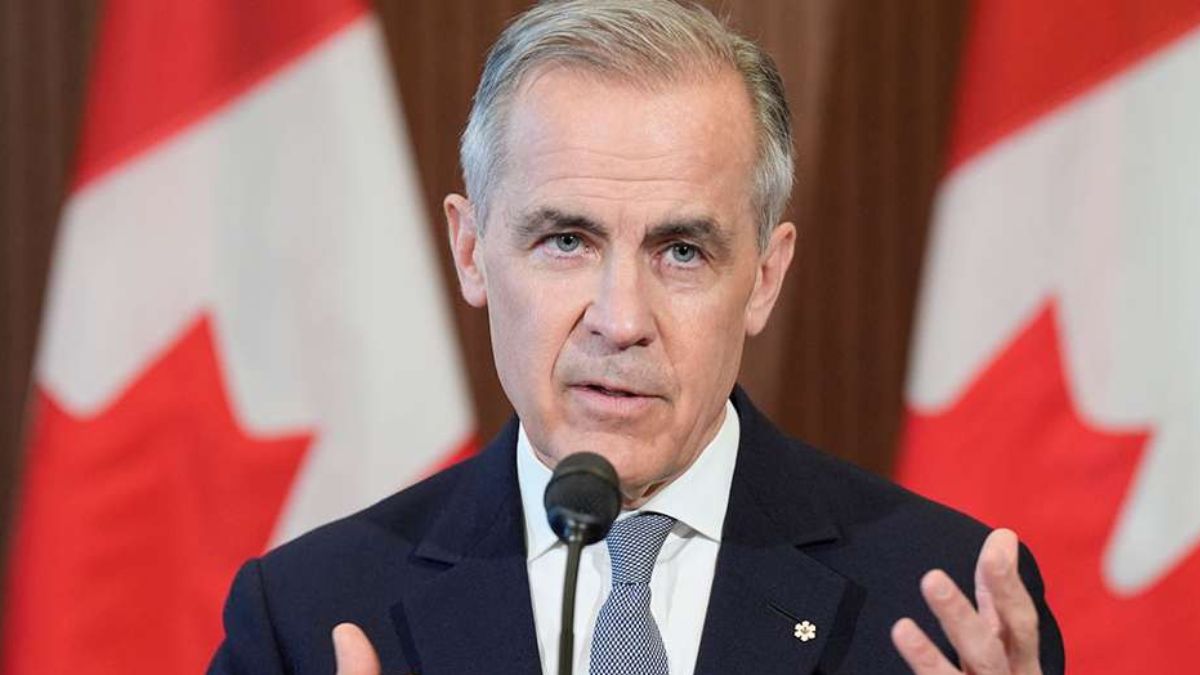
As President Trump prepares for a critical meeting with newly elected Canadian Prime Minister Mark Carney, his aggressive trade war policies are backfiring. Discover how tariffs, diplomacy, and political tensions are reshaping US-Canada relations—and why the G7 summit could be another flashpoint.
A Tense Diplomatic Reset: Carney Visits Trump Amid Deepening Rift
Canadian Prime Minister Mark Carney’s visit to the White House on Tuesday marks a significant diplomatic moment between two historic allies now facing the most contentious chapter in their bilateral relationship in decades. Following Carney’s election victory last week, tensions with U.S. President Donald Trump have escalated, fueled by an increasingly aggressive American trade agenda that has alienated Ottawa.
Carney’s unexpected rise to power, in part driven by voter backlash to Trump’s economic policies, underscores the depth of Canadian discontent. “We are over the shock of the American betrayal,” Carney said in a pointed post-election address. “But we should never forget the lessons.”
The Fallout from Trump’s Tariff Blitz
President Trump’s sweeping tariffs—initially imposed as leverage to renegotiate trade deals—have reignited economic friction between the United States and Canada. Despite being America’s second-largest trading partner and closest northern ally, Canada has been hit with:
- 25% tariffs on steel, aluminum, and auto parts
- Tariffs on goods deemed non-compliant with the USMCA
- Suspended but threatened blanket tariffs on all Canadian imports
In retaliation, Canada has imposed over C$60 billion (~$44 billion USD) in counter-tariffs targeting American-made goods ranging from steel and cars to food products and consumer items. Canadian industries have also launched “Buy Canadian” campaigns to resist U.S. imports, further dampening bilateral commerce.
Winners and Losers in the US-Canada Trade Clash
The economic consequences of this trade war are stark—and they extend far beyond government relations. American manufacturers, retailers, and consumers are feeling the squeeze.
- General Motors estimated that Trump’s tariffs will cost the company $4–5 billion this year alone.
- Small businesses like Busy Baby, a baby products startup, are now paying over $230,000 just to import goods into the U.S.
- Retail and tourism in U.S. border states have declined, particularly in Washington and California, due to a sharp drop in Canadian visitors.
According to the Federal Reserve’s Beige Book, multiple regions have reported decreased Canadian spending and travel, weakening local economies. Canadian consumers, meanwhile, are opting for European and domestic products, abandoning once-popular U.S. imports.
The Fractured Legacy of the USMCA
Trump’s decision to sideline parts of the United States-Mexico-Canada Agreement (USMCA)—a trade pact he once championed—has strained the credibility of U.S. commitments. The deal, meant to modernize NAFTA, is now at risk of unraveling due to unilateral tariff hikes from the White House.
Carney is expected to use his White House meeting to demand respect for the terms of the USMCA and press for removal of unjustified tariffs. However, senior U.S. officials have signaled that no major breakthroughs are expected.
Commerce Secretary Howard Lutnick recently admitted that a new agreement “would be very complex,” signaling low prospects for a quick diplomatic resolution.
Will Trump Attend the G7 Summit in Canada?
Another key question hangs over the Carney-Trump meeting: Will President Trump attend the upcoming G7 summit in Alberta next month?
Carney, the host of this year’s Group of 7 summit, has invited global leaders including Ukrainian President Volodymyr Zelensky—a move seen as a bold statement of independence amid Trump’s wavering support for Ukraine. Canadian officials hope the summit will rekindle cooperation on major global challenges such as climate change, AI regulation, and the Russia-Ukraine war.
However, Trump has not committed to attending. His past G7 appearances were marked by friction, walkouts, and public clashes, especially during the 2018 Charlevoix summit where he withdrew his endorsement of the final communiqué and ridiculed then-Prime Minister Justin Trudeau.
Now, with U.S. priorities shifting inward and Trump eyeing trade over diplomacy, the likelihood of a harmonious summit appears slim.
Sovereignty and Strategy: Carney Pushes Back
While Trump continues to refer to Canada as a “cherished” potential U.S. state in jest, Carney’s approach is to reassert Canada’s sovereignty and global leadership.
His invitation to King Charles III and his alignment with European allies signal an intentional shift away from American influence. “The King’s visit underscores our sovereignty,” Carney emphasized, positioning Canada as a fully independent global player.
By distancing from Trump’s America and recommitting to internationalism, Carney aims to reshape Canada’s foreign policy for a new geopolitical era—one that resists U.S. pressure and prioritizes multilateral cooperation.
The Road Ahead: Trade, Diplomacy, and a Fractured Alliance
Tuesday’s White House meeting could redefine the direction of U.S.-Canada relations for years. As Trump continues to push for tougher trade deals and flex economic power, Canada under Carney is digging in its heels—prepared to defend its industries, values, and alliances.
While both leaders have incentives to stabilize the relationship, the widening ideological gap and economic stakes may make that outcome elusive.
As one senior Canadian official put it ahead of the meeting: “We’re not setting expectations too high. But we do hope for a reset—or at least a pause in the damage.”
Conclusion: Allies No More?
The historic alliance between the U.S. and Canada is being tested like never before. What was once a seamless economic and political partnership is now marred by protectionism, populism, and distrust. Whether Trump and Carney can reverse course or accelerate divergence will depend on what happens behind closed doors at the White House—and in the days that follow.




