

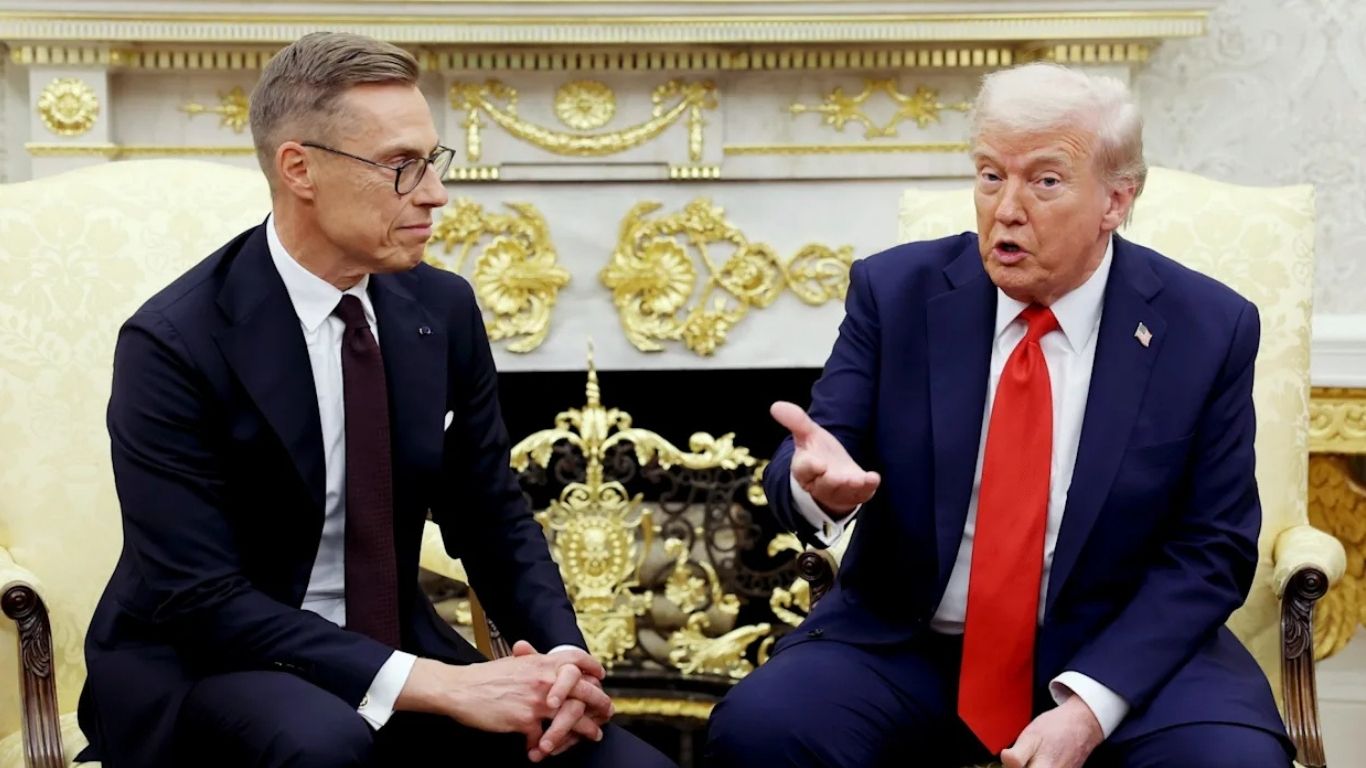
In a tweet that sent shockwaves through diplomatic circles and alliances, US President Donald Trump recently suggested Spain should be expelled from NATO. His blunt assertion came during a meeting with Finnish President Alexander Stubb at the White House, where Trump reiterated his longstanding call for NATO members to dramatically increase their defense spending from the current 2% of GDP to 5%. Spain, according to Trump, is the “laggard” among the 32-member alliance for not meeting this ambitious target, a commitment agreed upon by most member states earlier this year at the NATO summit in The Hague.
Trump’s remarks, including his suggestion that Spain “maybe should be thrown out of NATO, frankly,” reignited a months-long feud between Washington and Madrid over military expenditure and burden-sharing responsibilities.
NATO’s Legal Framework: Is Removal of a Member Legally Possible?
The North Atlantic Treaty, signed in 1949, lays out the foundation for NATO but notably lacks any explicit provisions for expelling a member state. According to Article 13, a member wishing to leave must formally notify the United States, which acts as the treaty’s depositary, and after a one-year waiting period, the departure is effective. However, there is no reciprocal clause allowing for involuntary removal or expulsion of a member by the alliance or its members.
Scholars, legal experts, and NATO officials confirm that while suspension of cooperation or other measures can be taken collectively in response to serious violations, outright expulsion of a sovereign member is unprecedented and without legal basis under current treaty rules. Thus, Trump’s call remains a political statement rather than an actionable proposal within NATO’s formal legal architecture.
Political and Strategic Dimensions Behind Trump’s Demand
Trump’s aggressive posture on NATO defense spending is consistent with his broader “America First” strategy, pressing European allies to shoulder more financial responsibility for their security and reduce dependence on US military support. Since assuming office, Trump has criticized numerous NATO members for perceived freeloading, especially Germany and Spain, advocating that the alliance’s budgetary contributions should reflect a more equitable burden-sharing.
Spain’s refusal to commit to raising its defense budget to 5% GDP, citing domestic economic priorities and social welfare considerations, clashes with Trump’s vision of a militarily robust Europe prepared for heightened geopolitical threats. His blunt suggestion to “throw Spain out” seeks to apply public and diplomatic pressure, exposing fissures within the alliance over commitment and cohesion.
Spain’s Response: Commitment Amid Criticism and Calls for Calm
In response, Spanish Prime Minister Pedro Sanchez and Defense officials reaffirmed their country’s ongoing commitment to NATO. Spain joined the alliance in 1982 and continues to meet capability-based targets supported by strategic contributions to NATO operations worldwide.
Madrid has urged for a measured and calm approach, emphasizing that defense spending alone does not fully capture the multidimensional contributions member states make. Spain’s stance reflects broader debates within NATO not just about raw numbers, but about strategic value, regional context, and domestic political realities in member nations.
The Implications of Member Removal: A Diplomatic and Security Nightmare
Had NATO a legal mechanism to expel Spain or any member, the alliance would face unprecedented diplomatic, security, and geopolitical challenges. NATO’s foundational principle of collective defense (Article 5) requires unwavering unity and trust among members to credibly deter shared threats.
Removing a member risks fracturing the alliance’s image of cohesion amid increasing strategic competition with Russia and China. It could embolden adversaries, undermine joint operations, and create destabilizing ripple effects across Europe and beyond. The resulting uncertainty could damage NATO’s credibility as the cornerstone of Western security architecture.
Precedents and Analogies: No Member Has Ever Been Expelled
Historically, no country has been expelled from NATO. All disruptions have involved member states voluntarily withdrawing or political tensions unresolved within alliance frameworks. Suspending or reducing cooperation has been explored in extreme cases but formal expulsion remains a taboo concept avoided by consensus-driven NATO governance.
Conflicts over defense spending, Turkey’s contentious policies, or disputes involving other members have been addressed through negotiation, pressure, and internal dialogue, rather than exclusion. This precedent underlines the alliance’s political commitment to solidarity despite disagreements.
NATO’s Internal Dynamics: Balancing Sovereignty with Collective Security
NATO operates on the basis of shared sovereignty and common defense, requiring a delicate balance between respecting national decisions such as budget allocations and enforcing collective responsibility. The absence of expulsion powers reflects a recognition of sovereign equality among members rather than a lack of enforcement capacity.
Instead, NATO relies on political dialogue, peer pressure, and diplomatic instruments to encourage compliance with alliance standards, including the 2% GDP defense spending guideline established decades ago and recently reconsidered upward.
Broader Geopolitical Stakes: What Expelling Spain Would Signal
If Trump’s proposal had any formal backing, expelling Spain a major European power, gateway to the Mediterranean, and partner in counterterrorism efforts would signal a fracturing of transatlantic ties at a time when unity is critical. It would reflect deep divisions within the West’s geopolitical strategy just as NATO faces challenges from Russia’s aggression in Ukraine, China’s rise, and terrorism threats.
Such a rift could embolden authoritarian regimes and weaken collective responses to global security challenges, reversing decades of alliance-building and global stability efforts.
Trump’s Call Highlights NATO’s Pressing Challenges but Remains Unfeasible
While US President Donald Trump’s provocative call to “throw Spain out” of NATO has stirred intense debate, it clashes fundamentally with NATO’s treaty framework and political realities. Current NATO law does not permit expulsion, and doing so would undermine the alliance’s cohesion and purpose.
Nonetheless, Trump’s statement underscores ongoing tensions within NATO about burden-sharing and defense commitments issues that demand careful management to preserve alliance unity. Spain’s refusal to meet the 5% defense spending target illustrates the complex trade-offs between national priorities and alliance demands facing many member states today.
As NATO navigates an increasingly complex security environment, these internal fissures should be addressed through diplomacy, dialogue, and collective resolve not exclusion. The alliance’s strength lies in its unity and adaptability, qualities that remain essential to meeting shared challenges successfully.




