

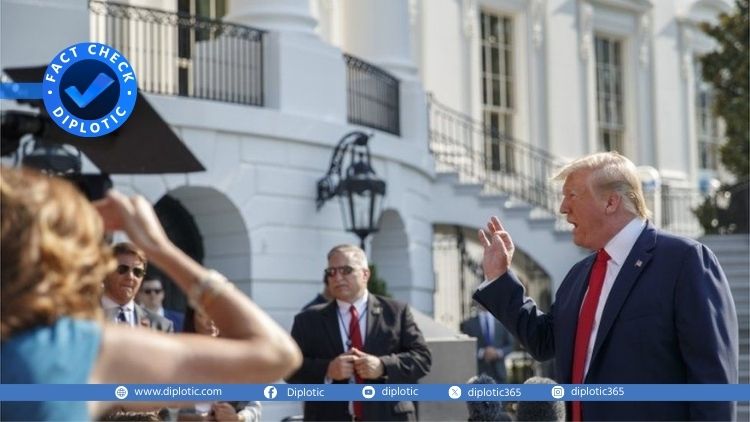
On September 9, 2025, a federal judge in Washington, D.C., halted President Donald Trump’s audacious attempt to fire Federal Reserve Governor Lisa Cook, marking a pivotal moment in a saga that could redefine the boundaries of central bank independence. The ruling, delivered by U.S. District Judge Jia Cobb, a Biden appointee, cited the Federal Reserve Act’s “for cause” provision, arguing that Trump’s justification—allegations of mortgage fraud from before Cook’s tenure—lacked legal grounding. This clash, rooted in decades of tension between political power and monetary policy, raises a profound question: can a president bend the Federal Reserve to his will, or does the law shield its autonomy? To answer, we must trace the Fed’s historical insulation, dissect the current legal and political skirmish, and weigh the global fallout if Trump prevails. This investigation uncovers the stakes for America’s economy and the delicate balance of power in a polarized era.
The Federal Reserve, established in 1913, was designed as a bulwark against political meddling. After 19th-century banking panics, Congress created a central bank to stabilize currency and credit, blending public and private elements. Its seven-member Board of Governors, appointed by the president and confirmed by the Senate, serves 14-year terms to ensure continuity beyond political cycles. The Federal Reserve Act allows removal only “for cause,” a term historically tied to misconduct or dereliction during tenure, not personal disputes or policy clashes. This structure mirrors other independent agencies, like the SEC, but the Fed’s unique role in setting interest rates gives it outsized influence. As chronicled in detailed accounts of the Fed’s evolution here, its independence has weathered challenges, from Franklin Roosevelt’s gold policies to Richard Nixon’s pressure on Chair Arthur Burns, yet no president has fired a governor—until Trump’s move against Cook.
Trump’s campaign against the Fed began in his first term, when he lambasted Chair Jerome Powell for raising rates, claiming they stifled growth. By 2025, with inflation cooling to 3% and unemployment at 4.1%, per Bureau of Labor Statistics data, Trump intensified his push for lower rates to boost housing and exports. His tariffs, projected to add 0.5% to inflation, clashed with the Fed’s cautious stance. Cook, the first Black woman governor, appointed by Biden in 2022, became a target after Federal Housing Finance Agency Director Bill Pulte alleged she misrepresented primary residences on 2021 mortgage applications. No charges have been filed, and Cook denies wrongdoing. Her lawyer, Abbe Lowell, called the accusations a “smear campaign.” The White House insists the allegations justify “cause,” but Judge Cobb ruled that only in-office conduct qualifies, citing the Fifth Amendment’s due process protections. This legal standoff, expected to escalate to the Supreme Court, tests the Fed’s firewall against executive overreach. Historical parallels abound: in 1980s Brazil, political interference in monetary policy fueled hyperinflation, costing 80% of GDP. If Trump redefines “cause,” he could stack the board, mirroring Hungary’s Viktor Orban, who curbed central bank autonomy in 2013, spiking inflation to 14%. For now, Cobb’s injunction keeps Cook in place, but the fight exposes a deeper truth: the Fed’s independence, once sacrosanct, is no longer untouchable.
The Legal Chessboard: Unpacking the Cook Case and Its Precedents
The courtroom drama over Lisa Cook’s firing is not just about one governor—it’s a test of constitutional checks and executive power. Judge Cobb’s September 9 ruling granted a preliminary injunction, arguing Trump’s move violated the Federal Reserve Act and Cook’s due process rights. The Act, vague on “for cause,” has never been litigated for a governor’s removal, making this a case of first impression. Cobb emphasized that permissible cause must relate to job performance, not pre-tenure actions like the alleged mortgage fraud. “President Trump does not have the power to unilaterally redefine ‘cause’ – completely unmoored to caselaw, history, and tradition,” Cook’s attorneys argued. The judge agreed, warning that Trump’s logic would allow removals for mere policy disagreements, rendering the Fed’s independence meaningless. This echoes a 2025 Supreme Court ruling distinguishing the Fed as a “quasi-private” entity, unlike other agencies where Trump successfully ousted officials.
The administration’s defense hinges on executive authority under Article II, claiming broad discretion to remove officers. Yet Cobb called this an “absurd result,” noting it would let presidents cherry-pick governors, undermining the Fed’s 14-year terms. The case parallels Seila Law v. CFPB (2020), where the Supreme Court limited protections for single-director agencies but left the Fed’s structure intact. Cook’s team argues Trump’s move flouts this precedent, using unproven allegations as a pretext. The Justice Department’s investigation, sparked by Pulte’s social media posts, lacks formal charges, raising questions about due process. Cobb noted Cook wasn’t given a hearing, a violation echoing Humphrey’s Executor (1935), which upheld removal protections for independent agencies.
This legal battle could reshape the Fed’s governance. If Trump appeals and wins, he could replace Cook with a loyalist, securing a 4-3 board majority by 2026, given his prior appointments and Adriana Kugler’s resignation. This mirrors political stacking in Turkey, where Erdogan’s central bank purges fueled 70% inflation in 2022. Conversely, if Cook prevails, it strengthens the Fed’s shield, preserving its data-driven mandate. Markets reacted nervously: the dollar dipped 0.3% post-ruling, per CNN, signaling investor fears of instability. The case’s trajectory—likely reaching the Supreme Court by 2026—will hinge on defining “cause.” Historical attempts to control central banks, like Weimar Germany’s in the 1920s, led to economic ruin. For Cook, a scholar with degrees from Oxford and Spelman, the fight is personal but symbolic: her fate could decide whether the Fed remains a technocratic bastion or bends to political winds.
Global Ripples and Future Stakes: A Fed Under Siege?
The Cook case transcends U.S. borders, signaling to markets and allies how far Trump can stretch executive power. The Fed’s independence, a cornerstone of global finance, influences everything from dollar stability to emerging-market borrowing costs. If Trump succeeds, the fallout could mirror Venezuela’s 2010s collapse, where political control over the central bank triggered 1,000% inflation, slashing GDP 60%. Investors already sold off long-term U.S. bonds post-firing attempt, per BBC reports, pushing yields up 0.2%. A politicized Fed risks higher borrowing costs worldwide, as U.S. bonds set global asset prices. Developing nations like Mexico, tied to U.S. rates, could face debt crises, with yields rising 1% for every 0.5% Fed hike.
Domestically, the timing is fraught. The Fed’s September 16-17, 2025, meeting may deliver a 0.25% rate cut, per Wall Street forecasts, but Trump’s tariffs could reignite inflation, forcing tighter policy. His push for a loyalist board—evident in nominating Stephen Miran—aims to align the Fed with his growth agenda. Yet, as World Bank analyses of central bank autonomy highlight, independence correlates with 2-3% lower inflation long-term. Eroding it risks stagflation, blending high prices and slow growth, as seen in 1970s America. Socially, this could hit hardest: 40% of U.S. households live paycheck-to-paycheck, per 2024 Fed data, and rate hikes would spike mortgage and credit card costs.
Looking ahead, a Trump victory could embolden other leaders. Poland’s 2020 central bank pressures led to 17% inflation, alienating EU partners. If Cook’s injunction holds, it preserves a firewall, but a loss could unravel decades of precedent. Markets expect volatility: gold rose 0.45% post-ruling, signaling uncertainty. The Fed’s $2.5 billion headquarters renovation, criticized by Trump allies, may fuel further attacks. For Americans, the stakes are clear: a Fed swayed by politics risks eroding savings and jobs. Globally, it weakens trust in the dollar, 88% of international transactions’ currency. The Cook case, a seemingly narrow dispute, could dictate whether the Fed remains a steady hand or a political pawn, with consequences echoing for decades.




