

The Diplomatic Tightrope
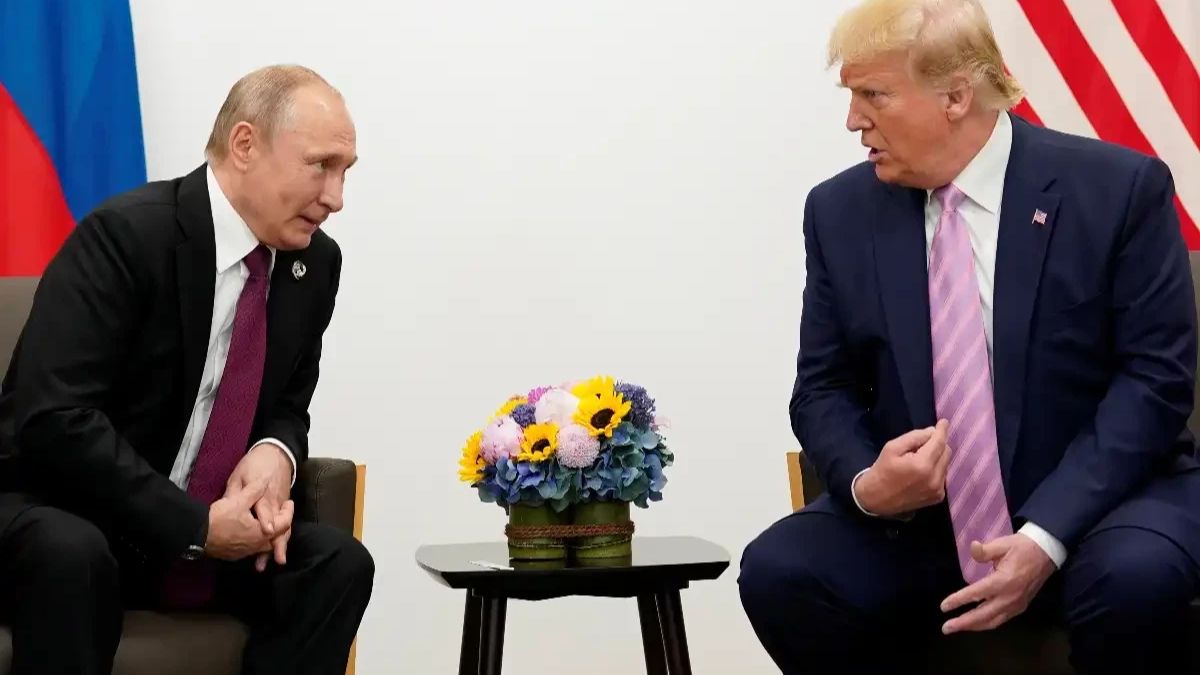
On August 15, 2025, Anchorage, Alaska, hosted a pivotal summit between U.S. President Donald Trump and Russian President Vladimir Putin, aimed at addressing the ongoing Russia-Ukraine war. This meeting, held at Joint Base Elmendorf-Richardson, marked the first U.S.-Russia summit since 2021 and Putin’s first visit to American soil in a decade. Trump, speaking on Air Force One, framed the summit as a “feel-out” session to gauge Putin’s intentions rather than to broker a deal on Ukraine’s behalf. This approach, however, has fueled concerns, particularly due to the exclusion of Ukrainian President Volodymyr Zelenskyy, who warned that any agreement without Kyiv’s involvement would yield “dead solutions.” European leaders echoed this sentiment, issuing a joint statement emphasizing that “the path to peace in Ukraine cannot be decided without Ukraine”. The summit’s timing, coinciding with Russian missile strikes on Dnipro and Sumy that killed civilians, underscores the disconnect between diplomatic rhetoric and battlefield realities.
The historical context of U.S.-Russia summits provides a sobering backdrop. The 1961 Vienna summit between John F. Kennedy and Nikita Khrushchev, which preceded the Cuban Missile Crisis, revealed the dangers of misjudging an adversary’s resolve. Trump’s approach, however, is unconventional, relying on personal dealmaking rather than institutional expertise. The absence of a confirmed U.S. ambassador to Russia and the departure of seasoned diplomats, as criticized by Senator Jeanne Shaheen, highlight a diplomatic void that could undermine negotiations. Trump’s pre-summit call with Belarusian President Alexander Lukashenko, a Putin ally who facilitated Russia’s 2022 invasion of Ukraine, adds further complexity. Lukashenko’s influence, described by Time as a last-minute attempt to sway Trump, raises questions about external pressures shaping the summit’s agenda.
Putin’s demands remain uncompromising: control over four Ukrainian provinces—Luhansk, Donetsk, Zaporizhzhia, and Kherson—annexed in 2022, Ukraine’s permanent neutrality, and the lifting of Western sanctions. These terms, tantamount to Ukraine’s capitulation, are unacceptable to Kyiv, which insists on full territorial integrity and NATO membership aspirations. Trump’s suggestion of “territorial swapping” has alarmed Ukraine and its European allies, evoking fears of a modern Yalta Conference where great powers dictate smaller nations’ fates. European leaders, including France’s Emmanuel Macron and Germany’s Friedrich Merz, have rallied behind Kyiv, stressing that borders must not be redrawn by force. The exclusion of Ukraine from the summit risks legitimizing Putin’s aggression, potentially fracturing NATO and emboldening authoritarian regimes globally.
The Geopolitical Chessboard
The Alaska summit is a microcosm of broader geopolitical tensions, testing the resilience of the post-Cold War order. Russia’s war, launched on February 24, 2022, has already reshaped European security, prompting NATO’s expansion to include Finland and Sweden. Putin’s strategy leverages Western divisions, a tactic honed since the 2014 annexation of Crimea. By securing a bilateral meeting with Trump, Putin gains diplomatic legitimacy without significant concessions, a point celebrated by Kremlin supporters as a “masterclass in diplomacy.” Trump’s engagement, despite his threats of secondary sanctions on nations like India for purchasing Russian oil, reveals a contradictory approach: economic pressure on Moscow paired with a high-profile platform for Putin on U.S. soil.
Economically, the war has strained both Russia and Ukraine. Russia’s economy faces high inflation and labor shortages, yet Putin’s battlefield gains—6,000 square kilometers since late 2023—bolster his leverage. Ukraine, conversely, grapples with a depleted military and ravaged infrastructure, making it vulnerable to external pressure. Trump’s tariffs on India, a key Quad ally, risk alienating a strategic partner while failing to deter larger Russian oil buyers like China, potentially destabilizing global energy markets. The Arctic context of the summit adds another dimension. Alaska, once Russian territory, is a strategic flashpoint in the warming Arctic, where melting ice opens new shipping routes and resources. Putin’s stop in Magadan en route to Anchorage signals Russia’s Arctic ambitions, aligning with broader geopolitical goals. The choice of a military base for the summit, driven by Anchorage’s limited hosting options during peak tourism season, underscores logistical challenges and the symbolic weight of hosting Putin on a U.S. military installation.
The Path Forward and Its Perils
The summit’s prospects for peace are slim, given the irreconcilable positions of Russia and Ukraine. Ukrainian commanders, like Serhiy Tsehotskyi, express deep skepticism, stating, “The Russians cannot be trusted. They promise one thing and do another.” This distrust stems from failed negotiations, from the 2014 Minsk agreements to the 2022 Istanbul talks, which collapsed amid mutual accusations. Putin’s history of violating ceasefires and his demand for Ukraine’s demilitarization suggest that any Alaska agreement could be a temporary pause rather than a lasting resolution. Zelenskyy’s insistence on security guarantees and territorial integrity, backed by Europe, sets a high bar for success. Trump’s suggestion of a follow-up trilateral meeting with Zelenskyy offers a glimmer of hope, but its feasibility remains uncertain.
Trump’s domestic calculus complicates matters. His campaign pledge to end the war “within 24 hours” has evolved into shifting deadlines, with the Alaska summit as the latest test. A deal, even a flawed one, could bolster his image as a peacemaker, overshadowing domestic controversies like his proposed police takeover in Washington. However, conceding to Putin’s demands risks alienating NATO allies and undermining U.S. credibility. The absence of a clear U.S. strategy, exacerbated by a lack of diplomatic expertise, could lead to a deal prioritizing optics over substance, leaving Ukraine exposed to future aggression. The summit’s broader implications are profound: a perceived U.S. retreat could embolden authoritarian leaders, while failure to reach an agreement might escalate tensions, with Trump’s threats of “severe consequences” potentially leading to new sanctions or military posturing. As Anchorage hosts this high-stakes encounter, the world watches to see whether Trump’s dealmaking can navigate the complexities of geopolitics or deepen the fractures in an already fragile international order.




