

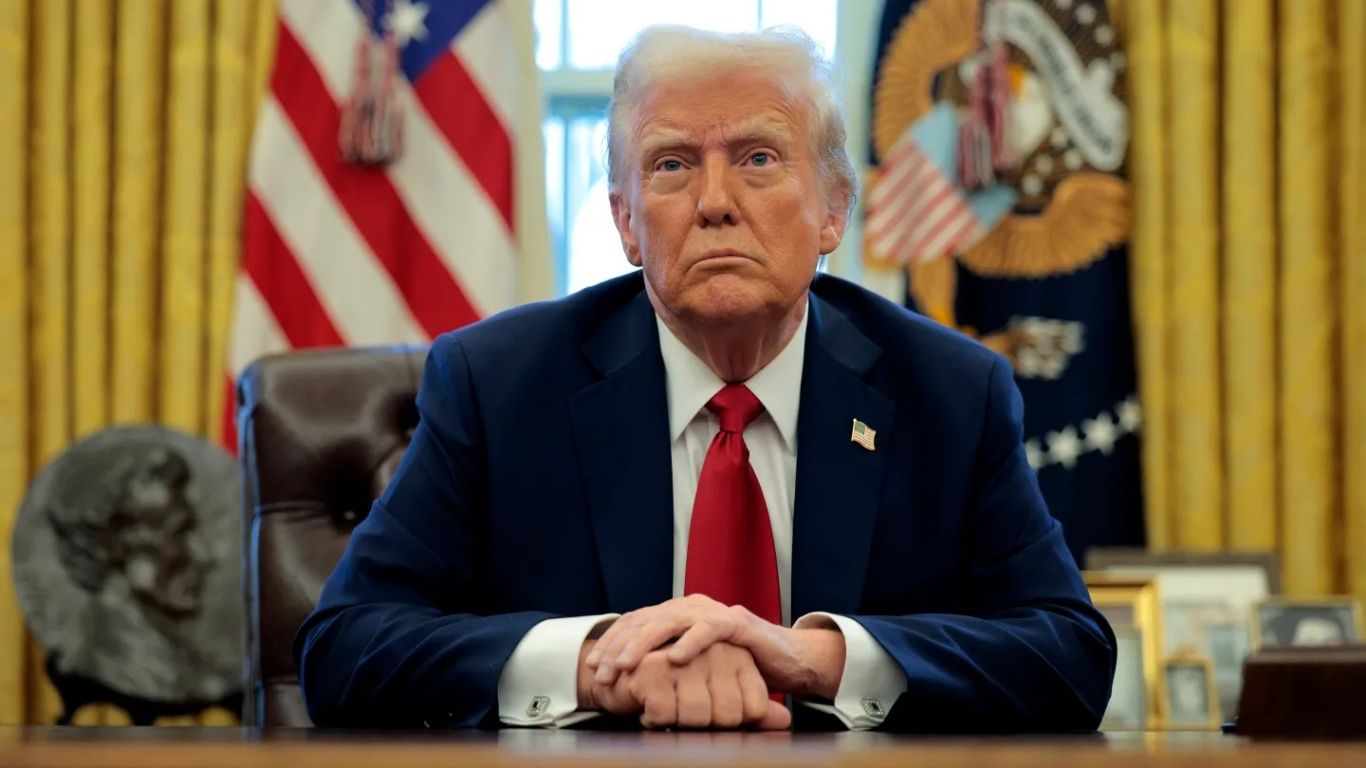
President Donald Trump stepped into the spotlight on Wednesday, revealing the names for this year’s Kennedy Center Honors and declaring he would host the event himself. This marks a big change from how things have been done before, putting the focus on his new role running the famous arts center in Washington, D.C. With a fresh list of stars set to be celebrated, questions arise about what this means for the future of American arts under his watch.
Trump’s announcement came during a visit to the Kennedy Center, where he shared the names of the 2025 honorees: country music king George Strait, Broadway and film actor Michael Crawford, action movie icon Sylvester Stallone, disco queen Gloria Gaynor, and rock band KISS. He said the ceremony, set for December and broadcast on CBS, would be a night to remember, free from what he calls “woke” influences that he believes have hurt the event in recent years.
This is the first time Trump has taken such a hands-on approach with the Honors since becoming chairman of the Kennedy Center board earlier this year. In his first term as president from 2017 to 2021, he skipped the event each year, calling some past choices “radical left lunatics.” Now, with full control, he’s turning it into a personal showcase, raising the profile of an awards show that has often flown under the radar despite its long history.
The Road to Trump’s Control
The Kennedy Center Honors started back in 1978 as a way to celebrate lifetime work in the performing arts, like music, dance, theater, and film. It’s held each year at the John F. Kennedy Center for the Performing Arts, a spot named after the former president and built in 1971 along the Potomac River. Over the years, it has spotlighted more than 250 artists, from legends like Ella Fitzgerald and Frank Sinatra to modern names like Oprah Winfrey and Lin-Manuel Miranda. The event draws big crowds and TV viewers, but it’s not always a huge hit in ratings compared to other award shows.
Trump’s involvement kicked off in February 2025, right after he returned to the White House. He removed all board members appointed by former President Joe Biden, including figures like strategist Mike Donilon and press secretary Karine Jean-Pierre. In their place, he put himself as chairman—a move no president had made before. He also let go of longtime president Deborah Rutter and about 40 staff members, saying the center needed a fresh start to cut costs and fix what he saw as poor management.
This shake-up didn’t come without pushback. Some artists pulled out of shows in protest, worried that Trump’s push against “anti-American propaganda” might limit free expression. Others in the arts world raised alarms about possible changes in programming, fearing a shift away from diverse voices toward content that aligns more with conservative views. Yet, Trump supporters argue this is a chance to make the center more appealing to everyday Americans, focusing on classic entertainment that brings people together.
Adding to the mix, there’s talk in Congress about renaming parts of the center. A bill called the “Make Entertainment Great Again Act,” put forward by Republican Rep. Bob Onder in July 2025, suggests calling the whole building the Donald J. Trump Center for the Performing Arts. Another idea from House Republicans is to name the opera house after First Lady Melania Trump, tying it to funding approvals. These proposals face tough odds, as rules set in the 1980s limit new names or memorials at the site. Still, they show how politics is mixing deeper into the arts scene.
Spotlight on the 2025 Honorees
This year’s picks reflect a mix of American pop culture icons who have stayed out of heavy political fights. George Strait, with over 60 number-one country hits, stands for traditional values in music that appeal across lines. Michael Crawford, famous for his role in “The Phantom of the Opera,” brings Broadway flair. Sylvester Stallone, the star of “Rocky” and “Rambo,” represents tough-guy stories of grit and success. Gloria Gaynor’s anthem “I Will Survive” has inspired millions, while KISS, with their wild shows and hits like “Rock and Roll All Nite,” add rock energy.
Trump made the reveal himself, breaking from the old way where the center and CBS sent out press notes under embargo. His move got quick coverage on cable news, boosting buzz for the event. He plans to host the gala, sitting in the presidential box and leading the night—something past presidents attended but never ran like this.
Compare that to last year’s group under Biden’s board: filmmaker Francis Ford Coppola, the Grateful Dead, singer Bonnie Raitt, jazz player Arturo Sandoval, and the Apollo Theater. Some saw those as leaning left, with Coppola’s films often touching on power and society, and the Grateful Dead linked to counterculture. Trump’s list seems to pick people who keep their views private or align more with mainstream appeal, avoiding outspoken critics.
Funding Fights and What It Means for Arts
One big angle here is money. The Kennedy Center gets some cash from the government each year—about $40 million lately for upkeep and operations. But in May 2025, Republicans in Congress passed $257 million for fixes and upgrades as part of Trump’s “One Big Beautiful Bill Act.” That’s six times the usual amount, aimed at repairing the building Trump called “in disrepair.”
Democrats aren’t happy. They point out that while the center gets a big boost, Trump has tried to cut funding for the National Endowment for the Arts (NEA), which gives grants to groups all over the country. In his budget plans, he wanted to end the NEA altogether, saying it supports too much “woke” content. Critics like Rep. Chellie Pingree from Maine asked for details on how the $257 million would be spent, worried it might go to pet projects rather than real needs.
This split highlights a larger debate: Should federal dollars focus on one big D.C. spot like the Kennedy Center, where the audience is mostly local elites, or spread out to help community theaters, museums, and schools nationwide? The NEA’s grants, even small ones, keep arts alive in rural areas and cities alike. Cutting them could hurt local jobs and programs, while pumping money into the center might make it a symbol of Trump’s vision—grand, but tied to his tastes.
Fundraising is another challenge. The center relies on ticket sales, donations, and sponsors for most of its budget. With the changes, some old donors might pull back, seeing it as too political. But Trump has already headlined a fundraiser in June 2025, drawing big checks from supporters like billionaire Stephen Schwarzman. Experts say his star power could bring in new money, but it risks turning the center into a partisan spot.
Broader Views on Politics and Culture
Looking wider, Trump’s role raises questions about government in the arts. History shows presidents have influenced culture, like when Ronald Reagan honored stars who shared his values or Barack Obama celebrated diverse talents. But taking direct control is new, and some fear it could lead to censorship. For instance, Trump’s team has talked about ending “drag shows” or content seen as unpatriotic, which might limit what gets shown.
Public reaction is mixed. On social media, fans of the honorees are excited, while others worry about the event becoming a rally-like affair. Arts groups like Americans for the Arts are watching closely, hoping the extra funding doesn’t come at the cost of broader support.
There’s also the tie to national events. Trump wants to link the Honors to plans for America’s 250th birthday in 2026, with ideas like a “Great American State Fair” in Iowa and “Patriot Games” for high school sports. This could make the center a hub for patriotic themes, blending arts with celebration.
Looking Ahead: Unity or Division?
As the December gala nears, eyes are on how Trump hosts it. Will he stick to honoring the artists, or use it to push his agenda? Quotes from his announcement stand out: “We’re going to make it hot,” he said, promising a night that puts America first. That’s a punchy line that fires up his base but might turn off others.
In the end, this year’s Kennedy Center Honors could signal a revival for the event, drawing bigger crowds with Trump’s showman style. Or it might deepen divides in a field meant to bring people together. For now, the picks show a nod to timeless American stories—of survival, strength, and fun. But the real story is how this fits into Trump’s bigger plan for culture.
To learn more about past events, check out historical overviews. For details on funding debates, see congressional updates. And for artist profiles, visit honoree backgrounds.




