

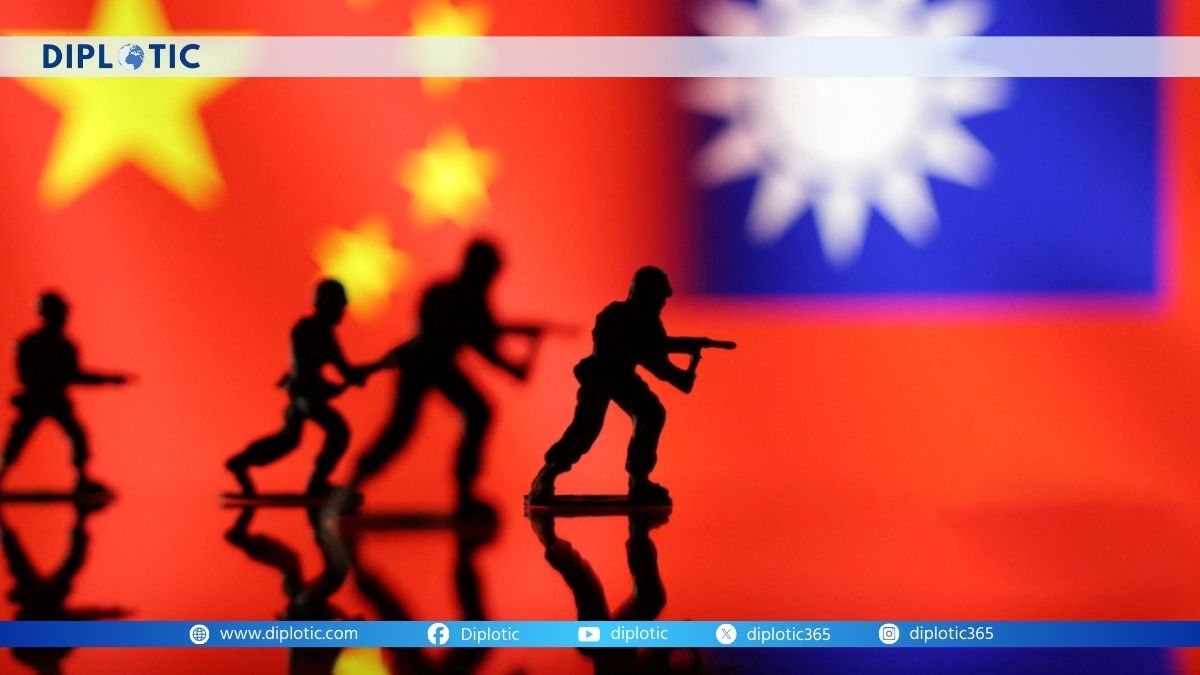
In late December 2025, tensions in the Taiwan Strait reached a new high as China launched its largest military exercises yet around the self-governed island of Taiwan. Named “Justice Mission 2025,” these drills involved live-fire exercises, simulated blockades of key ports, and coordinated operations with ships, planes, and missiles. The moves came just days after the United States approved a major arms sale to Taiwan worth over $11 billion, sparking questions about whether this was a direct response from Beijing. President Donald Trump, however, quickly downplayed the events, stating he was not concerned and highlighting his good ties with Chinese leader Xi Jinping. This reaction has raised eyebrows among experts and observers, prompting a deeper look into what these drills mean, why Trump responded the way he did, and how they fit into the long-standing friction between China and Taiwan. As global watchers assess the risks, the situation invites curiosity about whether this is just routine posturing or a sign of escalating dangers in the region.
What Sparked China’s Recent Military Actions Near Taiwan?
The trigger for China’s “Justice Mission 2025” drills appears straightforward but reveals layers of ongoing disputes. On December 19, 2025, the U.S. announced an $11.1 billion weapons package to Taiwan, including advanced rocket systems, howitzers, and missiles designed to boost the island’s defense capabilities. This was one of the largest such deals in recent years, aimed at helping Taiwan counter potential threats from across the strait. Beijing, which views Taiwan as part of its territory, reacted strongly, calling the sale a provocation and imposing sanctions on several U.S. defense companies involved.
The drills began on December 29, 2025, and entered their second day with 10 hours of live-fire exercises in five areas surrounding Taiwan. Chinese military statements described the operations as a warning against “Taiwan independence forces” and “external interference,” clearly pointing fingers at the U.S. and its allies. Destroyers, frigates, fighter jets, and bombers were deployed to test sea-air coordination and blockade tactics, simulating the seizure of key island areas. Taiwan’s defense ministry reported detecting 130 Chinese aircraft, with 90 crossing the median line—an unofficial boundary in the strait that China does not recognize—and over a dozen naval vessels nearby. In response, Taiwan scrambled jets, ships, and missile systems to monitor the situation.
But is this just about the arms sale, or is there more at play? Analysts suggest the timing also aligns with broader shifts in U.S.-China relations under the second Trump administration. Since taking office in January 2025, Trump has focused on trade deals and economic pressures rather than military confrontations with China. Some experts argue that Beijing is testing the new administration’s resolve, especially after Trump’s campaign rhetoric emphasized avoiding overseas entanglements. Parallel insights from past events show similar patterns: China’s exercises have grown in scale since 2022, following a U.S. congressional visit to Taiwan, indicating a strategy to normalize high-pressure tactics. Additionally, regional dynamics involve Japan and other allies, who have expressed concerns about stability in the Indo-Pacific. Japan’s increased defense spending and joint exercises with the U.S. add another angle, as China sees these as encroachments. The drills also highlight economic stakes, with trillions in trade passing through the Taiwan Strait each year, making any disruption a global concern. Investigating further, one wonders if China’s actions are meant to deter not just Taiwan but also U.S. commitments, probing for weaknesses in alliances that have held for decades.
How Has President Trump Addressed the Rising Tensions?
President Trump’s response to the drills has been notably calm, raising questions about his approach to U.S.-China relations. At a press conference on December 29, 2025, he told reporters, “I have a great relationship with President Xi, and he hasn’t told me anything about the drills. No, nothing worries me. They’ve been doing naval exercises for 20 years in that area.” This dismissal came even as images and reports showed the scale of the operations, including missile launches and simulated attacks. Trump emphasized that the activities were routine, not a new threat, and suggested his personal rapport with Xi could help manage any issues.
Yet, is this nonchalance a strategic choice or a potential oversight? Experts like Susan Shirk, a former U.S. diplomat, have noted that the drills seem directed more at the U.S. and Trump than at Taiwan itself, expressing anger over the arms sale which now includes offensive weapons capable of striking mainland China. Shirk pointed out concerns that Trump might be less committed to Taiwan’s defense compared to past presidents, possibly viewing it as a bargaining chip in trade talks. Another analyst, Alexander Neill, agreed that China has ramped up such exercises over the past two decades as part of military modernization, but warned that relying on personal ties with Xi might not influence Beijing’s Taiwan policy.
Looking at related angles, Trump’s administration has continued U.S. support for Taiwan through arms sales, maintaining the delicate balance of recognizing Beijing diplomatically while aiding Taipei militarily. However, his comments echo a transactional style, where military commitments could be traded for economic gains. This approach contrasts with previous administrations that stressed unwavering support for Taiwan under the Taiwan Relations Act of 1979. Investigative lenses also turn to internal U.S. debates: some in Congress push for stronger deterrence against China, while others worry about overcommitment amid other global challenges like the Ukraine conflict. Trump’s downplaying might aim to avoid escalation, but it invites curiosity about whether it signals a shift in U.S. policy, potentially encouraging China to push boundaries further. Broader context includes Trump’s recent calls with other leaders, suggesting a focus on dialogue over confrontation, but critics question if this leaves allies like Taiwan vulnerable.
What Lies Behind the Long-Standing China-Taiwan Divide?
To understand the current drills, one must explore the historical roots of China-Taiwan tensions, which date back over seven decades. After the Chinese Civil War ended in 1949, the defeated Nationalist forces fled to Taiwan, establishing a separate government while the Communist Party took control of the mainland. Beijing has since claimed Taiwan as a province, vowing reunification—even by force if necessary—while Taiwan has developed its own democratic system and identity. Over the years, China has increased pressure through diplomatic isolation, economic incentives, and military shows of force.
In recent times, especially since 2016, incursions into Taiwan’s air and sea zones have become routine, with hundreds of aircraft and vessels involved annually. The 2025 drills build on this trend, marking the sixth major exercise since 2022, each growing in complexity to demonstrate blockade capabilities. Taiwan, in turn, has boosted defense spending to modernize its forces, planning for asymmetric warfare to counter a larger opponent. Parallel insights reveal how U.S. policy has evolved: from the 1950s mutual defense treaty, which ended in 1979 when Washington switched recognition to Beijing, to current arms sales and strategic ambiguity—neither confirming nor denying military intervention in a conflict.
Different angles include the role of international norms. Taiwan’s President Lai Ching-te condemned the drills as a challenge to global rules, urging restraint while affirming Taiwan’s commitment to peace. China’s Foreign Minister Wang Yi reiterated that reunification is a “historical mission,” countering what he called provocations from independence advocates and U.S. arms deals. Economically, Taiwan’s semiconductor industry, producing most of the world’s advanced chips, adds a global stake—any conflict could disrupt supply chains worldwide. Regionally, allies like Japan and Australia have stepped up, viewing Taiwan’s security as tied to their own. Investigating these layers, one questions if historical patterns of deterrence will hold, or if modern factors like cyber threats and economic interdependence could alter the course. The divide persists because both sides see it as core to their identity, making resolution elusive without major concessions.
Could These Events Point to Greater Threats Ahead?
As the drills wrap up, their implications extend beyond the immediate region, prompting inquiries into potential future risks. Experts warn that such exercises are not mere shows but rehearsals for real operations, enhancing China’s ability to impose a blockade or invasion swiftly. With Beijing setting 2027 as a target for military readiness, the frequency and scale suggest preparation for coercion rather than just signaling. Taiwan’s people, while preparing defenses, largely do not expect imminent war, but the psychological impact grows with each incursion.
Broader angles include U.S. strategic priorities. Trump’s focus on domestic issues and trade might reduce emphasis on Taiwan, but Pentagon assessments still highlight 2027 as a key window for Chinese action. Parallel concerns arise from other hotspots: if U.S. resources are stretched by conflicts elsewhere, like Ukraine, it could embolden China. Allies in Asia, such as the Philippines, face similar pressures in the South China Sea, linking Taiwan’s fate to wider maritime security. Economically, a blockade could halt $2.45 trillion in annual trade through the strait, affecting global markets. Investigating further, one wonders if diplomatic efforts, like potential Trump-Xi meetings in 2026, could de-escalate, or if miscalculations might spark unintended clashes. The situation underscores the need for balanced deterrence, where arms sales and alliances counter aggression without provoking it.
In connecting past patterns to today’s events, these drills highlight how unresolved historical claims continue to shape present geopolitics. Trump’s relaxed stance might foster dialogue, but it also risks signaling weakness, potentially inviting more tests from Beijing. As 2025 ends, the world watches to see if this episode fades or foreshadows deeper instability, reminding us that peace in the Taiwan Strait remains fragile and vital for global order.




