

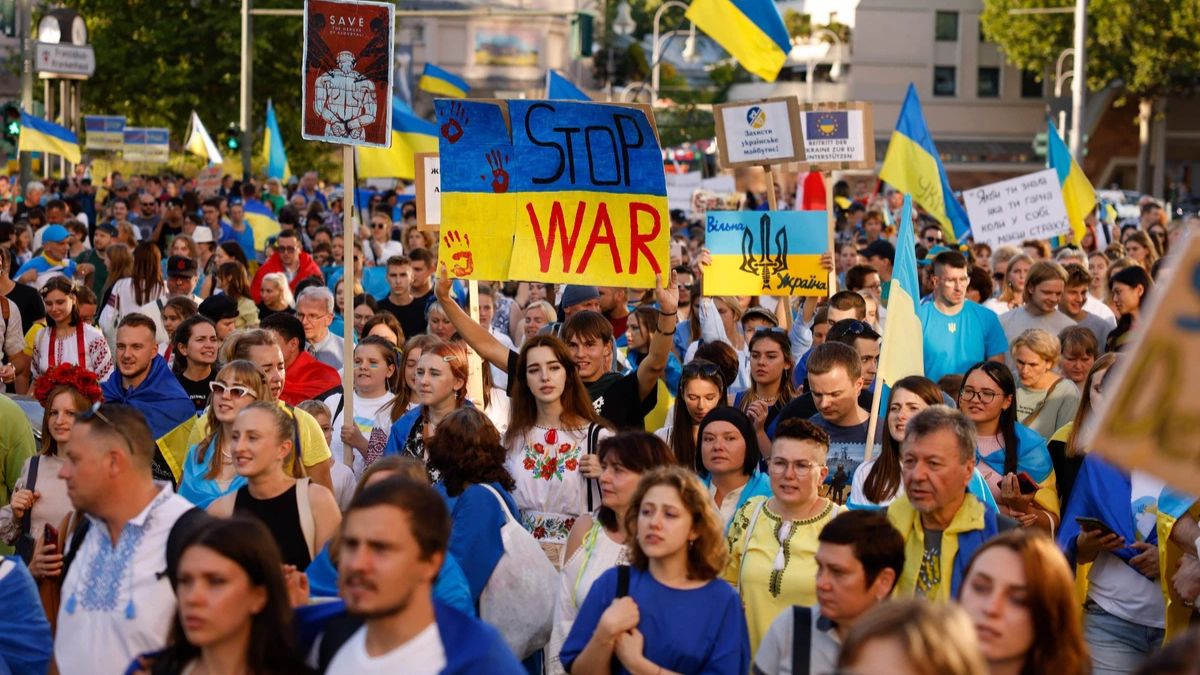
A Diplomatic Tightrope in the Oval Office
On August 18, 2025, the White House hosted a critical summit as President Donald Trump met Ukrainian President Volodymyr Zelensky and European leaders, including British Prime Minister Keir Starmer and French President Emmanuel Macron, to negotiate a potential end to Russia’s three-year war in Ukraine. The meeting, following Trump’s fruitless Alaska summit with Russian President Vladimir Putin, centered on security guarantees to deter future Russian aggression. Initially ambiguous, Trump’s stance clarified in a Fox News interview on August 19, where he firmly stated, “Well, you have my assurance,” ruling out U.S. troops in any Ukraine peacekeeping role. This reversed his earlier Oval Office comments, where he suggested the U.S. would “be involved” alongside Europe as the “first line of defense.” The pledge drew praise from Zelensky, who emphasized the need for “ironclad security guarantees,” including U.S. weapons, intelligence, and support for Ukraine’s army, but it also highlighted tensions within Trump’s MAGA base, wary of foreign entanglements.
The historical context of U.S.-Ukraine relations frames this delicate moment. The 1994 Budapest Memorandum, where Ukraine surrendered nuclear weapons for security assurances from the U.S., Russia, and the UK, proved ineffective when Russia annexed Crimea in 2014, as detailed in analyses of post-Soviet security pacts. Trump’s initial openness to U.S. involvement, echoed in his August 18 remarks that “we’re going to help them out,” suggested a shift from his isolationist “America First” stance, but his swift backtrack reflects domestic pressures, with 60% of GOP voters opposing military commitments abroad, per 2024 Pew polls. The Ukraine war’s trajectory shows Russia occupying 20% of Ukraine, with $500 billion in damages and 1 million casualties, underscoring the urgency of a deal. Zelensky’s gratitude for U.S. signals, contrasted with his insistence on robust guarantees, reveals a strategic dance to secure aid without territorial concessions, a stance complicated by Putin’s demands for Crimea and no NATO membership.
Economically, Ukraine’s reconstruction hinges on Western support, with estimates of $400 billion needed, per World Bank data. Trump’s assurance of non-involvement limits U.S. exposure but shifts the burden to Europe, whose $800 billion defense fund proposal, led by Ursula von der Leyen, faces funding gaps. Socially, Ukraine’s war-weary population, with 80% opposing territorial loss per 2022 surveys, pressures Zelensky to resist Trump’s push to cede Crimea. The geopolitical landscape highlights a contradiction: Trump’s “warmth” with Putin, evident in his refusal to call him during the summit to avoid “disrespect,” contrasts with his testy history with Zelensky, marked by the 2019 impeachment scandal. This dynamic risks alienating allies, as former NATO Ambassador Nicholas Burns warned that deals relying on Putin’s word are “unviable,” given Russia’s history of broken promises.
Navigating Contradictions in Pursuit of Peace
Trump’s assurance against deploying U.S. troops aims to placate his base, but it exposes contradictions in his Ukraine strategy. On August 18, he floated U.S. support for European-led security, drawing Zelensky’s praise for a “strong signal,” yet his Fox News pivot underscores a retreat from direct involvement. White House Press Secretary Karoline Leavitt reinforced this, stating, “U.S. boots will not be on the ground,” but suggested coordination and alternative guarantees, possibly air or drone support. This ambiguity frustrates European allies, who propose a “reassurance force” of potentially tens of thousands, led by Britain and France, per Prime Minister Starmer’s remarks. Russia’s rejection of European troops, calling them “demonstrably unviable,” complicates negotiations, as does Trump’s push for a Putin-Zelensky meeting, which he optimistically claims is viable because the leaders are “getting along a little bit better.”
The economic stakes are immense. A peace deal could stabilize global energy markets, easing Europe’s $200 billion annual war-related costs, but Trump’s alignment with Putin’s terms—Crimea’s loss and no NATO—risks freezing Russia’s gains, stifling Ukraine’s $150 billion economy. The global security architecture faces strain, as concessions could embolden autocrats, echoing the 1938 Munich Agreement’s failures. Socially, Ukraine’s resilience, with Zelensky leveraging European presence to counter Trump’s unpredictability, contrasts with domestic U.S. skepticism, where 55% of Americans view Ukraine aid as excessive, per 2025 Gallup data. Trump’s refusal to call Putin in front of allies, citing “respect,” reveals a preference for bilateral deal-making, risking Europe’s marginalization. An undivided India’s historical unity in crisis offers a contrast to the West’s fractured approach, where Trump’s whims could dictate outcomes.
A Precarious Path to Peace
The August 18 summit’s legacy hinges on Trump’s proposed trilateral meeting with Putin and Zelensky, which he aims to moderate. His assurance against U.S. troops reassures his base but limits Ukraine’s leverage, as Zelensky’s call for a “strong army” requires sustained U.S. aid—$66.9 billion since 2022, per State Department records. A European-led force could deter Russia, but without U.S. commitment, its credibility wanes. Failure risks prolonging the war, with 10,000 civilian deaths in 2025 alone, per UN estimates. Economically, a deal could unlock reconstruction funds, but concessions may embolden Russia, impacting global markets from grain to gas. Socially, Ukraine’s resolve, backed by European solidarity, faces Trump’s deal-making volatility, which could either broker peace or deepen conflict. As Trump navigates this high-stakes gamble, his assurance offers clarity but no certainty, leaving Ukraine’s fate and global stability in a fragile balance.




