
• About
  • Contact
  • Methodology
  • Violation Policy
  • Editorial Policy
  • Correction Policy
  • Privacy Policy
  • Reader Submissions
  • Our Team
  • Funding & Donors
Monday, June 8, 2026
  • Home
  • Focus
    • Exclusive
    • Editor’s Pick
    • Behind the Curtain
  • Fact Check
  • Politics
  • Diplomacy
  • Economy
  • War & Conflict
  • South Asia
  • More
    • Games & Sports
    • Technology
    • Entertainment
    • History & Culture
    • Science & Technology
    • Nature & Environment
    • Health & Lifestyle
Bangla
Diplotic
No Result
View All Result
  • Home
  • Focus
    • Exclusive
    • Editor’s Pick
    • Behind the Curtain
  • Fact Check
  • Politics
  • Diplomacy
  • Economy
  • War & Conflict
  • South Asia
  • More
    • Games & Sports
    • Technology
    • Entertainment
    • History & Culture
    • Science & Technology
    • Nature & Environment
    • Health & Lifestyle
No Result
View All Result
Diplotic
Bangla
Home Behind the Curtain

Landless Yet Recognized: The UN’s Love Letter to Palestine

Staff Reporter by Staff Reporter
September 18, 2025
in Behind the Curtain, War & Conflict
Reading Time: 2 mins read
A A
0
Landless Yet Recognized: The UN’s Love Letter to Palestine
0
VIEWS
Share on FacebookShare on Twitter

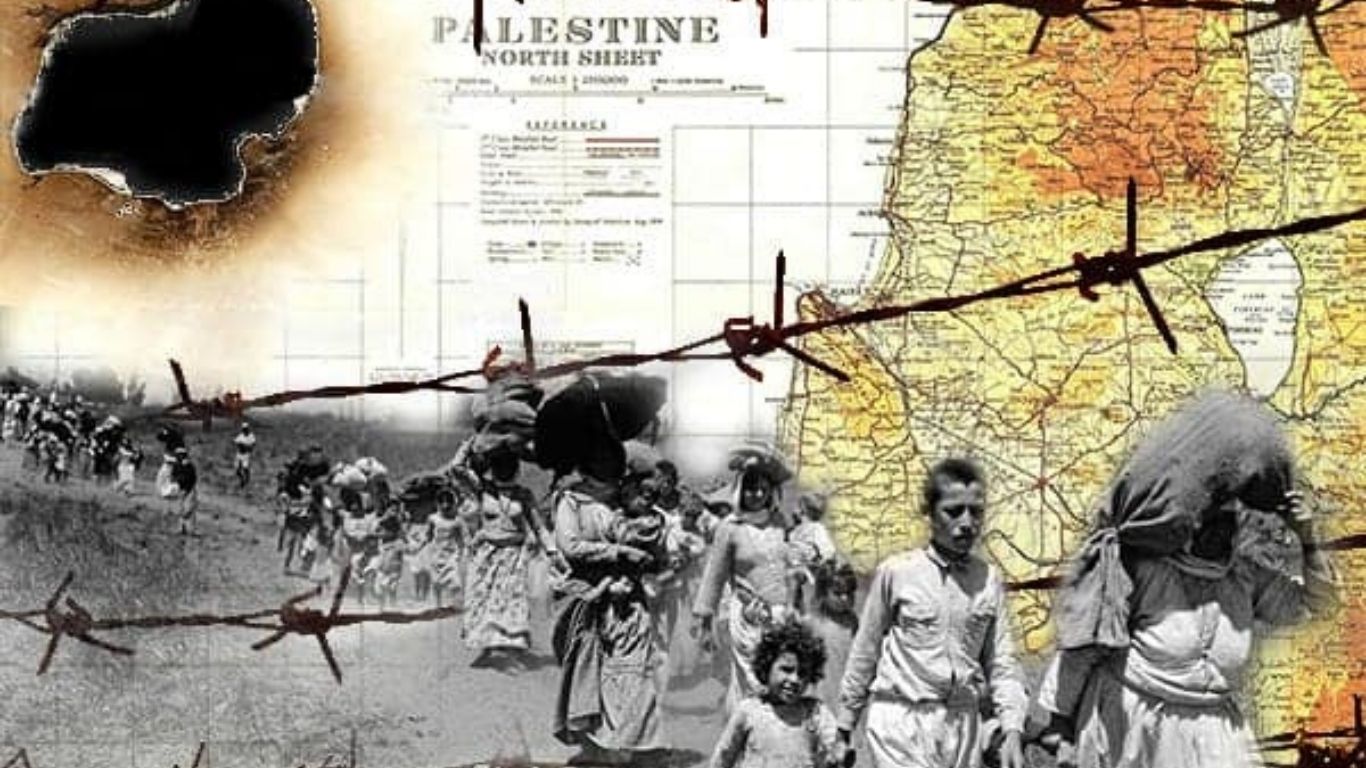
In the grand theater of international diplomacy, the United Nations, that venerable body meant to uphold peace and fairness, has once again displayed its sense of irony with a spectacular twist. While Israel possesses much of the land long claimed by Palestinians, it is Palestine that the UN has voted to recognize as a state, albeit only as a “non-member observer,” in a move that seems to defy simple logic.

Palestine declared its statehood in 1988, and since then, it has been on a diplomatic rollercoaster, gaining recognition from 147 of the 193 UN member states, a respectable 76% majority. Yet, full membership remains elusive, thanks largely to the U.S., a not-so-neutral permanent Security Council member who wields its veto power like a knight brandishing a sword. The Palestinians hold territory in the West Bank and Gaza, albeit heavily controlled and fragmented by Israel, which ironically occupies much of what the Palestinians claim. But hey, who’s counting land when you have international votes, right?

Meanwhile, Israel was established as a state back in 1948 and has enjoyed wide recognition by the vast majority of UN members as a full member since 1949. Yet, a handful of countries, mostly in the Muslim world, steadfastly refuse to recognize Israel, a reflection of regional tensions that continue to simmer. So Israel, commanding control on the ground, still faces pockets of diplomatic isolation, while Palestine, with limited control, boasts a swelling list of recognitions and international sympathy.

The UN General Assembly’s 2012 decision to grant Palestine non-member observer state status was heralded by some as a momentous step, a “pride and hope” day for Palestinians, according to the UN Secretary-General. Others, unsurprisingly, called it “counterproductive,” “a misuse of the UN,” or diplomatically “untenable.” Meanwhile, Israel calls it “diplomatic terrorism.” All quite diplomatic in tone, of course.

So what’s the takeaway from this curious UN exercise? That sovereignty and statehood are sometimes less about control and governance and more about political theatre and international sentiments. That a state can be recognized widely yet remain territorially constrained. And that the UN, for all its lofty ambitions, sometimes ends up spotlighting the contradictions on the world stage, inviting applause, skepticism, and sharp editorial pens in equal measure.

In the end, the Palestinian quest for recognition is a political saga spanning decades, resolutions, vetoes, and declarations, echoing the complexities of the Middle East conflict. And the UN’s role to commend, to block, to vote, and sometimes to baffle continues unabated, much to the bemusement of observers everywhere.


Staff Reporter

Staff Reporter

Staff Reporter at Diplotic | Covering global affairs, diplomacy & policy with clarity and insight.

Blue Moon: The Rare Lunar Wonder

Blue Moon: The Rare Lunar Wonder

by Arjuman Arju
May 31, 2026

The night sky has always fascinated people with its countless stars, planets, and celestial events. Among these wonders, the Blue...

Fact Check: Does Consciousness Create Reality?

Fact Check: Does Consciousness Create Reality?

by Morium Jahan Setu
May 11, 2026

For more than a century, quantum mechanics has challenged humanity’s understanding of reality. Unlike classical physics, which describes a predictable...

How China, Russia, Turkey and Europe Are Responding to Iran War

The Impact of the US-Iran Conflict on Global Oil Prices and Economic Performance

by Sajjad Hossain Adib
May 11, 2026

Introduction The conflict between the United States and Iran is a central topic in global geopolitics. This enduring friction has...

Fact Check: AI-generated misinformation is destabilizing South Asian elections

Fact Check: Are “Clear Cache” Apps Actually Improving Phone Speed?

by Samshul Arefin
May 1, 2026

Every day, millions of smartphone users tap buttons labeled "Clean," "Boost," or "Speed Up" in third-party cleaning apps, hoping to...

DIPLOTIC

© 2024 Diplotic - The Why Behind The What

Navigate Site

  • About
  • Contact
  • Methodology
  • Violation Policy
  • Editorial Policy
  • Correction Policy
  • Privacy Policy
  • Reader Submissions
  • Our Team
  • Funding & Donors

Follow Us

No Result
View All Result
  • Home
  • Focus
    • Exclusive
    • Editor’s Pick
    • Behind the Curtain
  • Fact Check
  • Politics
  • Diplomacy
  • Economy
  • War & Conflict
  • South Asia
  • More
    • Games & Sports
    • Technology
    • Entertainment
    • History & Culture
    • Science & Technology
    • Nature & Environment
    • Health & Lifestyle

© 2024 Diplotic - The Why Behind The What

