

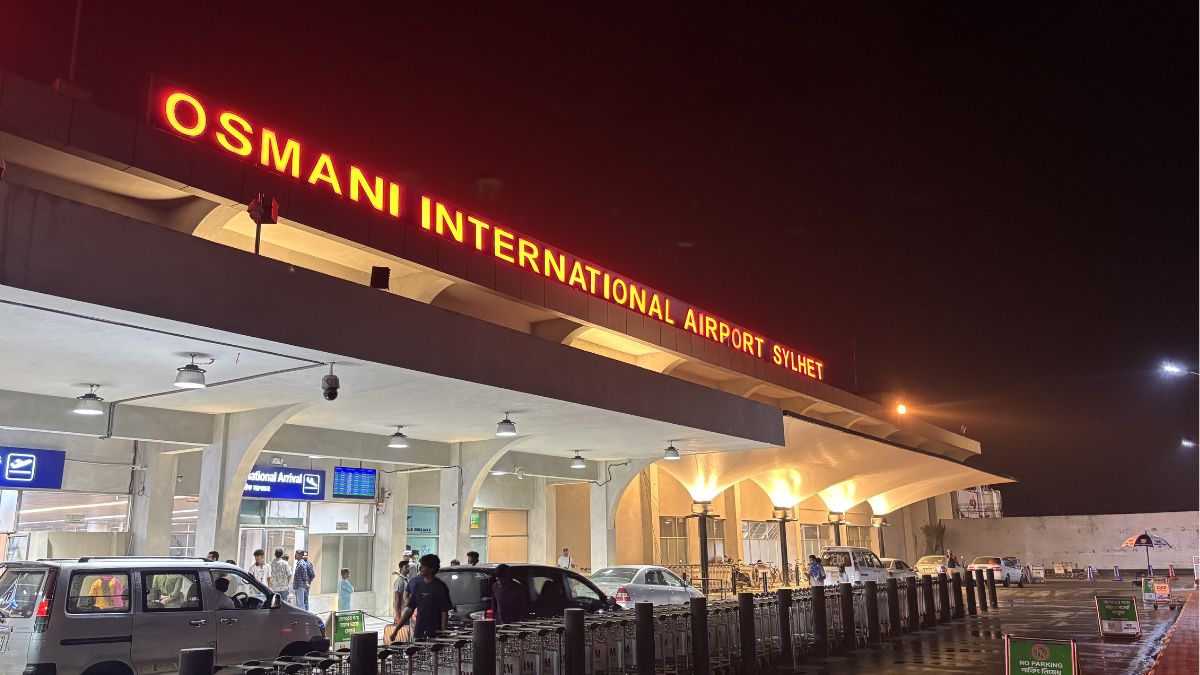
Sylhet Osmani International Airport (ZYL) carries the prestige of an international gateway, yet critics often ask: is it truly deserving of the title, or is “international” just a label? While the airport connects a diaspora-rich region to the world, questions persist about the frequency of overseas flights, infrastructure limitations, and its capacity to handle global traffic.
This fact-check delves into whether Sylhet Osmani International Airport functions as a fully operational international hub—or whether the term “international” overstates the reality. We examine the volume and consistency of international flights, the airport’s facilities, regulatory compliance, and traveler experience to assess whether the designation matches performance.
Using official data, aviation reports, and passenger insights, this analysis seeks to cut through the official branding and determine whether Sylhet’s air gateway truly lives up to its international name—or if it’s time to ground expectations.
Claim 1: Sylhet Osmani International Airport Is International in Name Only Due to Limited International Flight Operations
Fact-Check: Partially True
Sylhet Osmani International Airport (ZYL) is designated as an international airport (IATA: ZYL, ICAO: VGSY) and is the third largest in Bangladesh, after Dhaka’s Hazrat Shahjalal International Airport and Chattogram’s Shah Amanat International Airport. It was renamed in 2002 to honor General M A G Osmani, Commander-in-Chief during the 1971 Bangladesh Liberation War, and has been recognized as an international airport since then. However, critics argue that it does not function as a “true” international airport due to limited international flight operations and lack of service from major multinational airlines like Qatar Airways, Turkish Airlines, or Emirates.
Current international operations are primarily handled by Biman Bangladesh Airlines, with weekly flights to Dubai, Jeddah, Sharjah, London, and Manchester, though most flights originate or terminate in Dhaka. For example, Biman operates four weekly roundtrip Dreamliner flights to London and two to Manchester, as well as weekly non-stop flights to Jeddah and Sharjah, as of 2022. Historical attempts by other airlines to operate international routes have been inconsistent. Flydubai introduced nonstop flights from Dubai in 2015 but canceled them the next day due to Biman’s refusal to provide ground handling services. US-Bangla Airlines briefly operated flights to Muscat in 2020, but these were discontinued by 2023. The absence of major international carriers and the reliance on Biman limit the airport’s international connectivity compared to Dhaka, where multiple global airlines operate.
However, the airport supports some international traffic, particularly for the Sylhet diaspora (e.g., 700,000 Sylhetis in the UK). Its international routes, though limited, cater to key destinations like the Middle East and UK, driven by demand for Umrah and diaspora travel. A Daily Country Today article notes high fares (e.g., £1000–1400 for London–Sylhet versus £500–600 for London–Dhaka) and lack of competition as evidence of underutilization, but this reflects market dynamics rather than a complete lack of international status.
Verdict: The claim is partially true. Sylhet Osmani International Airport operates international flights, primarily through Biman Bangladesh Airlines, but its limited range of destinations, reliance on a single carrier, and absence of major multinational airlines make its international status less robust than major hubs like Dhaka. It is not “international in name only,” but its international operations are constrained.
Claim 2: Infrastructure Limitations Prevent Sylhet Osmani International Airport from Functioning as a True International Airport
Fact-Check: Partially True
The airport’s infrastructure has been criticized as inadequate for a fully functional international airport. A 2024 Daily Country Today article argues that Sylhet Osmani does not meet the standards of a “true” international airport due to insufficient facilities and capacity. Built during British rule to counter Japanese aggression, the airport was upgraded in 1986 with a terminal, navigational aids, and runway improvements, and designated international in 2002. However, its current passenger capacity is only 600,000 per annum, significantly lower than Dhaka’s 8 million.
A major expansion project, initiated in 2020 by Beijing Urban Construction Group (BUCG), aims to build a new terminal, cargo building, ATC tower, taxiway, apron, and modern fire station at a cost of Tk2116 crore (US$170 million). This would increase capacity to 2 million passengers annually, with six boarding bridges and 36 check-in counters, but progress has been slow, with only 22% completion by September 2024, targeting December 2027. Current facilities include parking, ATMs, restaurants, and wheelchair assistance, but reviews on platforms like Flightradar24 note poor taxi services and a dated infrastructure that feels more domestic than international. The cargo complex (46,225 sq ft, 1000 MT capacity) is underutilized, with no bonded warehouse, limiting international cargo operations.
Despite these limitations, the airport handles international flights and customs operations under the National Board of Revenue (NBR), with seizures of gold bars indicating active international activity. The ongoing expansion suggests intent to enhance international capabilities, but current infrastructure lags behind global standards for major international airports.
Verdict: The claim is partially true. Sylhet Osmani’s infrastructure supports limited international operations but is constrained by low capacity, dated facilities, and slow expansion progress. It functions as an international airport but falls short of the standards expected of a major international hub.
Claim 3: Sylhet Osmani International Airport’s Limited International Status Discriminates Against Sylhet’s Diaspora and Tourists
Fact-Check: True
The Daily Country Today article argues that the airport’s limited international operations disproportionately affect Sylhet’s diaspora (e.g., 700,000 in the UK) and tourists, forcing reliance on expensive Biman flights (e.g., £1000–1400 for London–Sylhet versus £500–600 for London–Dhaka). This lack of competition from multinational airlines like Qatar or Emirates reduces service quality and increases costs, particularly for diaspora travelers visiting Sylhet’s cultural sites, such as the Hazrat Shahjalal and Shahparan shrines. The article suggests that a fully international airport could make Sylhet a South Asian tourism hub, attracting visitors from India and beyond for short trips, boosting Bangladesh’s economy.
Data supports this. Sylhet’s tourism potential is significant, with its natural beauty (e.g., Surma River, Jaintia hills) and cultural attractions drawing thousands daily. The lack of direct international flights from major carriers limits accessibility, forcing travelers to connect through Dhaka, adding time and cost. For example, Biman’s Sylhet–London flights often route through Dhaka, inflating fares. The 2015 Flydubai cancellation due to Biman’s refusal to provide ground handling services exemplifies barriers to competition, reinforcing perceptions of discriminatory pricing and access. A 2024 Logistics Capacity Assessments report notes that only Biman operates international flights, limiting options for the diaspora and tourists.
Verdict: The claim is true. Limited international operations and lack of airline competition at Sylhet Osmani result in higher costs and reduced accessibility for the diaspora and tourists, supporting perceptions of discriminatory treatment compared to Dhaka.
Claim 4: Expansion of Sylhet Osmani International Airport Will Make It a Fully Functional International Airport
Fact-Check: Uncertain
The ongoing expansion project, valued at Tk2116 crore (US$170 million), aims to transform Sylhet Osmani into a more robust international airport by December 2027. The new terminal will increase passenger capacity from 600,000 to 2 million annually, with six boarding bridges, 36 check-in counters, and modern facilities like a cargo building and ATC tower. This could enable more international flights and attract multinational airlines, addressing criticisms of limited operations. The Daily Sun reports 22% progress as of September 2024, indicating active development but a long timeline.
However, challenges cast doubt on the outcome. Slow progress (22% in four years) suggests potential delays beyond 2027. Historical issues, such as Biman’s refusal to provide ground handling to Flydubai in 2015, indicate that operational and political barriers could persist even with infrastructure upgrades. The absence of a bonded warehouse and limited cargo operations suggest that full international functionality requires more than physical expansion. Additionally, attracting major airlines will depend on market demand and regulatory reforms to encourage competition, which are not guaranteed.
Verdict: The claim is uncertain. The expansion project has the potential to enhance Sylhet Osmani’s international functionality, but slow progress, historical operational barriers, and the need for regulatory changes make the outcome unclear by 2025.
The Bigger Picture: International or Just Aspirational?
Sylhet Osmani International Airport is more than international in name only—it operates weekly flights to key destinations like London, Manchester, Dubai, Jeddah, and Sharjah, serving the significant Sylhet diaspora and some tourist traffic. However, its international status is limited by reliance on Biman Bangladesh Airlines, lack of major multinational carriers, and dated infrastructure with a capacity of only 600,000 passengers annually. The high cost of flights (e.g., £1000–1400 for London–Sylhet) and lack of competition disadvantage the diaspora and hinder tourism potential, despite Sylhet’s cultural and natural attractions. The ongoing Tk2116 crore expansion project aims to address these issues by 2027, but with only 22% progress by 2024, full international functionality remains a distant goal. Systemic issues, like Biman’s control over ground handling and weak regulatory incentives for competition, further constrain its international role.
What’s for Future?
Sylhet’s airport being called “international” isn’t just a fancy label—it’s got flights to London, Dubai, and Jeddah, so it’s doing something. But let’s not get carried away. It’s basically Biman’s playground, with no Qatar or Emirates in sight, and those sky-high fares to the UK scream monopoly. The terminal’s stuck in the last century, handling a fraction of Dhaka’s passengers, and the big expansion they’re hyping? Barely a quarter done in four years. Sylhet’s diaspora and tourists deserve better than connecting through Dhaka or paying double for a direct flight. It’s international, sure, but it’s more like a small-town airport with big dreams and a long way to go.
“They call it international, but my uncle pays £1200 to fly from London while Dhaka’s half that,” I mutter, wondering if this airport’s just coasting on a shiny name.
Conclusion
Sylhet Osmani International Airport is not international in name only—it supports limited international flights to key destinations like London, Manchester, and the Middle East, serving the Sylhet diaspora and some tourists. However, its international status is constrained by reliance on Biman Bangladesh Airlines, lack of major multinational carriers, high fares due to limited competition, and outdated infrastructure with a capacity of only 600,000 passengers annually. These factors disadvantage travelers, particularly the diaspora, who face higher costs and fewer options. The ongoing Tk2116 crore expansion project aims to increase capacity to 2 million by 2027, but slow progress (22% by 2024) and operational barriers, like Biman’s control over ground handling, cast doubt on its near-term impact. While the airport functions as an international facility, it falls short of the standards expected of a major international hub, supporting the claim to a significant extent but not entirely.




