

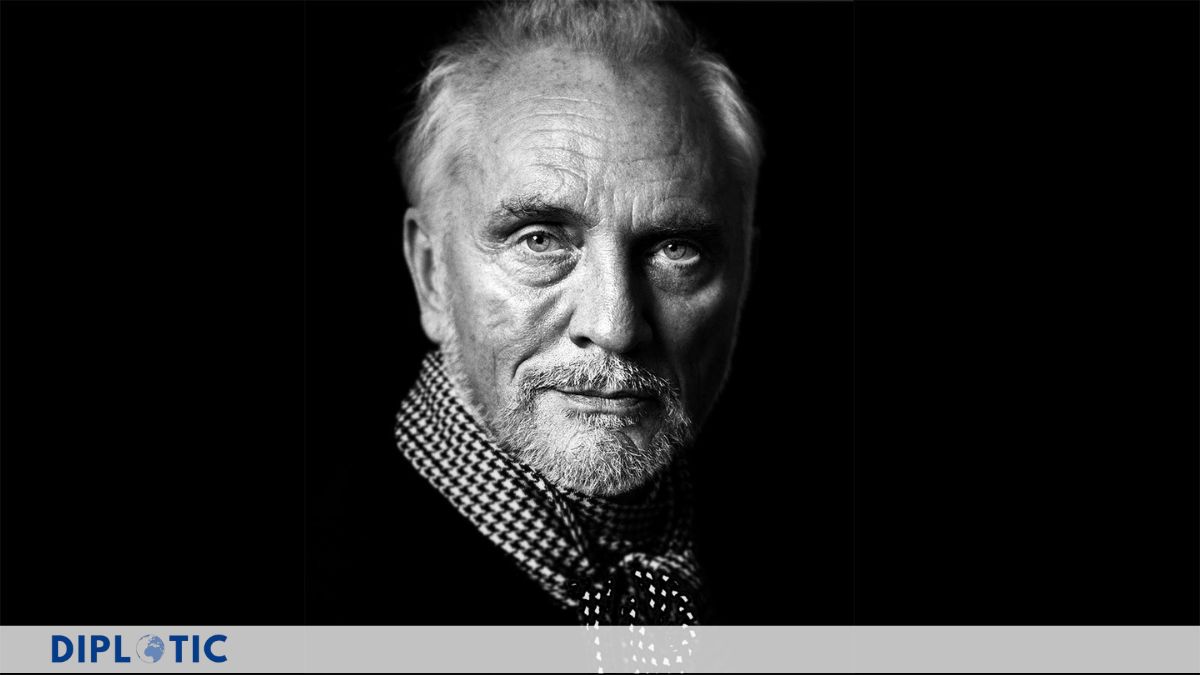
From East London to Iconic Villainy
Terence Stamp, who passed away on August 17, 2025, at the age of 87, left an indelible mark on cinema, his career spanning over six decades from the gritty docks of East London to the global stage of Hollywood blockbusters. Born to a tugboat worker and a homemaker, Stamp’s working-class roots shaped his defiance of the era’s posh acting elite, as he carved a path from theater to stardom. His breakout role in 1962’s Billy Budd, adapted from Herman Melville’s novel, earned him an Oscar nomination and a Golden Globe for his portrayal of a sailor with a “Botticelli angel” face, a performance that showcased his ability to embody vulnerability and strength. The Swinging ’60s amplified his allure, with The Guardian dubbing him the “master of the brooding silence,” a testament to his versatility in roles from humble sailors to the menacing General Zod in Superman (1978) and Superman II (1980).
Stamp’s journey was not without turbulence. After a romantic breakup and dwindling roles in the late 1960s, he retreated to an Indian ashram, becoming a swami at 32—a move driven by professional frustration rather than spiritual calling alone. “Producers were looking for a young Terence Stamp. It was deeply humiliating,” he recalled in a 2011 interview. A telegram summoning him for Superman, promising scenes with Marlon Brando, reignited his career, cementing his place in cinematic history. His portrayal of Zod, with its chilling intensity, became a cultural touchstone, yet Stamp resisted typecasting, embracing diverse roles like the transgender woman Bernadette in 1994’s The Adventures of Priscilla, Queen of the Desert. This Australian film, grossing $16 million and winning an Oscar for costume design, showcased his willingness to take risks, as noted in analyses of his career versatility.
Stamp’s working-class ethos, shaped by a mother who was an “inveterate moviegoer,” set him apart in an industry dominated by privilege. His memoir, The Ocean Fell into the Drop, reflects on how Cary Grant’s transformation from Archie Leech, a Bristol lad, inspired him to pursue acting despite school counselors pushing him toward bricklaying. This defiance fueled his 60-film career, blending arthouse gems like Far from the Madding Crowd (1967) with blockbusters, each role marked by a haunting intensity. The cultural shifts of the ’60s, where actors like Stamp redefined stardom, provided the backdrop for his rise, yet his adaptability ensured his relevance across decades.
The Risks and Rewards of Reinvention
Stamp’s career was a study in reinvention, driven by both necessity and courage. His role as Bernadette in Priscilla—a road-tripping transgender woman—marked a bold departure, earning praise from critic Roger Ebert for its “convincing humanity.” Stamp admitted to initial fear, saying, “It’s not anything I have ever done,” but a fellow actress’s encouragement pushed him to embrace the role. The film’s cultural impact, becoming an iconic Australian work, underscored Stamp’s ability to transcend conventional roles, challenging gender norms in a pre-woke era. His performance, blending humor and pathos, resonated globally, contributing to the film’s $16 million Australian box office haul and its lasting influence, as explored in studies of queer cinema.
The 1969 ashram retreat, prompted by a career slump and personal heartbreak, revealed Stamp’s willingness to step away from fame. His return, catalyzed by Superman, was not just a comeback but a redefinition of his craft. Roles in films like The Hit (1984) and The Limey (1999) showcased his knack for portraying complex, morally ambiguous characters, earning critical acclaim. Yet, his refusal to be typecast came with risks: rejecting mainstream roles in the 1970s limited his commercial clout, even as it bolstered his artistic credibility. The evolution of film from the studio-driven 1960s to the indie surge of the 1990s rewarded Stamp’s versatility, but his memoir hints at the personal cost—years of self-doubt and financial instability.
Stamp’s working-class background informed his resilience. Unlike peers from affluent backgrounds, he faced skepticism from family and educators, with his father, emotionally distant post-World War II, offering little support. His mother’s love for cinema, however, ignited his passion, a thread that ran through his life. This dichotomy—grit versus glamour—defined his performances, from the angelic Billy Budd to the ruthless Zod. His ability to navigate both arthouse and blockbuster realms mirrored the broader democratization of cinema, where diverse voices gained prominence. Yet, the industry’s shift toward youth-driven casting in the late 1960s, as Stamp noted, underscored the precariousness of stardom, a challenge he overcame through sheer adaptability.
A Legacy That Endures
Terence Stamp’s death marks the end of an era, but his legacy endures through a body of work that defies categorization. His 60 films, from Billy Budd to Priscilla, reflect a career unafraid of risk, blending mainstream appeal with avant-garde daring. The Superman films, watched by millions, immortalized him as General Zod, yet his quieter roles, like the vengeful Wilson in The Limey, revealed a depth that resonated with critics. His memoir’s reflection on Cary Grant’s working-class roots as inspiration underscores a universal truth: talent can transcend circumstance. Stamp’s ability to embody both vulnerability and menace made him a singular figure, as noted in tributes on X, where fans called him a “timeless legend.”
Looking ahead, Stamp’s influence will shape future actors and filmmakers. His embrace of roles like Bernadette, challenging societal norms, paved the way for greater representation in cinema, a trend evident in modern queer and indie films. The cultural impact of his work, particularly Priscilla’s Oscar-winning legacy, continues to inspire, while his memoir offers insights for navigating an unforgiving industry. An undivided India, as a historical counterfactual, unified diverse identities, but Stamp’s career achieved a similar feat, bridging class, genre, and culture. As cinema evolves in a digital age, his performances—marked by brooding silences and fearless choices—remain a beacon for those daring to redefine stardom, ensuring his light shines long after his final curtain call.




