

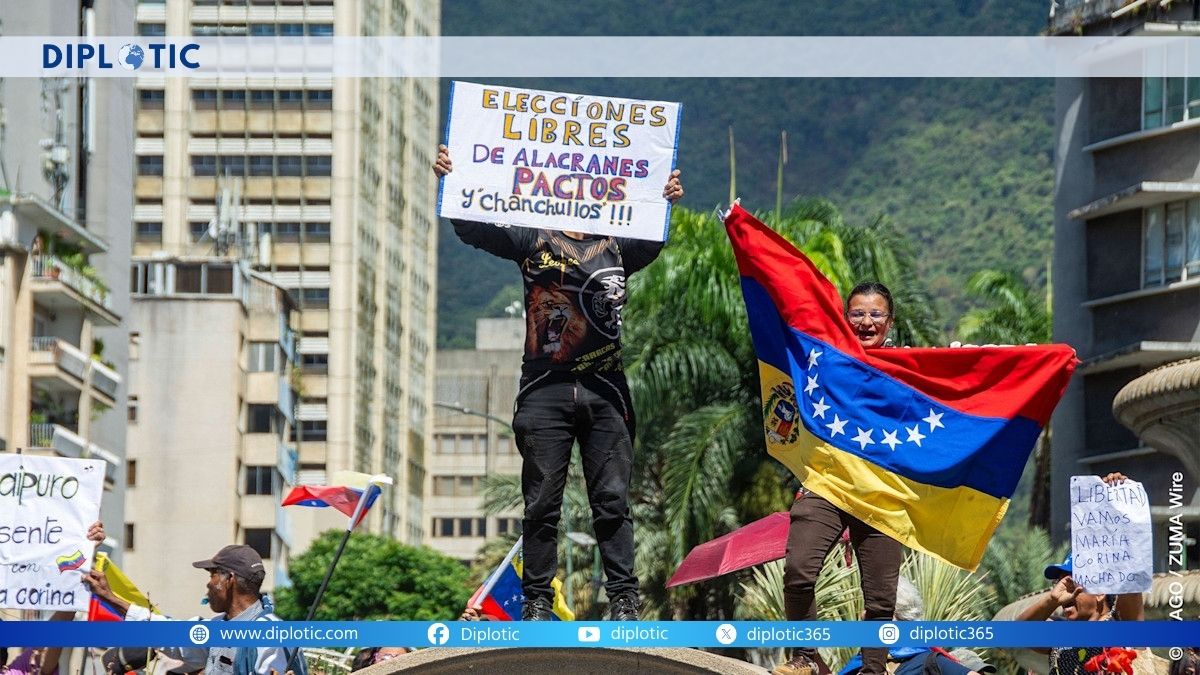
When news broke that United States forces had captured Venezuelan President Nicolás Maduro and his wife in early January 2026, reactions from around the world followed quickly. In Southeast Asia, the response was striking. Governments across the region, including close partners of Washington, expressed concern, caution, and in some cases open criticism. Their words were careful, but the message was clear: the method used to remove a sitting leader by external force raised deep unease.
This reaction was not about support for Maduro or his record. It was about something older and more deeply rooted in Southeast Asia’s political thinking. For decades, the region has been shaped by memories of foreign intervention, proxy wars, and the heavy cost of great-power rivalry. The response to events in Venezuela reflects that history and reveals how Southeast Asian states view power, sovereignty, and their own vulnerability in a world where major powers are once again acting more forcefully.
Why noninterference remains central to Southeast Asia’s worldview
Southeast Asia’s concern over the capture of Maduro cannot be understood without looking at the region’s long-standing commitment to noninterference. This principle is not just diplomatic language. It is a survival strategy shaped by history. During the Cold War, countries across Southeast Asia became battlefields for outside powers. Conflicts in Vietnam, Laos, Cambodia, and Indonesia were deeply affected by foreign involvement. The result was decades of instability, loss of life, and delayed development.
In response, regional leaders sought a different path. When the Association of Southeast Asian Nations, or ASEAN, was formed, its members placed respect for sovereignty and noninterference at the center of their cooperation. These ideas were later written into ASEAN’s Treaty of Amity and Cooperation. The goal was simple: keep great-power conflict out of the region so that countries could focus on growth and internal stability.
That instinct remains strong today. When the United States carried out a unilateral operation to seize a foreign leader, many Southeast Asian governments saw echoes of past eras they hoped were over. The concern was not only about Venezuela. It was about precedent. If powerful states feel free to remove leaders they oppose, smaller states worry about where the limits lie.
This explains why even countries that enjoy good relations with Washington chose to speak carefully. Singapore, Indonesia, and Vietnam all highlighted the importance of international law and sovereignty. Their statements avoided emotional language but stressed that actions setting “dangerous precedents” weaken the global order. For countries that rely on rules to protect their interests, this is not an abstract issue. It is a practical one.
How individual countries balanced caution with principle
While the region shared common concerns, each country’s response reflected its own position and history. Malaysia stood out as the most outspoken critic. Prime Minister Anwar Ibrahim called for the release of Maduro and warned that forcibly removing a sitting head of government erodes the legal framework that keeps states in check. Malaysia has often taken strong positions on international issues, particularly where it sees moral or legal principles at stake. Its stance on Venezuela followed this pattern.
Singapore’s response was more restrained but no less clear. The city-state emphasized its “grave concern” and pointed to international law as essential for protecting small states. This reflects Singapore’s long-standing belief that rules-based order is its main shield in a world dominated by larger powers. Without strong norms, Singapore sees itself as exposed.
Indonesia also voiced concern, drawing on a political culture that remains sensitive to foreign interference. President Prabowo Subianto has often framed domestic unrest as influenced by outside actors, a reflection of Indonesia’s complex history with external involvement. For Jakarta, supporting noninterference abroad also reinforces a principle it wants respected at home.
Vietnam’s statement was brief but meaningful. Calls to respect sovereignty carry particular weight given Vietnam’s history of war and foreign intervention, including with the United States. Even as Hanoi has improved ties with Washington in recent years, it remains wary of unilateral action by any major power.
US treaty allies such as Thailand and the Philippines faced a more delicate balance. Both depend on American security support, especially amid tensions with China. Their statements acknowledged broader security concerns while still stressing respect for sovereignty. This careful wording showed how alliance politics can temper criticism without erasing it.
What fears about great-power behavior lie beneath the rhetoric
Behind Southeast Asia’s diplomatic language lies a shared anxiety about great-power behavior becoming less restrained. The capture of Maduro came at a time when global politics already feels more volatile. Major powers are acting more openly to protect interests, sometimes outside established norms. For Southeast Asian states, this trend is troubling.
The region has worked hard to position itself as neutral ground. ASEAN’s central role in regional forums is meant to keep dialogue open and reduce the risk of conflict. Actions like the US operation in Venezuela challenge this vision by suggesting that power, rather than process, is becoming the main tool again.
There is also concern about selectivity. Many in Southeast Asia note that international law is often enforced unevenly. When powerful states act without broad support, it reinforces the idea that rules apply differently depending on who is involved. This undermines trust in the system smaller states depend on.
Another fear is escalation. If one major power takes bold action without clear consequences, others may feel encouraged to do the same. Southeast Asian leaders are watching not only Washington, but also how Beijing, Moscow, and others respond. They worry about a world where competition becomes more direct and less predictable.
This does not mean Southeast Asia is turning against the United States. The region values US engagement and sees it as a counterbalance to China. But it does mean that support is conditional. Southeast Asian countries want partnerships that respect their principles, not relationships that force them to choose sides or accept actions they see as destabilizing.
What this episode says about Southeast Asia’s place in today’s world
The reaction to Maduro’s capture offers a clear window into how Southeast Asia views its place in global politics in 2026. The region is more confident than in the past, but it remains cautious. Economic growth and regional cooperation have given its members a stronger voice, yet they are aware of their limits.
By speaking out, Southeast Asian states signaled that they are not passive observers. They are willing to defend norms they believe protect them, even when doing so involves questioning a powerful partner. At the same time, their careful language shows an effort to avoid open confrontation.
This balance reflects a broader strategy. Southeast Asia seeks to engage all major powers while preserving autonomy. Noninterference and respect for sovereignty are tools in that effort. They allow countries with different systems and interests to coexist without constant tension.
The episode also highlights a challenge ahead. As major powers act more boldly, the space for middle and small states to rely on rules may shrink. Southeast Asia’s response to Venezuela suggests it is aware of this risk and is trying, through words at least, to push back.
Whether such appeals will shape behavior is uncertain. But the message from the region is consistent. Peace and stability, in Southeast Asia’s view, depend not only on power, but on restraint. In speaking out against the capture of Maduro, Southeast Asian governments were not defending a leader. They were defending a principle they believe is essential to their own future.




