

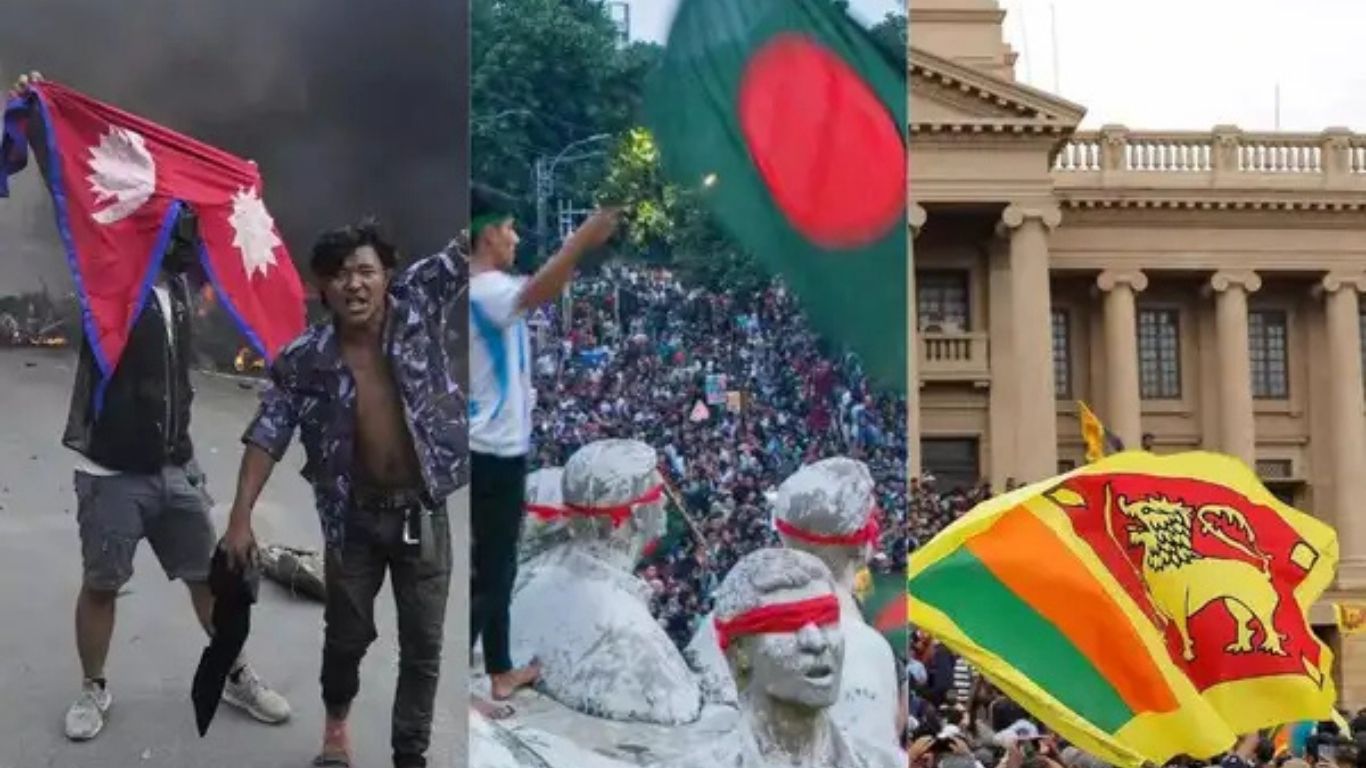
South Asia is shaking and not from earthquakes, but from governments collapsing one after another. In just four years, Sri Lanka, Bangladesh, Nepal, and Pakistan have all seen leaders toppled under the pressure of furious, street-led movements. What ties these crises together? A restless youth population, rotting economies, corrupt elites and whispers of foreign hands at play.
Flashpoints of Collapse
Nepal, September 2025
When Prime Minister Khadga Prasad Oli banned social media, he ignited a generational revolt. Gen Z poured into Kathmandu’s streets, raging against corruption, unemployment, and elite arrogance. The crackdown turned violent, with government buildings attacked and journalists beaten. Oli tried walking back the ban, but it was too late, he resigned, clinging on only as a powerless caretaker.
Bangladesh, August 2024
A student uprising over the quota system exploded into one of the deadliest movements in the nation’s history. More than 300 were killed. Sheikh Hasina fled. Today, an army-backed interim government runs the country, but divisions, militancy, and mistrust run deep.
Sri Lanka, July 2022
Economic collapse turned daily life into survival. With fuel gone, medicine scarce, and inflation at 60%, people stormed Gotabaya Rajapaksa’s palace, sending him fleeing. The regime fell, but the debt and despair remain.
Pakistan and Afghanistan
Imran Khan’s removal and the Taliban takeover added to the regional picture of collapsing political systems and fragile democracies.
The Deeper Forces at Work
Gen Z vs. the System: South Asia’s youngest generation is fighting back. They are digital natives, quick to mobilize, and unafraid to confront power. Social media bans only add fuel to their fire.
Economic Desperation: Inflation and joblessness cut across every country. For many, migration feels like the only future. Those who stay? They take to the streets.
Corruption and Nepotism: From “nepo kids” in Kathmandu to entrenched dynasties in Dhaka, elites cling to power while public patience burns out.
Caretaker Chaos: Collapsed governments give way to unelected, military-backed interim rulers who bring no stability, only prolonging the cycle.
The Domino Effect: Sri Lanka fell in 2022. Bangladesh in 2024. Nepal in 2025. A rhythm is forming. And the region is left asking: who’s next?
The America Question
Here’s where things get even more controversial. Many in South Asia whisper the same question: is America pushing these collapses?
In Bangladesh, a former U.S. State Department official alleged that USAID and the International Republican Institute quietly funded youth groups, minority activists, and even rap artists who stoked street protests against Hasina claims tied to her refusal to allow a U.S. military base aimed at countering China.
In Nepal, Washington officially funneled $60 million since 2022 into “democracy promotion, civil society, and election strengthening.” Critics call it soft regime-change money; supporters call it basic democratic aid.
Right-wing commentators spin darker theories of a “U.S. Deep State” plot to destabilize South Asia, weaken India, and expand American influence. These claims remain unproven but thrive in the region’s rumor mill.
Meanwhile, reality is messy: USAID budgets have been slashed under Trump and Musk-era policies, freezing projects in Bangladesh and limiting actual reach. The U.S. line remains the same: it supports democracy, human rights, and stability not regime change.
The truth? America’s money and messaging empower activists and civil society in ways that can ripple into protest movements. But whether Washington is deliberately toppling governments or simply fanning the flames of discontent is a debate still unsettled and perhaps deliberately left in the gray.
A Region on the Edge
South Asia today isn’t defined by parliaments or elections it’s defined by barricades, hashtags, and rage. Governments fall, but corruption, inequality, and economic despair stay.
America’s shadow looms in the background, whether as democracy’s backer or destabilizer, depending on who you ask. What’s undeniable is this: the youth are no longer waiting for permission. They are seizing the streets, forcing leaders out, and rewriting South Asia’s political script in real time.
The question isn’t whether another government will fall. The question is which one, and when.




