

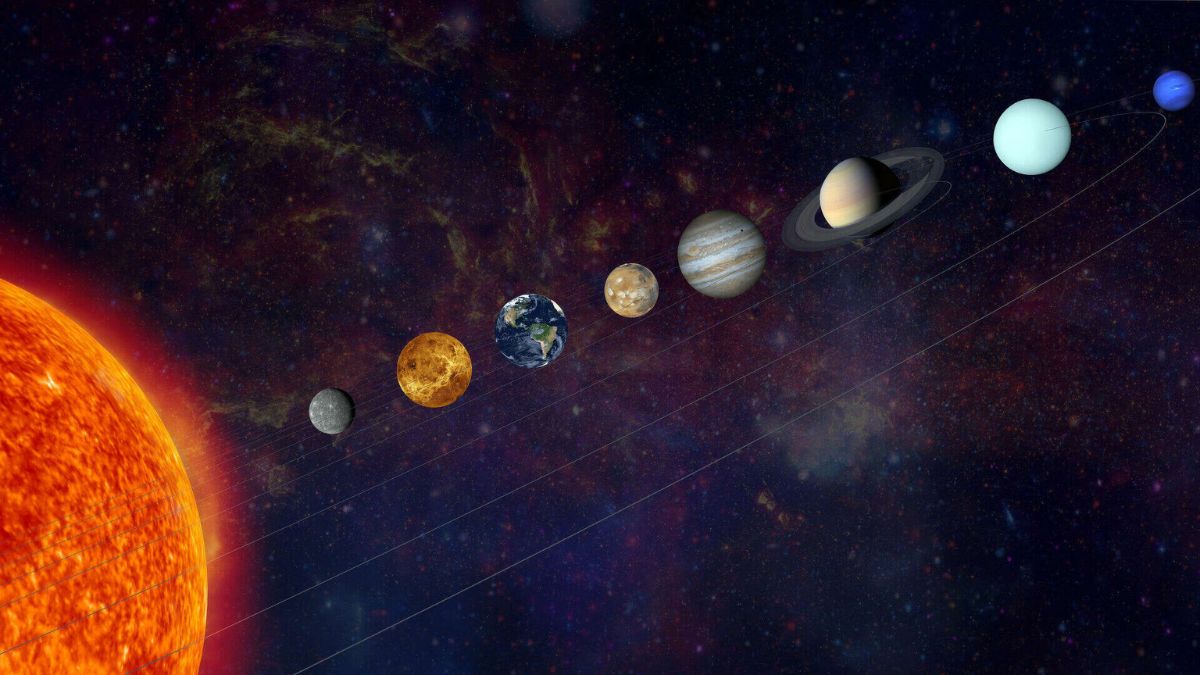
In the early months of 2026, skywatchers around the world will have a rare chance to see six planets lined up in the morning sky. Mercury, Venus, Mars, Jupiter, Saturn, and Uranus will appear together in a loose arc from late January through mid-March, with the best views expected around February 10–15. This event, often called a planetary alignment, draws attention because it combines several bright planets in one section of the sky at the same time. While full alignments of all eight planets are extremely rare, six-planet groupings happen more often but still feel special when they include easy-to-spot worlds like Venus and Jupiter alongside fainter ones like Uranus. The sight offers no scientific revolution, yet it sparks wonder, encourages people to look up, and reminds us how dynamic our cosmic neighborhood is. As telescopes, apps, and social media make astronomy more accessible, events like this one connect everyday observers to the larger patterns of planetary motion. The question is not just how to watch it, but why these moments continue to matter in an age of constant digital distraction.
When and Where Can You See the Six-Planet Alignment?
The alignment becomes noticeable in the pre-dawn sky starting late January 2026. Look east about 45 minutes to an hour before sunrise. Venus will shine as the brightest object, impossible to miss. Jupiter and Saturn will appear higher and to the left, forming a rough line with Mars, which glows reddish-orange. Mercury will stay low near the horizon, visible only in clear conditions with an unobstructed view. Uranus, the faintest of the group, requires binoculars or a small telescope and dark skies away from city lights.
The most compact view occurs around February 10–15, when the planets span roughly 60 degrees of sky—about the width of three outstretched fists held at arm’s length. By late February, Mercury begins to fade into morning twilight, and the formation spreads out. The event is visible from both hemispheres, though northern observers have a slight edge in February because the planets rise higher before dawn. Southern viewers see them well into March.
No special equipment is needed for the bright five planets. A pair of binoculars brings out more detail on Jupiter’s moons and Saturn’s rings. Smartphone apps such as Stellarium, SkySafari, or Star Walk help identify each planet by pointing the phone at the sky. Clear weather and a spot away from streetlights improve the view. Many astronomy clubs and observatories plan public events during this window, offering telescopes and guides for beginners.
Why Does This Alignment Happen and What Makes It Rare?
Planets orbit the Sun at different speeds and distances. Mercury races around in 88 days, while Saturn takes nearly 30 years. From Earth, we see them shift positions against the background stars. An alignment occurs when several planets happen to lie on the same side of the Sun as Earth, appearing close together in our sky. The ecliptic—the plane of Earth’s orbit—acts like a highway; planets stay near this path, so groupings look like a line.
Six-planet alignments are not truly rare; they happen every few years in some form. What makes the 2026 event stand out is the combination of visibility and brightness. Five naked-eye planets (Mercury through Saturn) appear together, and Uranus joins as a telescopic bonus. The spread is wide enough to see without rushing, yet compact enough to feel impressive. Urban light pollution hides fainter objects like Uranus in many places, but the bright inner planets remain clear even from cities.
Historical alignments have drawn attention before. The 2020 conjunction of Jupiter and Saturn, the closest in centuries, went viral as the “Christmas Star.” The 1982 nine-planet alignment was widely hyped, though most planets were too faint or close to the Sun to see well. In 2026, good timing and social media should make this one more visible to casual observers than many past events.
What Does the Alignment Mean for Science and Everyday Astronomy?
Scientifically, planetary alignments have little direct impact. They do not cause earthquakes, weather changes, or astrological effects, despite persistent myths. Gravity from distant planets is far too weak to influence Earth noticeably. The event is mainly a geometric coincidence—a beautiful reminder of orbital mechanics.
For science lovers, though, it offers real value. It encourages people to learn basic sky navigation, understand planetary distances, and appreciate scale in the solar system. Teachers use these moments to introduce astronomy in classrooms. Amateur astronomers share photos and observations online, building community knowledge. Public events during the alignment help observatories and clubs reach new audiences.
The visibility of Uranus alongside brighter planets is a bonus. Many people have never seen this ice giant with their own eyes. Spotting it through binoculars or a small scope gives a sense of discovery. The alignment also highlights ongoing missions: NASA’s Juno at Jupiter, ESA’s Juice heading toward the outer planets, and future probes that will build on what we learn from watching these worlds from afar.
What Could This Moment Mean for the Future of Public Astronomy?
The 2026 alignment arrives at a time when astronomy is more accessible than ever. Affordable telescopes, free apps, and live streams from observatories let anyone join in. Social media turns personal observations into shared experiences, creating global conversations about the sky. If the event draws new people to look up, it could spark lasting interest.
Challenges remain. Light pollution hides faint objects in many cities, and climate factors like cloud cover can block views. Yet the bright planets should still shine through for most. The alignment also reminds us that science communication works best when it combines facts with wonder. Explaining orbits and gravity alongside stories of planetary exploration keeps audiences engaged.
The six-planet alignment of 2026 connects ancient skywatching to modern digital sharing. It offers no cosmic upheaval, only a quiet chance to see our neighbors in space lined up together. For science lovers, it is a moment to pause, look east before dawn, and feel part of something vast. Whether it inspires a new generation of astronomers or simply leaves people with a memory of a beautiful sky, the event shows that wonder still has power in a busy world. As the planets drift apart again, the curiosity they spark may linger far longer.




