

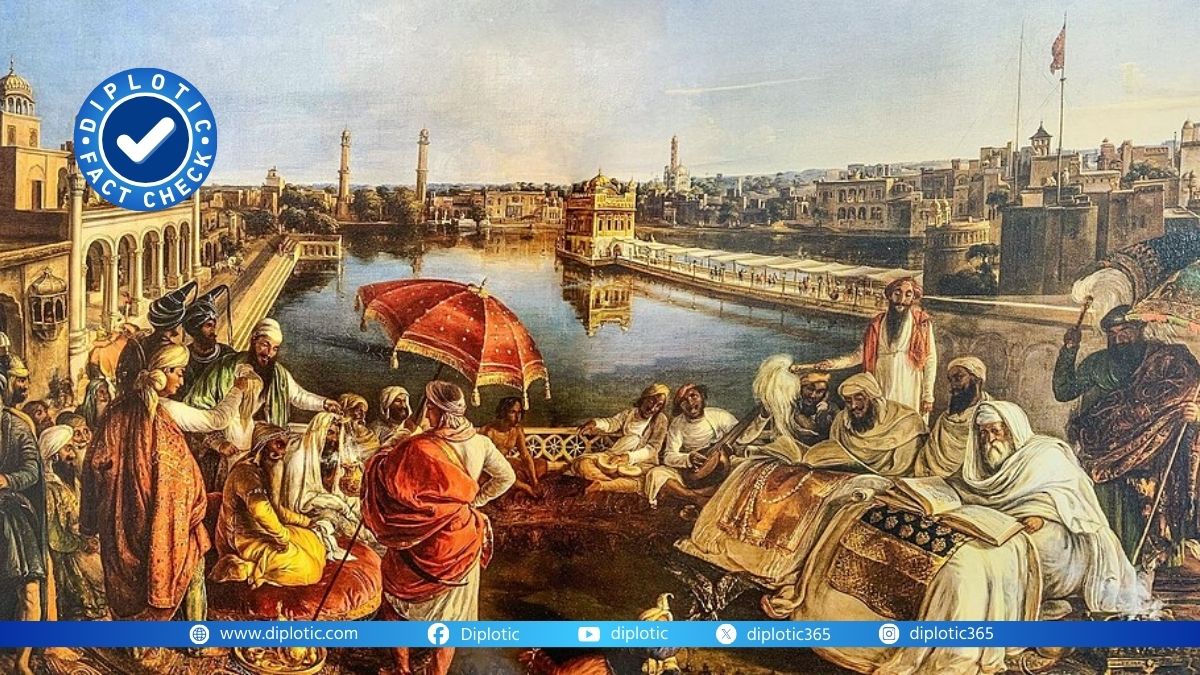
In the fertile plains of Punjab, where the five rivers meet and faiths have long mingled, Sikhism emerged in the late 15th century. Founded by Guru Nanak amid Hindu and Muslim influences, it drew from the Bhakti movement’s devotion while challenging social norms. Over ten Gurus, it grew into a community emphasizing equality, service, and direct connection to one God. Yet today, online posts and debates assert that Sikhs and Hindus shared identical rituals until British colonialism imposed separation. These claims often portray modern Sikh identity as a colonial invention, erasing pre-colonial harmony.
This narrative matters because it touches on identity in a region scarred by partition and ongoing tensions. Blurring boundaries risks overlooking Sikhism’s historical push for reform against caste, idolatry, and ritualism—core issues that fueled its rise. It also ignores how colonialism sharpened distinctions while building on existing ones. Drawing from historical texts, Guru Granth Sahib references, and scholarly analyses, this article probes five circulating claims. It reveals a story not of sudden invention, but of evolution amid shared roots and deliberate divergences.
Claim 1: Guru Nanak and Early Sikhs Followed Hindu Rituals Fully, with No Meaningful Differences Until the Colonial Era
Posts often cite Guru Nanak’s Hindu birth and Bhakti influences, claiming early Sikhs performed puja, wore sacred threads, and observed caste—like Hindus—until British divide-and-rule.
Evidence shows early distinctions. Guru Nanak rejected the janeu (sacred thread) as a child, declaring inner devotion superior. He criticized idol worship, pilgrimages, and Brahmin authority—core Hindu practices. The Guru Granth Sahib acknowledges Vedas but prioritizes personal remembrance of God over rituals like yajna (fire sacrifices) or muhurta (auspicious timing). Early followers formed sangats (congregations) with langar (community kitchens) defying caste. Guru Amar Das (third Guru) introduced distinct ceremonies for birth, marriage, and death, separating them from Hindu ones.
Scholars note Sikhism arose within a Hindu milieu but as reform, not replication. Pre-colonial syncretism existed—some Sikhs observed mixed practices—but Gurus consistently opposed key rituals.
Verdict: False. Distinctions began with Guru Nanak; rituals were never fully identical.
Claim 2: Pre-Colonial Sikh Life-Cycle Rituals (Birth, Marriage, Death) Were the Same as Hindu Ones
Claims assert Brahmins officiated Sikh ceremonies, with identical rites like havan or pind daan, until colonial reforms invented separation.
Historical accounts reveal differences. Guru Nanak opposed elaborate death rites, favoring remembrance over offerings to Brahmins. Guru Amar Das created Sikh-specific rituals, emphasizing equality without priestly intermediaries. Anand Karaj (Sikh marriage) circled the Guru Granth Sahib, distinct from Hindu Vedic fire circuits. Pre-colonial texts like rehitnamas (conduct codes) prohibit Hindu customs like sacred threads or animal sacrifices.
In Ranjit Singh’s era (early 19th century), some blending occurred due to court Hindus, but core Khalsa rejected idolatry and caste. Syncretism grew among non-Khalsa Sikhs, but not identity.
Verdict: Misleading. Overlaps existed in practice, especially among sahajdharis, but core rituals diverged from the Guru period.
Claim 3: Sikhs Saw Themselves as Part of Hinduism Until British Censuses and Laws Forced Separation
Viral narratives blame colonial censuses for categorizing Sikhs separately, inventing distinction where none existed.
Pre-colonial sources show separate awareness. Guru Gobind Singh’s Khalsa (1699) mandated the Five Ks and Singh/Kaur names, rejecting caste and Hindu markers. Rehitnamas forbade Hindu rituals. Sikhs under Banda Bahadur or Ranjit Singh maintained distinct identity, with separate granthis and gurdwaras.
Colonialism sharpened boundaries via censuses and the 1909 Anand Marriage Act, validating non-Hindu rites. The Singh Sabha movement (1870s onward) responded to Arya Samaj’s absorption attempts and Christian missions, purifying practices—but built on Guru foundations, not invention.
Verdict: Misleading. Self-perception as distinct predated colonialism; British policies amplified existing boundaries.
Claim 4: The Singh Sabha Movement Invented Sikh Separation Under British Influence to Divide Indians
Some argue Tat Khalsa (reformist Sabha faction) created “exclusive” identity for colonial favor, like recruiting Sikhs as “martial race.”
The movement reformed amid threats: Christian conversions, Arya Samaj claims of Sikhism as Hindu sect, and Udasi control of gurdwaras blending Hindu elements. It revived Guru teachings—rejecting idolatry, enforcing Khalsa codes—countering dilution post-Ranjit Singh.
British favored Sikhs militarily but also supported Hindu managers in shrines initially. Sabha’s push led to the 1925 Gurdwaras Act, transferring control to Sikhs. Reforms aligned with Guru Granth Sahib, not colonial creation.
Verdict: Misleading. Sabha purified and standardized, responding to real erosion; not a British invention.
Claim 5: Colonialism Erased a Shared Sikh-Hindu Syncretic Tradition That Was the Norm Pre-1850
Claims romanticize pre-colonial Punjab as fluid, with no firm boundaries—Sikhs and Hindus interchangeable until divide-and-rule.
Syncretism existed: shared festivals, intermarriages, some Sikhs visiting Hindu sites. But boundaries too—Khalsa’s visible markers, separate scriptures, langar defying caste. Janamsakhis and Dasam Granth show awareness of difference.
Post-1849 annexation, influx of Hindu converts and Udasi influence blurred lines temporarily. Sabha reversed this, but on pre-existing distinctions.
Verdict: Uncertain. Syncretism was common in practice, especially non-Khalsa; but textual and Guru-era evidence shows intentional distinction.
These claims highlight real pre-colonial fluidity—Punjab’s faiths overlapped in daily life, with shared culture and occasional blending. Yet they overstate uniformity, ignoring Guru-era rejections of Hindu rituals as empty. Sikhism reformed from within a Hindu context, carving distinct paths against caste and ritualism.
Colonialism influenced sharpening—through censuses, laws, and responses to missions—but did not invent separation. The Singh Sabha built on Guru foundations amid modern threats. Implications run deep: overstating colonial invention risks undermining Sikhism’s agency as reform movement. It also echoes philosophical tensions—unity versus particularity in diverse societies. True history honors shared roots without erasing deliberate branches. In Punjab’s story, distinction and connection coexist, like rivers merging yet retaining names.




