

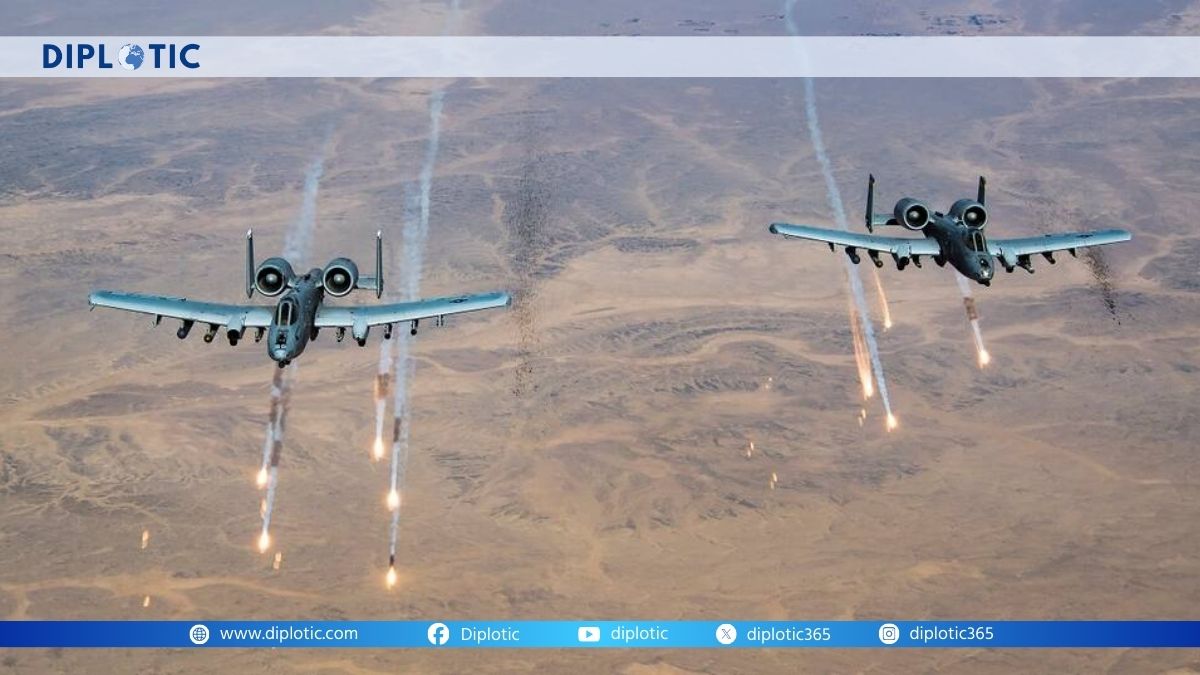
At the end of December 2025, a Saudi-led airstrike on Yemen’s southern port of Mukalla exposed a deep and dangerous split inside the Arab coalition that has intervened in Yemen for nearly a decade. The strike targeted what Saudi Arabia described as weapons shipments intended for UAE-backed southern forces, carried into the port without coordination with Riyadh or Yemen’s internationally recognised government. What might once have been handled quietly between allies instead unfolded in public, sending shockwaves through Yemen’s fragile political system.
This moment matters because it did not occur on the margins of the war. Mukalla lies in Hadramout, a strategic governorate rich in oil and gas and vital to border security with Saudi Arabia. The strike revealed that Saudi Arabia and the United Arab Emirates, long presented as partners with a shared goal in Yemen, now have openly competing agendas. For Yemen’s recognised government, already weak and divided, this fallout could be a turning point that reshapes the country’s future in troubling ways.
Why the Mukalla Strike Changed the Nature of the Saudi-UAE Relationship
Saudi Arabia justified the strike by saying that two ships had entered Mukalla port carrying more than 80 vehicles and containers of weapons destined for the Southern Transitional Council (STC), a UAE-backed separatist force. According to Riyadh, this happened without its knowledge or the approval of Yemen’s recognised government. The message was clear: Saudi Arabia viewed the shipment not only as a breach of coordination, but as a direct threat.
This incident brought years of quiet tension into the open. Since the beginning of the Yemen war in 2015, Saudi Arabia and the UAE have officially been allies within the same coalition. Both opposed the Houthi takeover of the capital, Sanaa, and both claimed to support Yemen’s legitimate government. Over time, however, their priorities diverged.
The UAE began backing the STC, which was formed in 2017 and openly seeks an independent southern Yemen. Saudi Arabia, by contrast, has continued to emphasize Yemen’s territorial unity, largely because fragmentation threatens its own border security and regional influence. The STC’s recent expansion across southern governorates, including Hadramout and al-Mahra, crossed a line for Riyadh.
Hadramout is not just another province. It provides economic depth through oil and gas resources and hosts key infrastructure. It also borders Saudi Arabia, making control over the area critical for trade and security. When STC forces moved deeper into Hadramout, Saudi Arabia interpreted it as an unacceptable shift in the balance of power.
The Mukalla strike therefore signaled more than a disagreement. It marked Saudi Arabia’s willingness to use force against assets linked to its coalition partner. Once that threshold was crossed, the idea of a united Arab coalition in Yemen became much harder to sustain.
How Yemen’s Recognised Government Became a Battlefield for Rival Allies
The immediate political impact of the Saudi-UAE fallout has been felt inside Yemen’s internationally recognised government itself. The Presidential Leadership Council (PLC), an eight-member body meant to unify anti-Houthi forces, is now openly divided along Saudi and Emirati lines.
This division did not appear overnight. It had been building quietly for years, as different Yemeni factions aligned themselves with external patrons. The recent escalation, however, forced these loyalties into the open. Members of the PLC issued conflicting statements after Saudi-backed PLC president Rashad al-Alimi called on the UAE to withdraw from Yemen following the Mukalla strike.
One group within the PLC supported al-Alimi’s call, effectively siding with Saudi Arabia. This camp includes figures closely linked to Riyadh’s vision of a unified Yemeni state. The opposing group rejected the call and defended the UAE’s role, reflecting the influence of the STC and other UAE-backed forces.
This public split revealed a painful reality. Yemen’s recognised government no longer acts as a single political authority. Instead, it functions as a collection of factions, each tied to different regional powers. Decisions are not made based on national consensus, but on external alliances.
As a result, the government has lost control of events on the ground. Military and political developments now move faster than any unified response from Sana’a’s rivals in the south. The state has become a venue for proxy competition, rather than a center of decision-making.
This fragmentation weakens the government’s legitimacy in the eyes of Yemenis. When leaders appear to represent foreign interests more than national ones, public trust erodes further. For a country already suffering from war, hunger, and institutional collapse, this erosion is dangerous.
How the Rift Risks Triggering a New Internal Conflict
The Saudi-UAE dispute does not only affect diplomacy. It carries serious military implications. With coalition unity breaking down, Yemen risks sliding into a new phase of internal conflict, this time within the camp that claims to represent legitimacy.
Political circles in Yemen now speak openly about the possibility of clashes between armed factions aligned with different coalition members. Many of these groups are heavily armed and control territory. Without a clear chain of command or shared objective, confrontations become more likely.
This shift in focus is particularly dangerous because it diverts attention away from the original enemy of the coalition: the Houthi movement. The Houthis continue to control Sanaa and much of northern Yemen, including the most densely populated areas. As rival anti-Houthi factions turn on each other, the Houthis stand to benefit.
History shows that when opponents fragment, the strongest and most organized force often expands its influence. The Houthis could use the current confusion to consolidate power, push into new areas, or strengthen their negotiating position. Every dispute among their rivals makes their position stronger.
Economically, the impact could be severe. Hadramout’s resources are critical to any future recovery. Instability in the province threatens oil and gas production, port activity, and trade routes. Investors and aid providers are unlikely to engage in a landscape where even coalition partners are in conflict.
Militarily, the weakening of the Saudi-led coalition raises questions about its ability to achieve any of its stated goals. After more than ten years of war, the coalition has not restored the recognised government to Sanaa. Now, internal divisions make that outcome even less likely.
What This Fallout Means for Yemen’s Long and Fragile Future
The Saudi-UAE fallout has exposed the limits of Yemen’s current political framework. The recognised government, instead of serving as a unifying authority, is increasingly a reflection of regional rivalries. This reality complicates any path toward peace or stability.
For Saudi Arabia, the situation poses a strategic dilemma. Riyadh wants security on its southern border and a stable Yemen that does not threaten its interests. Continued partnership with the UAE, however, now appears uncertain. For the UAE, supporting southern allies aligns with its long-term vision, even if it deepens Yemen’s fragmentation.
Caught in between is Yemen itself. After years of war, the country faces the risk of further division, not only between north and south, but within the south and among those who claim legitimacy. The people of Yemen, already exhausted by conflict, pay the price for these power struggles.
The Mukalla strike may be remembered as a moment when the illusion of coalition unity finally collapsed. What follows could shape Yemen’s trajectory for years to come. If the rift deepens, Yemen’s recognised government may weaken beyond repair, leaving the country more divided, more unstable, and further from peace.
The past decade of war has shown that external alliances alone cannot rebuild a state. Without a shared national vision and genuine unity, Yemen risks entering yet another cycle of conflict, even as the original war remains unresolved.




