
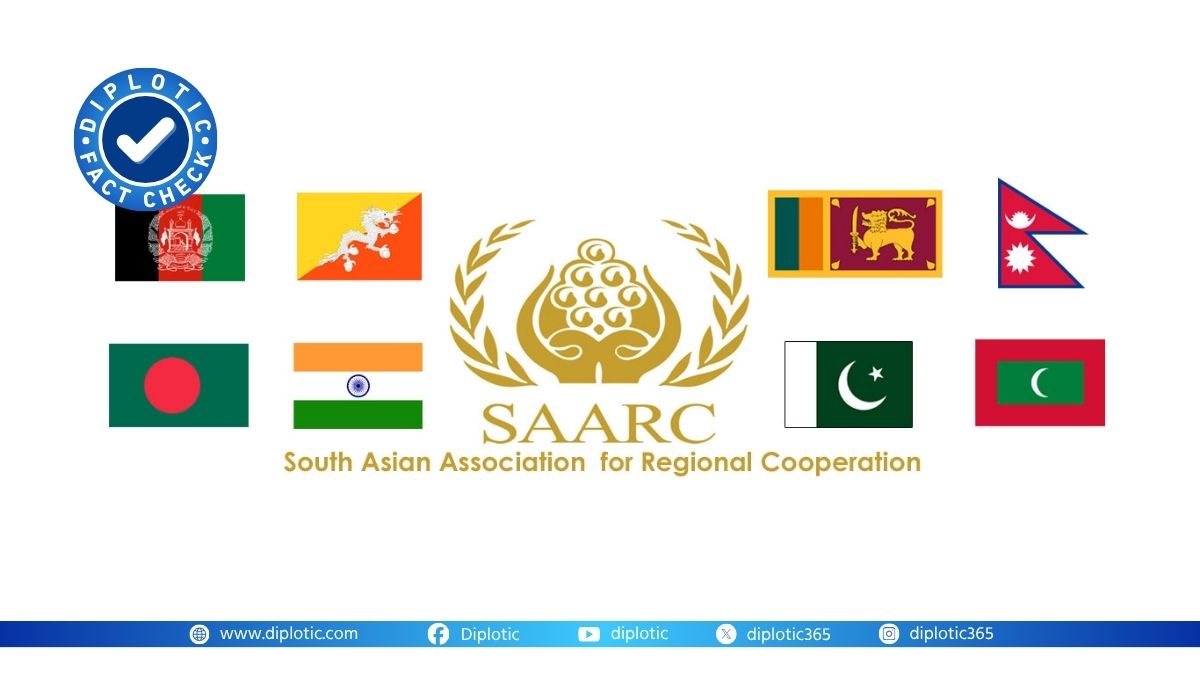
Envision a family reunion gone sour: Eight siblings—giants and minnows—gather for biryani and banter, but two big brothers (India and Pakistan) keep knocking over the table, spilling grievances from Partition-era plates. The aunts (Bangladesh, Nepal) plead for peace; the uncles (Bhutan, Maldives) fidget quietly. By 2025, the meal’s cold, the room’s dusty, and everyone’s eyeing the door—yet the invitation lingers, unsigned. That’s SAARC: South Asia’s dream of unity, born in 1985 Dhaka amid hopes of shared rivers and roads, now a punchline for diplomats whispering “dead on arrival.”
Why does this ghost haunt? South Asia packs 1.9 billion souls—quarter of humanity—into a powder keg of poverty, floods, and feuds. SAARC was meant to bridge it: trade pacts, disaster drills, cultural swaps. Instead, intra-regional trade idles at 5-7% (World Bank, 2025), vs. ASEAN’s 25%. Stalled summits since 2014 mean missed monsoons of progress—think untapped hydropower from Nepal’s glaciers or Bangladesh’s ports linking to Sri Lanka’s tea fields. As China builds “alternative” clubs and BIMSTEC steals the spotlight, the stakes sharpen: Without SAARC, South Asia risks fracturing into India’s “Neighborhood First” solo acts, leaving smaller kin in the lurch. This probe unearths five claims, blending charter lore with 2025 cables, colonial scars, and the ethics of letting rivalry rot the rice bowl. No ivory-tower talk—just the grit of why unity’s worth the fight.
Claim 1: No Summits Since 2014 Means SAARC’s Core Engine Is Seized
Flash to 2014 Kathmandu: Leaders toast SAARC’s silver jubilee, ink motor vehicle dreams. Cut to 2016 Islamabad: Uri attack torches it—India boycotts, citing Pakistan’s “terror hand”; Bangladesh, Bhutan, Afghanistan follow. Claim: Summit freeze = total paralysis, bloc’s heartbeat flatlined.
Cross-check: Last full leaders’ huddle? Indeed 2014. 2016 cancellation? Uri’s fallout, per Indian Express archives—Pakistan’s “unanimity” veto couldn’t save it. 2025 twist: Nepal’s informal foreign ministers’ meets limp on (Britannica, Sep 2025), but no heads-of-state bash. Secretariat in Kathmandu buzzes with tech committees—agriculture swaps, weather warnings—but sans summits, they’re side gigs, not spotlights.
History unpacks: SAARC’s charter (Dhaka, 1985) mandates biennial summits for “review and acceleration,” but Article X’s “unanimity” clause is kryptonite—any feud freezes all. Echoes 1990s delays: 11 summits skipped over Indo-Pak spats (ResearchGate, 2016). Theoretically, it’s “veto paralysis,” like UN Security Council’s big-power blocks, but in family scale: Big brothers bicker, little sisters starve for shared stories. Contradiction: 2025’s Pahalgam attack (26 dead) sparked fresh Indo-Pak flares—India suspends SAARC visas for Pakistanis—yet Bangladesh pushes revival post its political shift (Dawn, May 2025).
Deeper cut: Ethical trade-off—skip summits to punish terror, or convene to cool tempers? Implication: No table means no talks; 2025’s silence during India-Pak “standoff” (Modern Diplomacy, Jul) let China host trilateral chats with Bangladesh-Pakistan, siphoning SAARC’s soul.
Verdict: True. Summits are the charter’s pulse; their absence starves the body, though limbs twitch.
Claim 2: Indo-Pak Tensions Are the Sole Villain Torpedoing SAARC
Tea-shop talk: “Blame the border boys—India-Pakistan hate kills every SAARC baby.” Kashmir, Uri, Pahalgam: Each flare-up buries a summit.
Verify: Spot-on for triggers—2016 Uri boycott (Wikipedia); 2025 Pahalgam (26 tourists killed) halts SAARC visa scheme, per MEA (Apr 2025). Indo-Pak rift: Rooted in 1947 Partition’s bloody map, nuclear shadows since 1998. SAARC’s birth? Bangladesh’s Ziaur Rahman dodged Indo-Pak vetoes with “non-interference” charter clause. 2025 update: Post-Pahalgam “Operation Sindoor” strikes (Wiki, May) deepen distrust; India’s “terror and talks can’t coexist” mantra echoes Modi-era (Diplomat, Mar 2025).
But sole? Nah—Afghanistan’s Taliban snag: 2021 foreign ministers’ meet axed over Kabul rep (Indian Express, Sep 2021); 2025’s junta chaos adds Taliban-Taliban irony. Broader: Economic lopsides—India’s $3.6T GDP dwarfs Maldives’ $6B (Gkdrift, Aug 2025)—breeds “big brother” fears, per ex-Sri Lankan FM (Diplomat, 2019). Geopolitics: China’s BRI lures Pakistan, Nepal; India’s BIMSTEC bypasses both (ORF, 2023).
Philosophy nudge: Realism’s curse—states prioritize survival over synergy, echoing Thucydides’ “strong do what they can, weak suffer.” Hypocrisy: Pakistan pushes SAARC revival for “stability” (Centreline, May 2025) while inking CPEC; India preaches “Neighborhood First” but skips family feuds. Trade-off: Blame duo dodges smaller states’ homework—like Nepal’s water-sharing woes with India.
Street echo: Dhaka cabbies gripe, “Indo-Pak fight, we pay the fare.” Wider: 2025’s China-Kunming trilateral (Pakistan-Bangladesh) mocks SAARC’s void.
Verdict: Misleading. Indo-Pak is the headline villain, but enablers like asymmetry and outsiders amplify the crime.
Claim 3: SAFTA’s Stagnation Proves Economic Cooperation Is a Pipe Dream
SAARC’s crown jewel: 2004 SAFTA pact—tariffs to zero by 2016, eyeing customs union. Claim: Intra-trade at 5% (vs. ASEAN’s 25%) screams failure; bloc’s economic heart quit beating.
Facts: SAFTA kicked off 2006—duties slashed to 0-5% for most goods (ADB, 2025). Progress? Exports hit $354B (2012), imports $602B—but intra? Stuck at 5-7% (Drishti IAS, 2025). 2025: Ratified by all, yet non-tariff walls (visas, standards) block trucks; India-Pakistan trade? $3.8B, choked by barriers (Word360, Aug 2025).
Context: Charter’s economic thrust—Article II(b): “Accelerate growth, social progress.” But vetoes veto vibes: Pakistan’s MFN denial till 2015; India’s sensitive lists shield farms (IJRTI, Apr 2025). History: SAPTA (1993) was baby steps; SAFTA bolder, but 2025’s Pahalgam fallout suspends cross-border posts (Wiki). Theory: “Asymmetry trap”—India’s dominance (80% trade share) spooks smaller kin, per EU EEAS (Aug 2025).
Contradiction: SAARC Ag Centre swaps rice strains; South Asian Satellite beams weather—tech hums, trade hiccups. Ethical sting: Poor pay—Bangladesh’s RMG exports to Pakistan? Keen but visa-blocked (Daily Star, Apr 2025). Implication: Stalled SAFTA starves jobs; 40% youth unemployed (ILO, 2025) could’ve been wired via regional wires.
Verdict: Partially True. SAFTA inches forward on paper, but real-world ruts render it rickety—not dead, just dragging.
Claim 4: BIMSTEC Has Fully Replaced SAARC as South Asia’s Cooperation Hub
Modi’s 2019 oath? BIMSTEC invite, no SAARC nod. Claim: Bay of Bengal club (7 nations, sans Pakistan-Afghanistan) is SAARC 2.0—summits galore, pacts popping.
Check: BIMSTEC’s glow-up: 6th Summit (Bangkok, Apr 2025) inks Bangkok Vision 2030—maritime security, connectivity (South Asian Voices, May 2025). India’s push: Act East bridge to ASEAN; excludes Pak for “pragmatism” (Drishti IAS, 2025). 2025: Energy Centre in Bengaluru; business forums buzz (TBS, Mar 2025).
Vs. SAARC? Complementary, not clone—BIMSTEC skips Pak vetoes, adds Thai-Myanmar spice. But limits: FTA stalled since 2004 (Asia Live, Mar 2025); smaller states fear “India’s extension” (Kathmandu Post, Jan 2025). Charter clash: SAARC’s all-in South Asia; BIMSTEC’s Bay-focused, leaving Maldives-Afghanistan out (ORF, 2023).
Geopolitics: India’s pivot post-2016 Uri—BIMSTEC as “SAARC without Pak” (Byjus, 2022). Trade-off: Faster pacts, but fragmented family—Nepal-Bhutan dual-dip, but no full-table fix. Hypocrisy: India eyes BIMSTEC for “equity,” yet dominates both (TBS, Mar 2025).
Deeper: EU backs BIMSTEC bilaterals (EEAS, 2025), but SAARC’s UN observer slot lingers. Implication: Replacement risks “splintered South Asia”—China fills gaps via Kunming chats.
Verdict: Misleading. BIMSTEC bridges gaps, but can’t clone SAARC’s scope—sidecar, not successor.
Claim 5: 2025 Revivals and Informal Meets Show SAARC’s Flickering Back to Life
Post-Bangladesh shift (Aug 2024), Yunus pushes summits; Nepal hosts ministers’ chats; Secretariat’s Golam Sarwar jets to Doha (Nov 2025) for social dev. Claim: Dormant? Nah—embers glow.
Evidence: 40th Charter Day (Dec 2024) fetes progress; informal FM meets (Nepal, 2025) tick boxes (Britannica). Bangladesh-Nepal duo: “Strengthen SAARC and BIMSTEC” (Diplomat, Mar 2025). Pakistan: “Diplomatic strength” for revival (Dawn, May). India’s Jaishankar: “Paused, not off table” (Asia Live, Mar 2025).
But flicker or fire? Charter demands summits; these are sparks. 2025’s India-Pak “war” sim (ResearchGate, May) and Pahalgam (CGS) douse hopes. Social: UNICEF tie-ups (SAARC Sec, Nov 2025); Ag Centre aids food security (Gkdrift, Aug). Theory: “Track-two diplomacy”—back channels build trust sans spotlights.
Contradiction: Revival calls amid China’s “new bloc” (Modern Diplomacy, Jul 2025). Ethical: Smaller states (Maldives’ $8.8B blockchain hub eyes SAARC ties) beg inclusion. Implication: Flickers fuel hope, but without Indo-Pak thaw, it’s candle in cyclone.
Verdict: Uncertain. Informal wins warm the room, but summits’ absence chills the feast—revival teases, doesn’t triumph.
The Fractured Feast: SAARC’s Last Supper or Late Bloom?
Unravel the mat: SAARC’s no corpse—charter alive, secretariat scripting, SAFTA sputtering. But it’s comatose: Indo-Pak feuds (Pahalgam’s fresh scar) veto vitality; BIMSTEC’s the busy cousin, not the heir. Fearless truth: Hypocrisies heap—India’s “Neighborhood First” skips the neighborhood bully; Pakistan preaches unity while pocketing CPEC. Strategic blunder: Veto clause, meant to shield, shackles—echoing Partition’s maps that married rivals in misery.
For Dhaka dreamers or Kathmandu clerks, the bill’s brutal: 5% trade means missed markets; stalled pacts mean shared floods unshared. Ethics prod: Unity’s not optional—colonial ghosts (British borders birthed beefs) demand we bury hatchets, not hopes. Wider wake: China’s Kunming club courts Bangladesh-Nepal; without SAARC, South Asia’s supper scatters.
2025’s fork: Bangladesh’s nudge, Nepal’s chats—will they thaw the freeze? Or let BIMSTEC banquet alone? SAARC teaches: Families feud, but skip reunions, and the biryani’s for strangers. Time to set the table—or watch China cater.