

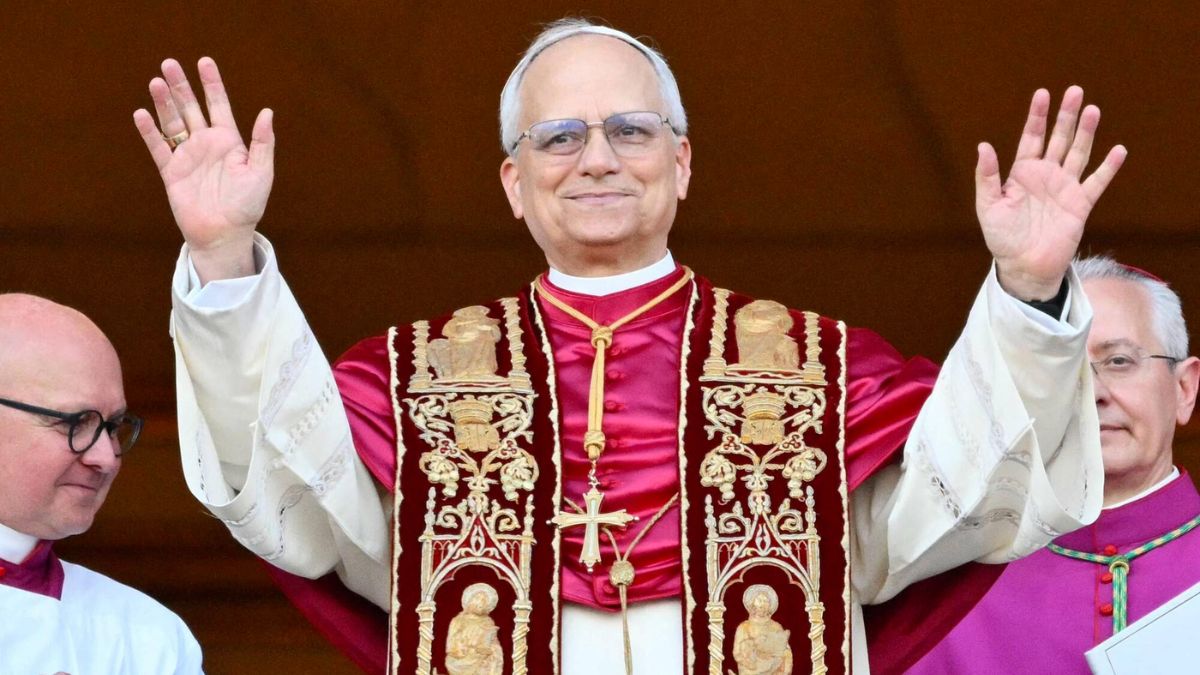
VATICAN CITY, May 8, 2025 — In a groundbreaking moment for the Catholic Church, Cardinal Robert Francis Prevost, a moderate reformer from the United States, has been elected the new pope following the death of Pope Francis. Taking the name Pope Leo XIV, he becomes the first American-born pontiff in history, a development that has stunned the global religious and political landscape.
White Smoke Signals New Papacy
The world watched in awe as thick white smoke rose from the chimney of the Sistine Chapel, confirming that the conclave of 133 cardinals had selected the Church’s new leader. Bells from St Peter’s Basilica rang out shortly after, stirring applause from thousands gathered in St Peter’s Square, eagerly awaiting the announcement.
After four ballots over two days, the cardinals reached the required two-thirds majority, a swift decision in a conclave marked by both urgency and unity.
Who Is Pope Leo XIV?
Born in Chicago, Illinois, and fluent in Spanish, Robert Prevost brings a global pastoral experience to the papacy. He previously served as bishop of Chiclayo in northern Peru and held prominent roles in the Vatican, including a seat in the Dicastery for Bishops, responsible for appointing bishops worldwide.
Elevated to cardinal by Pope Francis in 2023, he is viewed as a moderate reformer with deep spiritual roots and international credibility. His selection challenges the long-standing Vatican hesitation toward an American pope due to U.S. geopolitical power and secular influence.
“Despite all expectations, Cardinal Prevost’s blend of pastoral warmth, reform-minded moderation, and international experience made him the surprise unifier the Church needs,” said one Vatican insider.
First Message: A Call for Unity and Courage
In his first address from the balcony of St Peter’s Basilica, Pope Leo XIV offered a moving message of peace, unity, and hope:
“May this message of peace enter your hearts, reach your families, and extend to all people, everywhere.”
Paying tribute to Pope Francis, he encouraged the faithful to “move forward, without fear, united, hand in hand with God and with one another.” He ended with a powerful benediction:
“Peace be with all of you.”
Why This Papal Election Matters
The rapid selection of Pope Leo XIV came just weeks after the passing of Pope Francis, who died in April at the age of 88. Francis’s papacy, marked by progressive teachings, environmental advocacy, and LGBTQ+ inclusion, drew both praise and criticism—particularly from conservative factions within the Church.
Prevost’s election may signal a desire to balance continuity with healing, especially in regions like the United States, where divisions among bishops are increasingly politicized. Some align with Donald Trump, while others reject his platform, reflecting deep rifts in U.S. Catholic leadership.
Challenges Facing Pope Leo XIV
As pontiff, Pope Leo XIV inherits a Church at a crossroads, facing internal fragmentation and global turmoil. His top priorities are expected to include:
- Healing polarization between liberal and conservative factions within the Church
- Addressing the clerical sexual abuse crisis with transparency and urgency
- Promoting social justice, particularly for migrants, refugees, and the poor
- Leading bold dialogue on climate change, human rights, and religious freedom
- Navigating international conflicts in Ukraine, the Middle East, and Sudan
The cardinals had emphasized before the conclave the need for a pope capable of being “a bridge and a guide for a disoriented humanity”—a vision Pope Leo XIV appears ready to embrace.
American Catholicism in the Spotlight
The election of an American pope brings renewed attention to the deeply divided U.S. Catholic Church. An early pastoral visit to the U.S. is widely expected, as Leo XIV works to rebuild trust, promote unity, and reaffirm spiritual leadership amid political and cultural strife.
A Pope for a Divided World
Pope Leo XIV ascends the papacy with a message of courage, compassion, and connection. In a time when religion is often a battleground, his election offers a glimmer of unity—a reminder of the Church’s role not only as a moral compass, but as a beacon of global peace.
As he stood before the faithful for the first time, his humble demeanor and heartfelt words set the tone for what may be a transformational chapter in the history of the Catholic Church.




