

A War Reframed in Washington’s Language
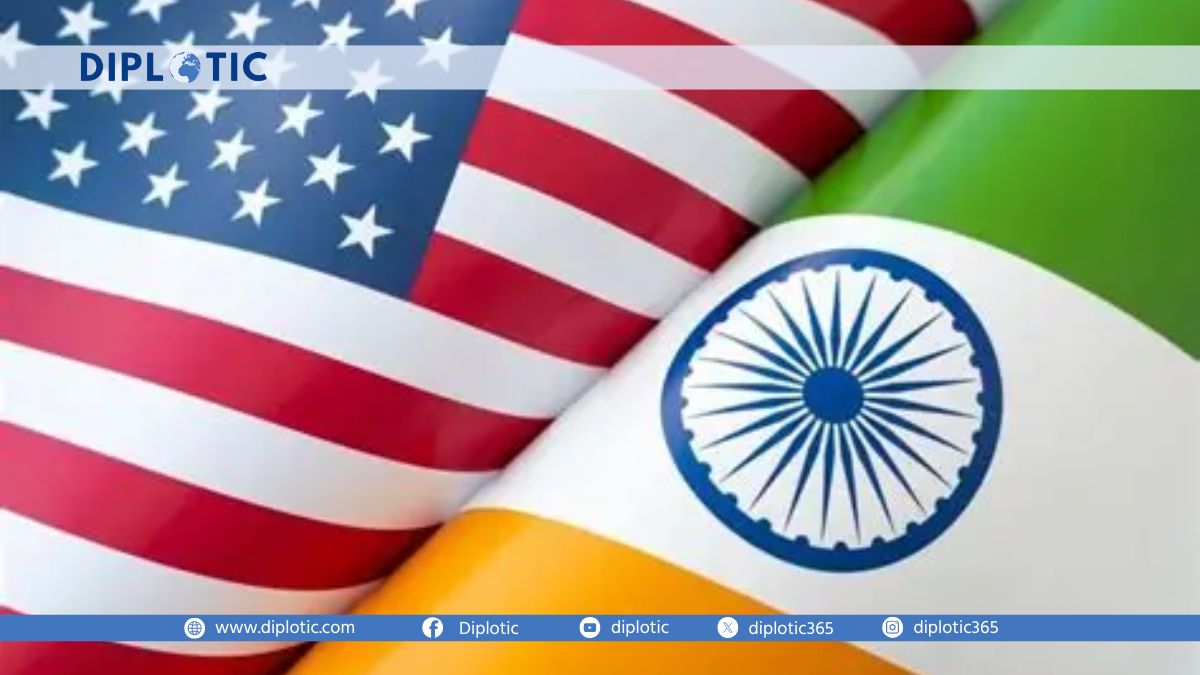
When White House Trade Adviser Peter Navarro stood before cameras and declared Russia’s invasion of Ukraine “Modi’s war,” it was more than a slip of the tongue. It was a deliberate reframing of blame, redirecting attention from Moscow to New Delhi. By insisting that “the road to peace runs, in part, through New Delhi,” Navarro sharpened the United States’ strategy: pressure India until it abandons Russian oil. But beneath the blunt accusation lies a far deeper geopolitical game, one where trade, alliances, and energy security collide.
India’s dependence on Russian crude has grown dramatically since 2022. Before the Ukraine war, Russia supplied barely 2% of India’s oil. Today, it accounts for nearly 40%. This shift was not accidental. Sanctions pushed Moscow to offer discounted barrels, and India—an energy-hungry nation of 1.4 billion people—took the deal. For Delhi, this was an act of economic pragmatism, not defiance. Yet Washington sees the flow of Indian money into Russian coffers as indirect financing of war.
The new 50% tariffs on Indian goods are Washington’s weapon of choice. They are among the harshest duties imposed on a major trading partner in recent decades. Everything from garments to gems and seafood now faces a steep price wall at the American border. Officially, the tariffs punish India’s purchases of oil and arms from Russia. Unofficially, they reveal America’s frustration: India is too big to sanction outright, yet too independent to be left alone.
Here lies the paradox. The US has not applied the same economic punishment to China, the world’s largest buyer of Russian oil, nor to the European Union, which continues robust trade with Moscow. India alone has been branded complicit. Navarro’s remark exposed this selective pressure, and it raises the question of whether the world’s largest democracy is being scapegoated for Washington’s own strategic frustrations.
The Long Shadow of History in US–India Relations
To understand today’s clash, one must recall the long and uneasy arc of India–US relations. During the Cold War, India leaned on the Soviet Union for defense and industrial support. Washington, meanwhile, saw Delhi as unreliable and often tilted toward Pakistan. Even after the Soviet collapse, traces of that mistrust lingered. India’s nuclear tests in 1998 drew American sanctions, only later lifted when strategic cooperation became more valuable than punishment.
The last two decades seemed to herald a new era. Shared concerns about China’s rise pushed India and the US closer, both militarily and economically. Trade ballooned, and the two countries positioned themselves as pillars of stability in the Indo-Pacific. Washington hailed India as the “world’s largest democracy,” an indispensable partner in its rivalry with Beijing. Yet beneath the warm words lay structural differences. India prized its strategic autonomy, refusing to be bound to American positions on global conflicts. The US, however, expected alignment from allies.
This divergence sharpened with the Ukraine war. While the West imposed sanctions, India continued to buy Russian energy. Delhi argued that Western countries had long bought Russian gas even during conflicts, and that its own choices were no different. The argument carried weight, but Washington’s patience wore thin. Navarro’s “Modi’s war” phrase crystallized the long-brewing tension: America’s expectation of loyalty colliding with India’s insistence on independence.
It is not the first time trade has been used as leverage. In past disputes, from steel tariffs to pharmaceutical battles, Washington wielded economic tools to shape Delhi’s behavior. What is new today is the sheer scale of the penalties and the framing of India as a moral offender, not just a difficult trading partner. The result is a relationship now shadowed by mistrust, where trade and geopolitics cannot be separated.
The Economic Gamble and the Risks Ahead
The tariffs hit at a vulnerable time. India’s economy, though resilient, depends heavily on exports to sustain jobs across industries from textiles to technology. By choking access to American markets, Washington has struck at livelihoods that stretch from factory towns in Gujarat to fishing hubs in Kerala. The government insists the immediate effect is limited, but ripple effects are inevitable. Investors weigh uncertainty, supply chains shift, and small exporters face a cliff.
Prime Minister Modi’s response has been swift, promising tax cuts and exploring new trade avenues. Yet the scale of the shock is difficult to offset. India’s vast consumer base gives it some insulation, but global markets still shape its trajectory. Moreover, trade disputes often carry political symbolism. By branding India’s purchases of Russian oil as funding war, Washington has turned an economic disagreement into a moral indictment. That makes compromise more difficult.
Still, not all voices in the US speak with Navarro’s sharpness. Treasury Secretary Scott Bessent, in contrast, offered reassurance, saying he believed “at the end of the day we will come together.” His words reflect a pragmatic reality: America cannot afford to lose India as a partner, particularly in the Indo-Pacific where China’s power looms large. This tension between hardline trade penalties and strategic necessity defines the current moment.
Looking forward, the choices are stark. If tariffs remain, India may deepen its pivot toward alternative markets, from Southeast Asia to Africa, while doubling down on discounted Russian energy. This could weaken the very leverage Washington seeks to build. If negotiations resume, however, both sides may find a face-saving compromise, with India reducing some defense purchases from Russia while continuing to buy oil.
The crisis thus poses a larger question: can a partnership framed as a bulwark of democracy survive when one side demands obedience and the other demands autonomy? In this way, Navarro’s phrase “Modi’s war” is less about Ukraine and more about the future of the global order, where middle powers like India refuse to fit neatly into Washington’s expectations. Whether this standoff ends in adjustment or estrangement will define not just trade flows, but the balance of power in Asia.
For readers seeking historical context, India’s long-standing policy of non-alignment, described in the Britannica overview of its foreign policy, helps explain its current choices. At the same time, the detailed history of the Cold War reveals why energy, alliances, and trade remain so deeply intertwined in today’s crises.




