

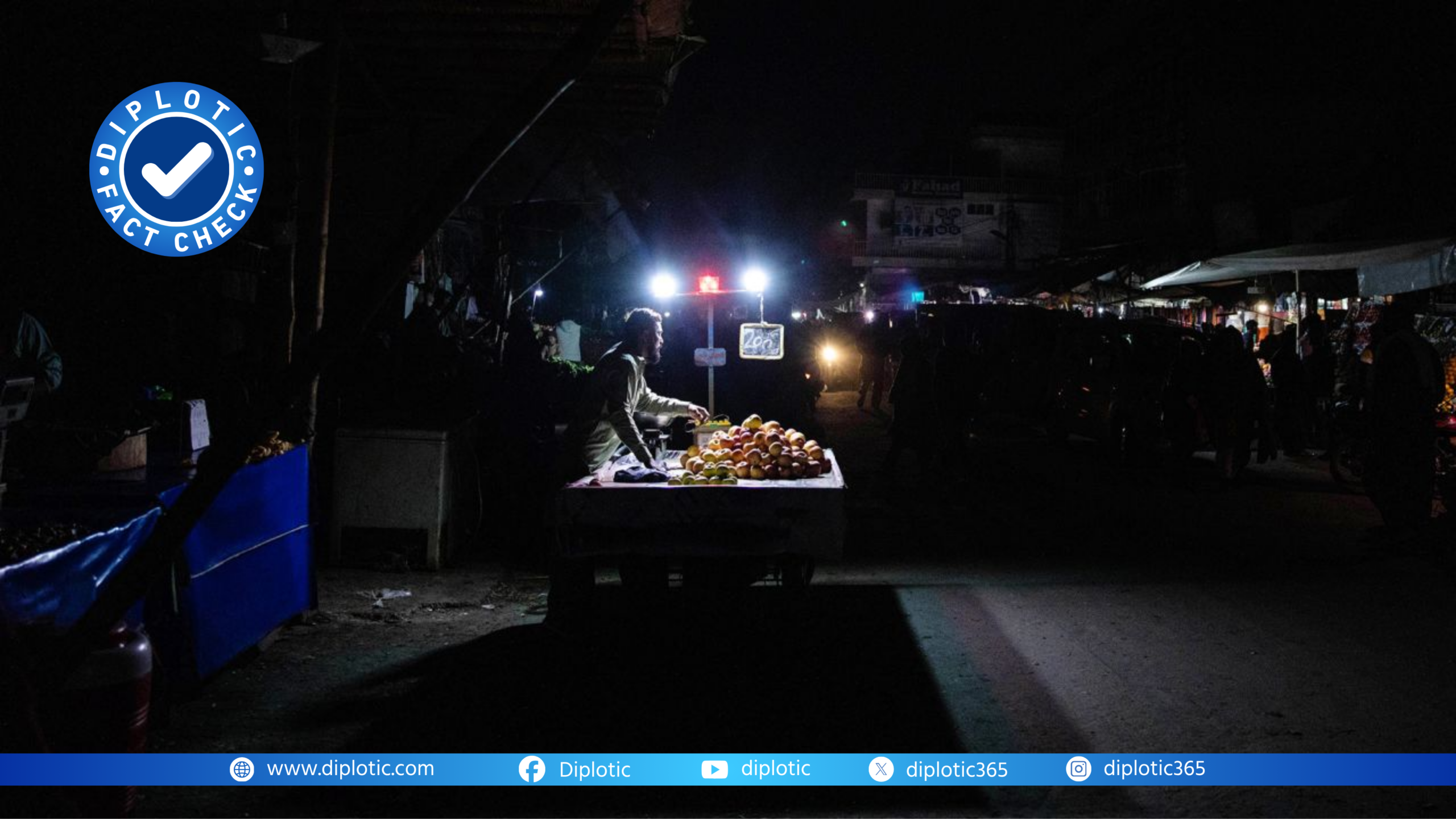
Across social media platforms, citizens from Dhaka to Lahore to Colombo are posting about worsening power cuts. In Bangladesh, reports describe up to 10 hours of daily outages during a scorching April heatwave . In Pakistan, officials warn of unavoidable summer blackouts as LNG imports nearly vanish . In Sri Lanka, opposition politicians accuse the government of unannounced power and water cuts despite official denials . These scattered reports paint a picture of a region-wide crisis. But is there a single “hidden” energy shortage driving all of this, or are these separate national problems converging at a difficult moment? This investigation examines the evidence from official sources, media reports, and expert analysis to determine whether South Asia is facing a coordinated energy crisis and what is truly causing the lights to go out.
Claim 1: Bangladesh is experiencing frequent, prolonged power cuts, with some areas facing up to 10 hours of daily outages.
Evaluation: This claim is supported by multiple news reports from April 2026. The first significant heatwave of the summer has exposed the fragility of Bangladesh’s power sector, with power generation lagging far behind demand. Over the first two days of April, electricity demand soared along with the temperature, triggering up to 10 hours of power cuts in parts of the country .
Reports from Rajshahi division describe a dire situation. In Bagmara upazila, residents reported power outages lasting up to 10 hours over several days. In Palsha, a deep tube well operator said they were experiencing four to five power cuts daily, each lasting between one and three hours . A school teacher in Shibganj upazila described the situation as so bad that power went out at intervals of every one or two hours.
Official data from the Power Grid Company of Bangladesh confirms the severity. At the evening peak generation hour of 9:00 pm on Tuesday, the overall load-shedding was estimated at 853 MW, with production of 13,189 MW against demand of 14,042 MW. The situation worsened during the day—at 3:00 pm, load-shedding doubled to 1,732 MW, with 11,986 MW produced against demand of 13,800 MW .
However, the government’s official position is more measured. On April 2, 2026, Power Minister Iqbal Hassan Mahmood informed Parliament that there is currently “no shortage of electricity in the country as per demand.” He acknowledged, however, that temporary disruptions sometimes occur during peak summer due to fuel constraints, transmission limitations, maintenance work, and adverse weather conditions . He stated that electricity demand increases significantly during summer, and at peak hours, these factors may make it difficult to supply electricity fully according to demand.
Verdict: True. Bangladesh is experiencing significant power cuts, with official data confirming load-shedding exceeding 1,700 MW at times. The government acknowledges “temporary disruptions” while maintaining there is no fundamental shortage.
Claim 2: Pakistan faces a deepening power crisis triggered by the complete disruption of LNG supplies due to the Iran war.
Evaluation: This claim is strongly supported by expert analysis and government planning documents. Pakistan’s LNG supplies are expected to fall to near zero from April 2026 onward, removing a source that contributes more than one-fifth of total power generation. Coal availability is also under pressure, jointly affecting close to 30 percent of supply .
The crisis stems directly from the US-Israel war on Iran. Qatar, the world’s third-largest producer and exporter of LNG, declared force majeure and paused gas deliveries on March 4, 2026 . This disruption coincided with the practical closure of the Strait of Hormuz, through which a significant portion of global energy trade passes .
The government is finalizing a plan to curb summer electricity consumption through scheduled outages, compulsory conservation measures, and higher tariffs. With peak demand expected at 27-28 GW, officials say daily power cuts and steeper bills are unavoidable .
Dr. Khalid Waleed of the Sustainable Development Policy Institute estimates that a full summer blockade of the Strait of Hormuz could cut 8,800 GWh of RLNG-based generation. With replacement fuel premiums costing an additional Rs100-110 billion, tariffs could go up by Rs6-8 per kWh through emergency adjustments. Average residential bills may exceed Rs55-60 per kWh .
The fallback option—furnace oil—comes at a steep cost, with generation expenses significantly higher than gas or coal-based alternatives. These are structural shocks that no policy can fully offset in the short term .
Domestic mismanagement is exacerbating the crisis. Disputes between Pakistan Railways and key coal-fired power plants have placed 1,500 to 1,800 MW of generation at risk—an entirely avoidable disruption caused by coal transport bottlenecks, refusal to load wagons, and delays in logistical coordination .
Verdict: True. Pakistan is facing a severe energy crisis driven primarily by the disruption of LNG imports from Qatar due to the Iran war, compounded by domestic logistical failures and rising global fuel prices.
Claim 3: Sri Lanka has reintroduced fuel rationing and is facing power cuts due to the Iran war and domestic policy failures.
Evaluation: This claim is supported by extensive reporting from Sri Lankan media and expert analysis. Following the joint US-Israel attacks on Iran, Sri Lanka experienced widescale panic buying of fuel, reminiscent of the 2022 economic crisis. Queues were abundant at fueling stations as motorists rushed to fill up in anticipation of shortages. The result was over-purchasing leading to self-induced shortages .
The government has reintroduced a QR-based fuel quota system, providing motorists a weekly allocation of 25 litres . The country has also moved to a four-day work week effective from March 18, 2026 . Fuel rationing was initially introduced on March 6, withdrawn ahead of Eid, but then reinstated .
However, the causes go beyond the war. The Sri Lankan government is facing significant criticism for past opposition to energy infrastructure projects. The Trincomalee Oil Storage Tankers project—a joint venture with India—was opposed for nearly a decade by the Janatha Vimukthi Peramuna, the party now in government. Current President Anura Kumara Dissanayake, then in opposition, led strikes and legal action against the project .
Furthermore, the government has abandoned diversification to renewable energy. The Adani Group’s proposed 484 MW wind energy project was withdrawn after the new government’s hardened objections. A further 43 renewable energy projects face ongoing approval delays . The Ceylon Electricity Board has been accused of causing losses amounting to Rs 2 billion due to curtailment of renewable energy production .
The government has also been using substandard coal at the Lakvijaya Power Plant, forcing increased diesel consumption at a time of global fuel scarcity . Opposition politicians have alleged that unannounced power cuts are already in force in some areas, blaming a “coal procurement scam” for the crisis .
Verdict: True. Sri Lanka is facing fuel rationing and power cuts triggered by the Iran war but significantly worsened by domestic policy failures, including past opposition to energy infrastructure, abandonment of renewable energy projects, and use of substandard coal.
Claim 4: Nepal faces potential power supply challenges due to India restricting electricity imports during peak domestic demand.
Evaluation: This claim is accurate based on official statements from the Nepal Electricity Authority. Starting April 16, 2026, Nepal will only be allowed to purchase electricity for 16 hours a day from India’s open electricity market, the Indian Energy Exchange. India’s Central Electricity Authority has decided not to export electricity through these markets during periods of high domestic demand .
According to NEA Managing Director Hitendra Dev Shakya, Nepal will receive electricity 24 hours a day until April 15, and after that, only for 16 hours daily for about two and a half months. From April 16 to 30, imports will be allowed from 2:00 AM to 6:00 PM, and during May and June, from 4:00 AM to 8:00 PM. From July onward, imports will again be permitted 24 hours a day .
However, the NEA has stated that there will be no issues in load management despite reduced supply hours. Shakya noted that with increased domestic production, sufficient water levels in the Kulekhani reservoir, and full-capacity generation from Upper Tamakoshi Hydropower, Nepal can manage. Last year during the dry season, Nepal received electricity only during solar hours, and load management was handled efficiently .
The challenge is structural: most hydropower projects in Nepal are run-of-river types, so domestic electricity production drops to about one-third during the winter/dry season . This makes Nepal dependent on imports during this period. The war in the Gulf has also affected Nepal—the Nepal Oil Corporation has started distributing half-filled cooking gas cylinders (7.1 kg instead of the usual 14.2 kg) to cope with shortages .
Verdict: True that Nepal faces reduced import hours, but the NEA claims this will not cause load-shedding. Nepal’s import window from India will be restricted to 16 hours daily from mid-April through June. However, the government asserts that domestic production can fill the gap, unlike previous years.
Claim 5: The Iran war and closure of the Strait of Hormuz are the primary hidden drivers of South Asia’s energy crisis.
Evaluation: This claim requires careful examination of causality. The war in the Persian Gulf, launched by the US and Israel in February-March 2026, has caused significant disruption to South Asian energy supplies . Qatar, a critical LNG supplier to the region, declared force majeure and paused deliveries . The Strait of Hormuz is practically closed, with traffic down by 95 percent due to risk perception, even though Iran has officially declared the straits open to vessels from countries not participating in attacks .
The impact on the region has been severe. Bangladesh, which relies on natural gas for over half of its energy needs, felt the impact almost immediately. It had to acquire LNG cargoes at prices of $23-28 per mmbtu, versus the $10 per mmbtu paid before the crisis . Bangladesh has stopped power generation from some gas-fired plants.
Sri Lanka depends on imports for its energy needs and has introduced fuel quotas . The disruptions in West Asian airports have also started to hit tourist arrivals—for the first two weeks of March 2026, Sri Lanka welcomed about 20 percent fewer tourists than the same period in 2025 .
However, the war is not the only factor, and describing the shortage as “hidden” is misleading. Domestic policy failures are equally significant. In Bangladesh, the Power Minister explicitly cites fuel constraints, transmission limitations, and maintenance work . In Pakistan, domestic disputes between Railways and coal plants have placed up to 1,800 MW at risk . In Sri Lanka, years of opposition to energy infrastructure and abandonment of renewable projects have created vulnerability . In Nepal, the structural limitation of run-of-river hydropower makes dry-season dependence on imports inevitable .
The war is the trigger, but each country’s domestic energy policies—or lack thereof—determine the severity of the impact. The “hidden” shortage is not hidden at all; it is the predictable result of years of underinvestment, policy incoherence, and geopolitical vulnerability.
Verdict: True as a causal factor, but the “hidden” framing is misleading. The Iran war and Strait of Hormuz closure are genuine drivers of the crisis, but domestic policy failures are equally significant and well-documented.
Claim 6: Power cuts across South Asia are a “new” phenomenon indicating a sudden, unprecedented crisis.
Evaluation: This claim is false when examined against recent history. In Bangladesh, this would be the third year of acute power outages since the government officially introduced rotating power cuts on July 19, 2022 . The government had initially promised not to roll out power cuts unannounced but failed to keep the promise because the shortage was far greater than expected.
In Pakistan, energy shortages have been a recurring feature of summer months for over a decade, with load-shedding schedules becoming a regular part of daily life. The current crisis is more severe due to the LNG disruption, but the pattern of summer blackouts is not new.
In Sri Lanka, the 2022 economic crisis was accompanied by severe fuel and power shortages. The current crisis echoes that period, with queues at fueling stations and reintroduction of QR codes eerily similar to 2022 .
What is new is the convergence of multiple shocks simultaneously: the Iran war disrupting global energy supplies , the summer heatwave driving unprecedented demand , and the lingering effects of each country’s unique policy failures. The crisis is not new, but its intensity may be.
Verdict: False. Power cuts are not a new phenomenon in South Asia. Bangladesh has faced acute outages since 2022, Pakistan has recurring summer load-shedding, and Sri Lanka experienced similar shortages during its 2022 economic crisis. The current situation is more severe due to the convergence of multiple shocks, but the pattern is familiar.
Claim 7: Load-shedding in India is widespread and comparable to neighboring countries, indicating a region-wide hidden shortage.
Evaluation: The available evidence does not support widespread, crisis-level load-shedding across India. One report details a scheduled three-day power outage in Bulandshahr, Uttar Pradesh, from April 2-4, 2026, affecting approximately 3,200 consumers. The outages are scheduled from 10:00 AM to 1:00 PM for maintenance work, specifically to split an overloaded 11 kV feeder .
This is a planned maintenance shutdown, not crisis-driven load-shedding. The Electricity Department has appealed to consumers to make prior arrangements for drinking water and other essentials and requested cooperation regarding the essential maintenance work .
India’s energy situation is not directly comparable to its neighbors. India has diversified energy sources, including significant domestic coal production, expanding renewable capacity, and multiple LNG import terminals. While India has begun rationing cooking gas in the wake of the war and petrol and diesel prices are expected to rise, the scale of disruption is different .
The Gateway House analysis notes that India is “itself has begun to ration cooking gas” and that petrol and diesel prices will follow, becoming increasingly unaffordable . But this reflects price and availability pressures, not the systematic power cuts seen in Bangladesh and Pakistan.
Verdict: False. There is no evidence of widespread, crisis-level power cuts across India comparable to neighboring countries. Reported outages are scheduled maintenance work affecting limited areas, not emergency load-shedding.
Conclusion: A Perfect Storm of War, Weather, and Policy Failure
The investigation confirms that power cuts are increasing across significant parts of South Asia, but the causes are not a single “hidden” shortage. Instead, the region is experiencing a perfect storm of three converging factors: the Iran war disrupting global energy supplies , an intense early summer heatwave driving record electricity demand , and long-standing domestic policy failures in energy infrastructure, fuel procurement, and renewable energy transition .
Bangladesh faces verified load-shedding exceeding 1,700 MW, with up to 10 hours of daily outages in some areas . The government’s official position acknowledges “temporary disruptions” while maintaining there is no fundamental shortage—a distinction that offers little comfort to those sitting in the dark .
Pakistan is arguably the hardest hit, with LNG imports falling to near zero and a full summer blockade of the Strait of Hormuz threatening to cut thousands of megawatts of generation . The government’s plan for scheduled outages, higher tariffs, and conservation measures reflects the severity of the situation .
Sri Lanka has reintroduced fuel rationing and a four-day work week, with opposition politicians accusing the government of unannounced power cuts . The crisis is compounded by years of policy failures, including opposition to energy infrastructure and abandonment of renewable energy projects .
Nepal faces reduced import hours from India but claims domestic production can fill the gap—a claim that will be tested in the coming months .
The “hidden” framing of the shortage is misleading. The war is a genuine external shock, but the vulnerability of each country to that shock is the product of years of policy choices. Bangladesh’s reliance on imported LNG without adequate diversification, Pakistan’s chronic energy sector mismanagement, Sri Lanka’s political opposition to infrastructure development, and Nepal’s structural dependence on dry-season imports are not secrets—they are well-documented realities.
For citizens across South Asia, the immediate future is likely to bring more power cuts, higher electricity bills, and continued uncertainty. The longer-term solution requires not just weathering the current storm but addressing the structural vulnerabilities that made the region so susceptible to this crisis in the first place. Until then, the lights will continue to flicker—not because of a hidden shortage, but because of failures that have been visible for years.




