

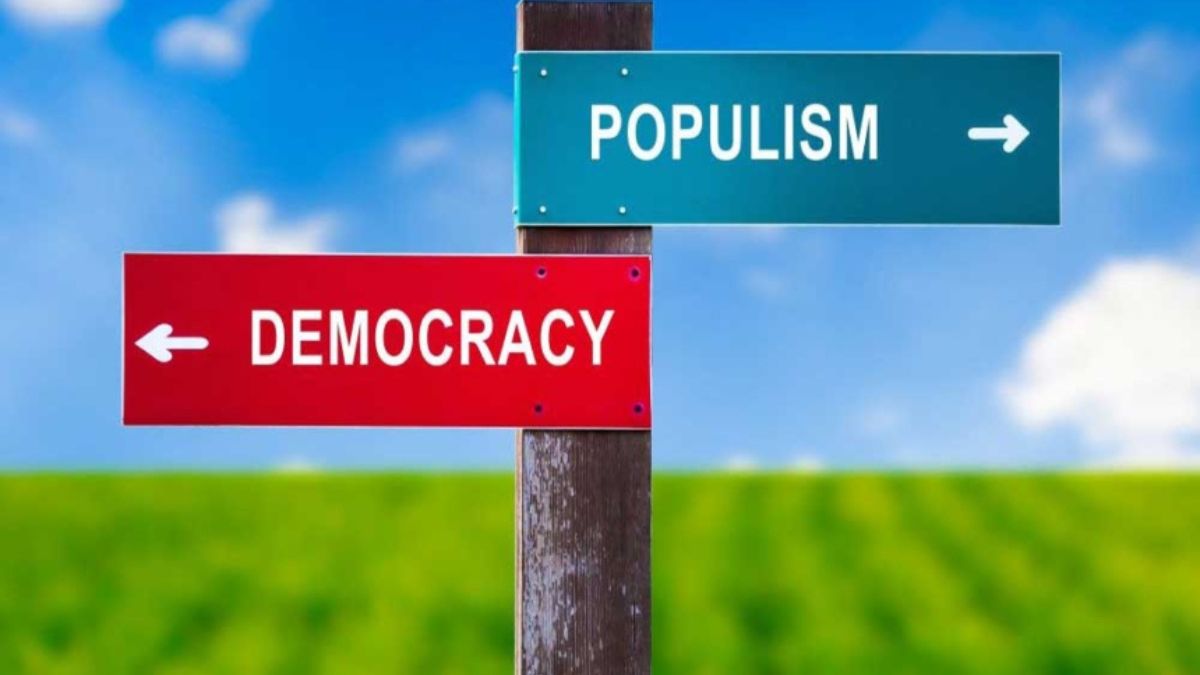
In the political landscape of 2025, a surprising image captures a central paradox of American politics. President Donald Trump, a Republican, stands alongside Zohran Mamdani, New York City’s newly elected Democratic Socialist mayor. Their ideologies appear to be polar opposites, yet their meeting hints at a shared political force that continues to reshape the nation: populism. While the Republican Party has largely unified under Trump’s brand of populist rhetoric, the Democratic Party remains deeply conflicted about how to respond. For decades, Democratic leaders have relied on a playbook of cautious centrism, believing it to be the only viable path to national victory. However, this approach has repeatedly failed to harness the powerful, economic discontent that fuels both left-wing and right-wing populist movements. The persistent struggle within the Democratic Party is not merely about policy but about a fundamental misunderstanding of what populism represents—a demand for systemic change from voters who feel abandoned by the existing political and economic order.
What Did Democrats Mislearn from the Clinton Era?
To understand the current Democratic dilemma, one must look back to the 1990s and the rise of Bill Clinton’s centrism. That political project emerged after a string of painful presidential losses to Republicans Ronald Reagan and George H.W. Bush. The lesson many party leaders took was that the Democrats needed to move to the center, embrace globalization, and distance themselves from the more fiery, class-based rhetoric of the past. This conclusion, however, may have been based on a misreading of history. In the 1984 and 1988 Democratic primaries, the establishment centrist candidates, Walter Mondale and Michael Dukakis, ultimately defeated an insurgent populist: Reverend Jesse L. Jackson. The party saw Jackson’s losses as proof that his message was not a winning one. But an alternative lesson was available. What if the party’s failure was not in having a populist message, but in failing to effectively harness the profound grassroots energy and clear economic vision that Jackson’s campaigns generated? Even James Carville, a key architect of Clinton’s centrist victories, now argues that the Democratic Party “must run on the most populist economic platform since the Great Depression.” This admission suggests that for thirty years, the party may have pursued a strategy that won elections in the short term but gradually eroded its connection to the economic anxieties of its own base and the wider working class.
What Was the True Lesson of Jesse Jackson’s Campaigns?
The populism of Jesse Jackson in the 1980s offers a blueprint that today’s Democratic leaders often overlook. His campaigns spoke directly to the concrete economic pain of Americans: the farmer facing foreclosure, the factory worker whose job moved overseas, the parent struggling to afford groceries. He tied these individual struggles to a powerful, systemic critique, arguing that the economic and political “system” was rigged against ordinary people. This message of righteous economic anger is precisely what figures like James Carville believe the modern party lacks. However, Jackson’s legacy contains a second, even more crucial lesson that is frequently missed. He demonstrated that it is entirely possible to build a multiracial coalition focused on economic justice without sidelining demands for racial and social equality. Jackson’s “Rainbow Coalition” was explicitly designed to unite marginalized groups and sympathetic white voters around a common platform of economic fairness and social justice. He argued these goals were intertwined, not in conflict. This vision directly challenged the centrist Democratic philosophy, exemplified then by figures like Joe Biden, which often suggested that appeals for racial justice had to be softened to build alliances with white voters. Jackson proposed the opposite: a stronger, more authentic coalition built on shared economic interests and a mutual commitment to justice.
Why Does the Democratic Party Still Struggle to Embrace This Model?
Despite the clear historical example, the Democratic Party’s institutional resistance to a Jackson-style populism remains strong. This resistance stems from a deeply ingrained fear. Party leaders are wary of alienating the wealthy donors and corporate interests that fund campaigns. They also fear repelling a mythical “moderate middle” voter with messages deemed too radical or divisive. This fear leads to a cautious, often watered-down political approach. The party’s victory with Joe Biden in 2020 over more progressive rivals like Bernie Sanders was seen by the establishment as a vindication of centrism. Yet, this view may again be a misreading. It overlooks how economic discontent continues to simmer beneath the surface, capable of boosting unlikely figures from Trump to Mamdani. The younger progressive “Squad” in Congress channels Jackson’s spirit, tying economic demands to social justice, but they often find themselves at odds with the party’s old guard. The persistent challenge is that the party’s power structure—its relationship with donors, its consulting class, and its moderate elected officials—is built for the centrist model. Embracing a bold, economic populism would require a fundamental reordering of these priorities and relationships, a risk the establishment has been unwilling to take.
What Is the Cost of This Continued Misunderstanding?
The cost of the Democratic Party’s failure to authentically embrace a populist economic message is steep and multifaceted. First, it creates a political vacuum. When the left fails to offer a compelling, systemic critique of economic inequality, that space is filled by others. Donald Trump’s right-wing populism, though often more rhetorical than substantive in policy, effectively channels the same anger and sense of betrayal that Jackson once spoke to, albeit toward very different cultural and political ends. Second, it weakens the party’s ability to build durable, multiracial working-class coalitions. By separating economic messaging from robust advocacy for racial and social justice, the party’s approach can feel transactional and incomplete to the very coalition it relies on. Finally, it jeopardizes long-term relevance. A generation of younger voters, facing student debt, unaffordable housing, and precarious employment, is increasingly skeptical of establishment politics in both parties. They are drawn to candidates who acknowledge the system is broken and demand transformative change. If the Democratic Party cannot convincingly become the vehicle for that change, it risks losing this generation altogether, ceding the future to other, more decisive political forces.
The meeting between Trump and Mamdani is less a curiosity and more a symptom of a political era defined by disruption. For Democrats, the path forward requires an honest reckoning with the past. It means recognizing that the centrist playbook of the 1990s is ill-suited for the economic realities of the 2020s. The party must rediscover the lessons it chose to ignore decades ago: that economic populism is not a fringe idea but a mainstream demand, and that a coalition for justice and equality is strongest when it is also a coalition for shared economic prosperity. This does not require abandoning principles but rather returning to them with renewed clarity and courage. The alternative is to remain trapped in a cycle of misunderstanding, watching as the energy that could fuel a transformative political movement is co-opted by others or dissipates into disillusionment, leaving the party’s potential for real leadership unfulfilled.




