

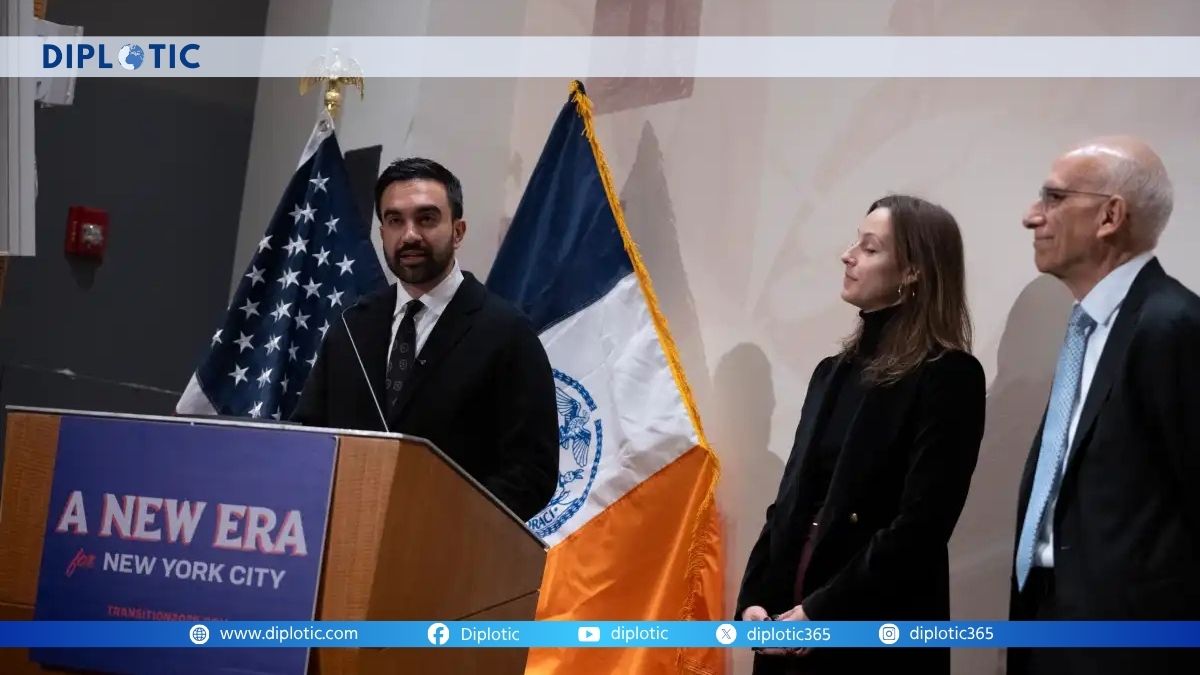
Zohran Mamdani’s rise to power marks a major turning point in New York City politics. For decades, the city was governed by centrist Democrats who favored compromise with real estate, business, and bureaucracy. Mamdani, a democratic socialist, came to office promising a different vision: rent freezes, mass affordable housing, city-owned grocery stores, fare-free public transit, expanded childcare, and higher wages for workers. His platform, rooted in equity and public ownership, drew massive support from tenants, workers, and young voters disillusioned with corporate influence. But now that the campaign is over, the real challenge begins: how to turn bold promises into actual policy inside one of the most complex city governments in the world.
The left’s first plan is to use the mayor’s appointment power to shape every corner of city government. Key agencies such as Housing Preservation and Development, Economic Development, and Social Services will likely be filled with reform-minded leaders who share Mamdani’s agenda. Those choices will decide whether progressive policy ideas become functioning programs or stall in bureaucracy. Yet, the mayor’s control is limited — rent laws and transit fares fall under state authority, meaning that Albany will remain a constant obstacle. The left therefore intends to combine executive action where possible with legislative campaigns and public pressure when outside approval is required.
The second front will be the city budget, the true battlefield of municipal politics. Mamdani’s allies plan to direct funding toward universal childcare, housing construction, and public grocery pilots, while cutting back on corporate subsidies. This will bring conflict with both conservative council members and state fiscal monitors. Raising revenue for these plans may demand new taxes on luxury property or corporate profits, moves that will spark legal and political fights. Progressives are already preparing economic studies to prove that redistributive policies can strengthen, not weaken, the city’s long-term economy.
Another core strategy is movement power. Mamdani’s victory was built on grassroots energy — tenant unions, immigrant-rights groups, and labor activists — and these networks will now act as both shield and sword. Mass rallies, door-to-door campaigns, and pressure on city council votes will be used to hold officials accountable and prevent quiet rollbacks. However, keeping such a large coalition united will not be easy. Labor unions, while supportive of higher wages and public jobs, often clash over spending priorities or control of city enterprises. The left knows it must balance radical policy with careful negotiation to avoid paralyzing infighting.
To survive in the long run, Mamdani’s team must pick winnable fights and show tangible success. Executive actions like expanding fare-free bus pilots or opening one or two municipal grocery stores could provide visible proof that progressive governance delivers real benefits. Bigger changes — like full rent freezes or large-scale tax reforms — will take years of organizing and state cooperation. That mix of immediate victories and long-term campaigns is how the administration hopes to keep the public inspired without losing momentum to frustration.
Opposition is guaranteed. Real estate lobbies, private grocers, and business alliances are already preparing lawsuits and media campaigns to frame Mamdani’s agenda as reckless socialism. The left is responding with data, public hearings, and partnerships with legal aid groups to defend the new policies. They argue that the real crisis is not overreach, but decades of inequality and neglect that left millions struggling in one of the richest cities on earth. The biggest barrier, though, is structural — the city is bound by state and federal limits that often prevent bold municipal experiments. That is why Mamdani’s administration is also building bridges with progressive legislators in Albany to shift those boundaries over time.
For the left, the stakes could not be higher. A failed experiment in city governance could demoralize a generation of organizers and hand power back to the establishment. But if Mamdani manages to deliver even part of his ambitious agenda — affordable housing that actually gets built, childcare centers that open, buses that become truly free — it could redefine what is politically possible in American cities. New York has always been a testing ground for national change, and under Zohran Mamdani, it may once again become the proving ground for a new kind of urban socialism — one that must now learn the hardest lesson of all: how to govern effectively while staying true to its ideals.




