

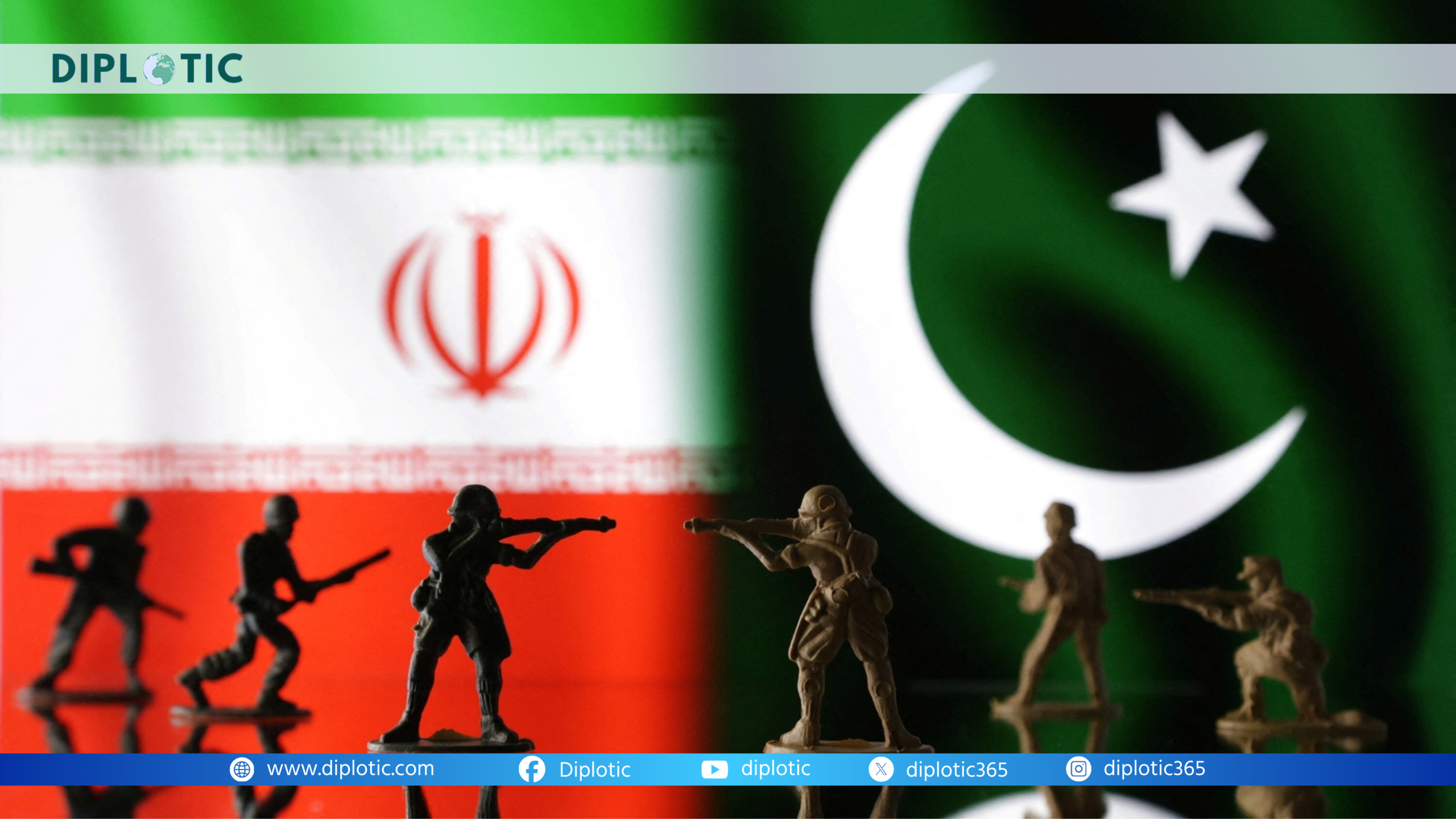
In March 2025, Pakistan’s military leader, Field Marshal Asim Munir, addressed the parliamentary security committee with a question that had lingered over his country for years. “How long will we continue to sacrifice countless lives in the style of a soft state?” he asked . The question was rhetorical, a statement of intent rather than a request for information. One year later, that question has found its answer. In the span of 72 hours this week, Munir held a direct phone call with President Donald Trump. Prime Minister Shehbaz Sharif called Iranian President Masoud Pezeshkian. And Pakistan pitched its own capital as the venue for what could become the most consequential diplomatic encounter of the decade—a meeting between senior American and Iranian officials . For a country that was exchanging fire with India less than a year ago and is currently running military operations on its western border against Afghanistan, this is a remarkable act of positioning. This investigation examines how Pakistan positioned itself as the indispensable mediator in the Iran war, what structural advantages it brings to the table, and what the risks and rewards of this role might be.
How Did Pakistan Position Itself as a Mediator?
Not since Pakistan’s overnight pivot after the September 11 attacks has the country inserted itself into the center of American strategic thinking with this speed or ambition. The difference between then and now is telling. In 2001, Washington came to Pakistan out of necessity. This time, Pakistan came to Washington with an offer . The country has spent the past year methodically building the credibility that made that offer credible.
The foundation of this positioning was Munir’s “hard state” doctrine. When he asked how long Pakistan would remain a soft state, he was announcing a fundamental shift in national strategy. The previous decade had left the country associated with strategic ambiguity—a state that fought terrorism with one hand and sheltered it with the other . Ending that ambiguity became the central project of Pakistan’s military establishment.
Operation Ghazab Lil Haq, the ongoing military campaign involving airstrikes deep inside Afghan territory against Tehrik-e-Taliban Pakistan positions, is the most visible expression of this new doctrine . The strategic signal is unambiguous: Pakistan will pursue threats to its existence regardless of political cost. When Tehreek-e-Labbaik Pakistan, a group capable of shutting down motorways and laying siege to cities, became a vehicle for extortion and instability, the establishment dismantled its leverage. When sectarian tensions flared, Munir’s response was blunt: Pakistan is a country for Pakistanis. Those who seek to import the sectarian politics of the Middle East are unwelcome to do so .
The discipline of this approach held throughout the Gaza crisis. When Arab streets were convulsing and Muslim governments were under immense pressure to rupture ties with Washington, Pakistan held its institutional relationship intact. It made the appropriate diplomatic noises. It did not break. In a region where Gaza became a loyalty test that many governments failed on their own terms, Pakistan’s steadiness was noted .
The May 2025 India-Pakistan ceasefire added another layer. The four-day war ended in a ceasefire that handed Pakistan a diplomatic advantage that Delhi found humiliating and Islamabad found validating. For Pakistan’s establishment, the episode confirmed what Munir had long argued: closeness to President Trump produces strategic leverage . The personal rapport Munir cultivated with Trump during those negotiations gave Pakistan something most foreign leaders spend years pursuing: a direct personal channel to the Oval Office. In a White House that runs on personal relationships rather than institutional channels, that is not a soft asset. It is the whole game .
What Structural Advantages Does Pakistan Bring to Mediation?
Conventional wisdom has long held that Oman handles US-Iran engagement. It brokered the back channels that produced the 2015 nuclear deal. Qatar built its entire foreign policy brand on being the region’s preferred mediation platform . Both are small, stable, wealthy Gulf states with no axes to grind. In normal times, they are exactly what you want. But these are not normal times. This is crisis diplomacy under the pressure of active strikes, with a five-day window imposed by the postponement of attacks on Iran’s power grid . The moment demands something different.
Pakistan brings several structural advantages that smaller Gulf states cannot match. The first is military weight. Pakistan is a nuclear-armed state mediating between a nuclear aspirant and a nuclear superpower. It has skin in the game in a way that no Gulf trading state ever can . The second is geographic proximity. Pakistan shares a 900-kilometer border with Iran running through Balochistan—a province that Iran watches with anxiety given its own restive Baloch population on the other side . For Tehran, a hostile Pakistan is not an abstraction. It is a second front. At a moment when Iran is absorbing Israeli strikes, managing proxy networks from Yemen to Lebanon, and facing the prospect of direct US military action against its power infrastructure, the last thing it can afford is trouble on its eastern border.
The third advantage is demographic. Pakistan has the second-largest Shia Muslim population in the world after Iran—roughly 40 million people . This gives it a sectarian proximity to Tehran that most Sunni-majority states cannot claim or feign. The fourth is regional credibility. Pakistan signed a mutual defense pact with Saudi Arabia last year, lending it credibility in Riyadh and Washington simultaneously . This combination of relationships is rare. A country that can speak to both Tehran and Riyadh, to both Washington and Beijing, has a flexibility that more aligned states lack.
There is also a dimension that rarely gets discussed: the implicit ability to make Tehran’s strategic environment worse if the relationship sours. Iran needs Pakistan’s goodwill, and Pakistan enters these negotiations with something that Doha and Muscat do not have. That is not a threat that needs to be made explicitly. It is a structural reality that experienced diplomats understand without it being said . And it cuts both ways. For Tehran, the very fact that Pakistan is not a neutral Gulf state is part of the appeal. Islamabad offers Iran something that Muscat and Doha cannot—a venue with enough strategic weight that engaging there does not feel like capitulation .
What Are the Risks of This Mediation Role?
The risks of Pakistan’s positioning are as significant as the rewards. The first is rejection. Iran has publicly denied that any direct negotiations are taking place, with Iranian parliamentary speaker Mohammad-Bagher Qalibaf dismissing reports as “fake news” aimed at manipulating financial markets . If Tehran publicly rebuffs the offer, the damage to Pakistan is not just diplomatic embarrassment. It is a signal to Washington that Islamabad oversold its access, and that signal is hard to walk back .
The second risk is overreach. Islamabad is mediating a superpower crisis while fighting in Afghanistan, managing a fragile ceasefire with India, and running an economy that only recently emerged from an IMF bailout program . The bandwidth required to manage all these fronts simultaneously is enormous, and failure on any one front could undermine credibility on all others.
The third risk is the personal nature of the relationship with the American president. The same personal rapport that grants access makes Pakistan’s position contingent on a president whose decision-making can shift overnight . What Trump gives, Trump can take away. A mediation effort that succeeds may still leave Pakistan dependent on a single individual for its strategic relevance.
There is also the risk of domestic blowback. The hard state doctrine that built Pakistan’s credibility involved cracking down on domestic groups, including some with significant popular support. The costs of those decisions are still being absorbed. If the foreign policy dividends do not materialize in ways that ordinary Pakistanis can see, the domestic political calculus could shift .
What Are the Potential Rewards for Pakistan?
The potential rewards of successful mediation go well beyond prestige. A Pakistan that is seen as Washington’s indispensable partner in two theaters—South Asia and the Middle East—becomes a different proposition for Gulf investors, multilateral lenders, and the sovereign wealth funds whose capital Islamabad desperately needs . Strategic relevance converts into economic confidence in ways that IMF programs alone never can .
There is also a wider geopolitical consequence. China has been Iran’s biggest economic lifeline and Pakistan’s largest infrastructure investor. If anything, Beijing will be comfortable that its oldest and most reliable partner in the region is the one staging the peace talks—far preferable, from China’s perspective, to a process run entirely through Washington’s Gulf allies with no Chinese equities at the table . Pakistan’s mediation could thus serve both its American and Chinese relationships simultaneously, a rare position in an era of great-power competition.
The India dimension completes the picture. If Islamabad can help broker even a temporary framework in the US-Iran standoff, it will have established itself as an indispensable interlocutor across two of the most dangerous theaters in Asia simultaneously—a position it has not occupied since the early years of the Afghan war, and one that permanently disrupts India’s preferred narrative of Pakistan as a failing, peripheral state . For a country that has long defined itself in opposition to its larger neighbor, this would be a significant shift.
What Does This Mean for the Future of Pakistani Statecraft?
The transformation of Pakistan’s strategic position over the past year suggests that the soft state question has been answered, at least for now. The country has shown it can hold a line, deliver under pressure, and make itself indispensable to the most consequential actors in the room—and this time, not as a staging ground for someone else’s war, but as the address where a peace might actually begin . Whether this represents a durable shift or a temporary alignment depends on outcomes that are not yet determined.
The stage is bigger than it has ever been. Pakistan is mediating between a nuclear-armed superpower and a nuclear aspirant while fighting militants on its western border and managing relations with its nuclear-armed neighbor to the east. The resources required to sustain this role are substantial, and the risks of overreach are real . But for the first time in a generation, the world is watching Pakistan not with anxiety, but with expectation.
Conclusion
The question that Field Marshal Munir posed to Pakistan’s parliamentary security committee in March 2025 was a diagnosis of a national ailment. The answer, revealed in the frantic diplomacy of March 2026, is that Pakistan has chosen a path. It has decided that the cost of being a soft state—the perpetual crisis, the dependence on others, the inability to shape its own destiny—is higher than the cost of being a hard one .
Whether this choice will be sustained depends on outcomes that are not yet clear. The mediation effort could fail. Iran could reject the offer. The ceasefire with India could break. Domestic opposition could rise. But something has already been settled that cannot be unsettled. Pakistan has shown it can act. It has shown it can be counted on. And it has shown that in a crisis where the usual mediators lack the weight to move events, it can step into the gap . That is not a guarantee of success. But it is a foundation on which success could be built—and that, for a country that has spent decades searching for a role, is a start .




