

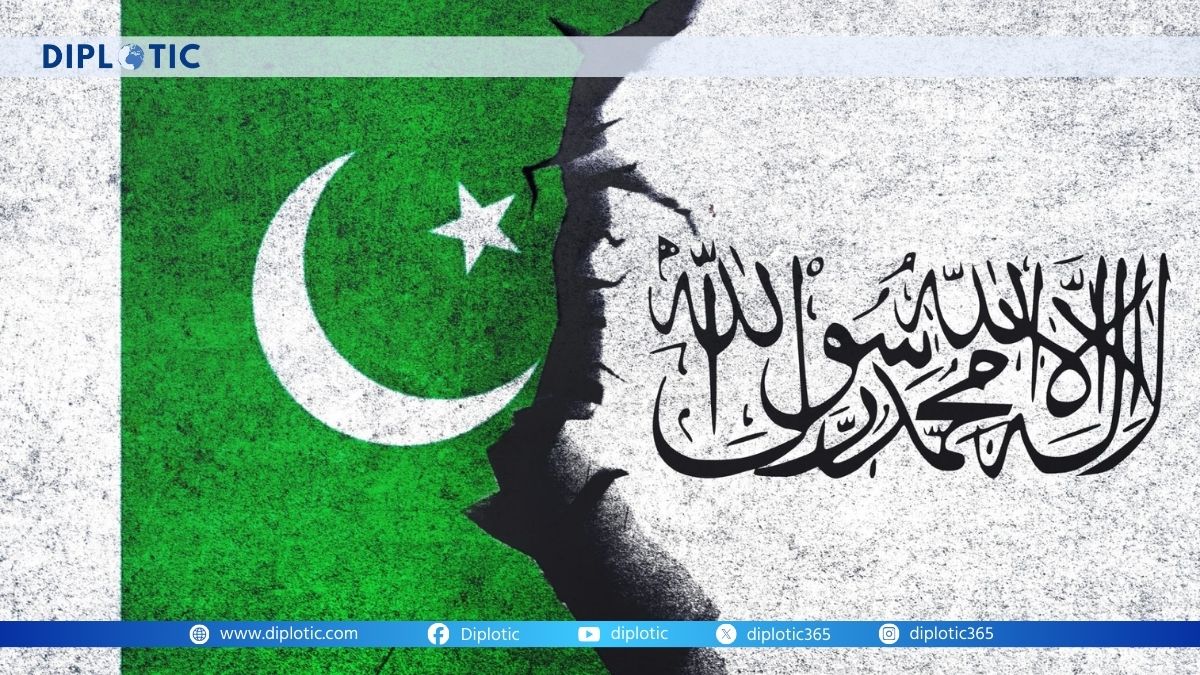
When Pakistani air strikes hit Kabul and other Afghan cities in the early hours of February 27, 2026, the long and tense relationship between the two neighbours entered a new and dangerous phase. Pakistan’s Defence Minister Khawaja Asif declared that patience had run out and described the situation as “open war”. The Taliban authorities in Afghanistan responded by announcing large-scale operations along the Durand Line, the disputed border that separates the two countries. Within hours, both sides were claiming heavy casualties and accusing the other of aggression.
For years, tensions between Islamabad and Kabul have simmered. Since the Taliban returned to power in 2021 after the withdrawal of United States and NATO forces, cross-border attacks, border closures, and diplomatic protests have become frequent. But direct strikes on Kabul mark a sharp escalation. The question now is not only who fired first, but whether this conflict can be contained before it destabilises an already fragile region.
What Triggered the Latest Escalation Along the Durand Line?
The immediate trigger for the air strikes appears to have been renewed fighting along the Durand Line, a 2,611-kilometre border that Afghanistan has never formally recognised. Afghan officials say their forces attacked Pakistani military positions in response to earlier Pakistani strikes inside Afghan territory. Pakistan, in turn, says it acted after Afghan forces targeted its posts near the frontier.
Reports indicate that Pakistani jets struck targets in Kabul, Paktia, and Kandahar. Islamabad claims it targeted Taliban defence facilities, including brigade headquarters and ammunition depots. Afghan authorities confirmed that the provinces were hit but disputed the scale of damage and casualties reported by Pakistan. Independent verification of casualty figures remains difficult.
The fighting has also spread to key border crossings such as Torkham, where shelling and gunfire were reported. This crossing is vital not only for trade but also for the movement of Afghan nationals returning from Pakistan. Despite periodic closures since October 2025, it has remained an important link between the two economies.
This round of violence follows a fragile ceasefire agreed in October 2025 through mediation by Qatar and Turkiye. That ceasefire had temporarily reduced hostilities after a week of deadly clashes. However, it did not resolve the deeper disputes. Border fencing by Pakistan, Afghan objections to the Durand Line, and repeated accusations of cross-border militant activity have kept tensions high.
The declaration of “open war” is politically significant. While both sides have exchanged fire in the past, formal language suggesting war indicates a shift in tone. Whether this becomes a prolonged military campaign or remains limited to cross-border strikes will depend on the next steps taken by both governments.
Is the Tehreek-e-Taliban Pakistan the Core of the Conflict?
At the heart of Pakistan’s concerns is the Tehreek-e-Taliban Pakistan, commonly known as TTP. The TTP emerged in 2007 and has carried out attacks across Pakistan, particularly in Khyber Pakhtunkhwa and Balochistan. Although separate from the Afghan Taliban, the two groups share ideological and social ties.
Islamabad has repeatedly accused the Taliban government in Kabul of allowing TTP fighters to operate from Afghan soil. Since 2021, attacks inside Pakistan attributed to the TTP and other armed groups such as the Balochistan Liberation Army have increased. Pakistani officials argue that these groups use Afghan territory as safe havens before crossing into Pakistan to conduct operations.
The Taliban authorities deny sheltering militants who target Pakistan. However, analysts note that the Afghan Taliban may be unwilling or unable to take strong action against the TTP. Cracking down on the group could risk internal divisions or push militants toward rival groups such as Islamic State Khorasan Province. This creates a security dilemma: Pakistan demands firm action, while the Taliban leadership balances internal stability against external pressure.
Pakistan’s recent strategy appears more direct and forceful. Instead of relying only on border operations, it has chosen to strike deeper inside Afghan territory. This suggests frustration with diplomatic channels and previous understandings. At the same time, Afghanistan lacks a conventional air force comparable to Pakistan’s. While Afghan forces may rely on ground operations and asymmetric tactics, Pakistan holds a clear advantage in air power.
The core issue remains unresolved: unless there is credible action against armed groups targeting Pakistan, Islamabad is likely to maintain pressure. But each strike risks civilian harm and further resentment, which can deepen hostility between the populations on both sides of the border.
Could This Become a Wider Regional Crisis?
The international response shows growing concern. The United Nations has urged both countries to respect international law and avoid further escalation. Iran has called for dialogue during the month of Ramadan. Russia has offered to mediate, and India has criticised Pakistan’s air strikes, calling them an attempt to shift focus from internal problems.
These reactions highlight the broader stakes. Afghanistan remains economically fragile and politically isolated since 2021. Pakistan is facing its own economic challenges and internal security threats. A prolonged conflict would strain both states further. Trade routes could close, refugee flows could increase, and armed groups could exploit instability.
A full-scale conventional war appears unlikely in the short term. Pakistan may avoid sending ground troops deep into Afghanistan, aware of the risks of becoming entangled in prolonged fighting. Afghanistan, lacking advanced military assets, may rely on limited cross-border operations rather than large offensives. Yet even without formal war, sustained artillery exchanges and air strikes can create a cycle of retaliation that is hard to break.
The Durand Line dispute adds another layer. For Afghanistan, recognition of the border remains politically sensitive, tied to historical grievances and ethnic ties among Pashtun communities. For Pakistan, the border is an internationally recognised frontier that must be defended. This fundamental disagreement makes technical solutions difficult.
In the past, both countries have stepped back from the brink after intense exchanges. Mediation by regional powers or behind-the-scenes talks could again reduce tensions. However, the current language of “open war” suggests a harder position than before.
The coming days will test whether military action replaces diplomacy or whether back-channel efforts can restore calm. The conflict did not begin with the latest air strikes, and it will not end with them. It is rooted in years of mistrust, competing security priorities, and unresolved border questions. If leaders on both sides fail to address these deeper issues, the Durand Line will remain not just a boundary on a map, but a fault line that threatens stability across South Asia.




