

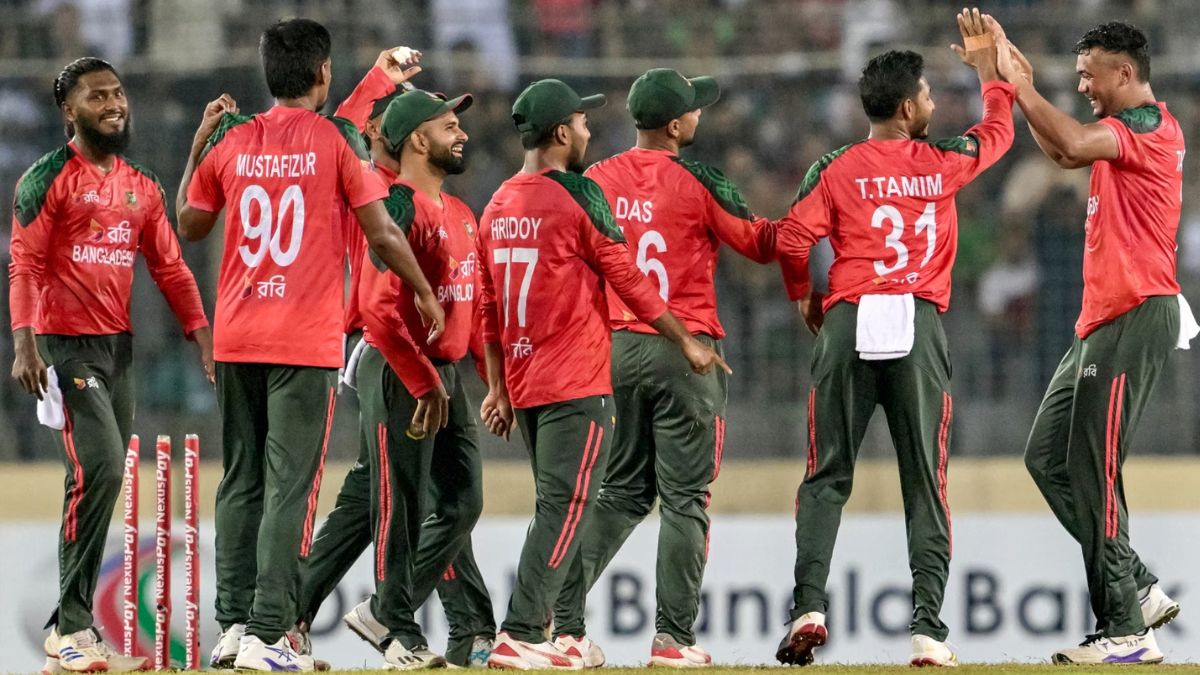
The Pakistan cricket team is staring down the barrel of a potential 3-0 whitewash in their T20I series against Bangladesh, a scenario that seemed unthinkable just weeks ago when they dominated the same opponents on home soil. With Bangladesh already securing the series, the final match on July 24, 2025, at the Shere Bangla National Stadium in Dhaka offers Pakistan a chance to salvage pride, while the hosts aim to cement their newfound T20 prowess with a clean sweep. Here’s a deep dive into the series dynamics, team performances, and what’s at stake, delivered with a touch of self-deprecating wit and a relentless pursuit of the truth behind the scorelines.
A Tale of Two Series: From Lahore’s Highs to Dhaka’s Lows
Six weeks ago, Pakistan’s batters treated Bangladesh’s bowlers like punching bags at Lahore’s Gaddafi Stadium, a venue where flat tracks and short boundaries made life easy for their aggressive top order. Fast forward to Dhaka, and the tables have turned with a vengeance. The Shere Bangla pitch, a slow, gripping beast, has exposed Pakistan’s frailties, leaving their batters floundering like fish out of water. Bangladesh, meanwhile, have transformed from the underdogs who crumbled in Lahore into a well-oiled unit, blending disciplined bowling with calculated batting to outclass their rivals.
This stark contrast isn’t just about pitch conditions. It’s a story of adaptability—or Pakistan’s lack thereof. As ESPNcricinfo noted, Pakistan’s 3-0 triumph in May 2025 was built on “batting featherbeds” that suited their aggressive approach, but in Dhaka’s low-scoring cauldron, their weaknesses have been “magnified and exploited”. The visitors’ inability to adjust to Mirpur’s tricky surface, where first-innings totals hover around 125-150, has been their undoing. Bangladesh, buoyed by a recent T20I series win in Sri Lanka, have capitalized on home conditions, showing they’re no longer the pushovers Pakistan expected.
Bangladesh’s Bowling Brilliance: A Clinical Dissection
Bangladesh’s bowlers have been the architects of Pakistan’s misery. In the first T20I on July 20, they skittled Pakistan for a paltry 110, with Taskin Ahmed (3 wickets) and Mustafizur Rahman (2 for 6 in 4 overs) leading the charge. Mustafizur’s off-cutters, a nightmare on Mirpur’s sluggish pitch, have been near unplayable, earning him figures that would make any bowler blush with pride. The second game saw Bangladesh defend 133, with their pacers reducing Pakistan to a shambolic 15 for 5 in the powerplay—a collapse that screamed panic and poor shot selection.
“We know this wicket like the back of our hand,” Bangladesh captain Litton Das said after the first T20I. “It’s not easy to bat on, but our bowlers executed perfectly.” His words weren’t just bravado; they were a statement of fact. Bangladesh’s bowlers have mastered the art of exploiting Mirpur’s conditions, using pace variations and spin to choke Pakistan’s batters. Mahedi Hasan, with 30 powerplay wickets since 2021, has been a standout, while Rishad Hossain is just two scalps shy of 50 T20I wickets, a milestone that could come in the final game.
The hosts’ fielding, despite a few dropped catches, has been sharp enough to effect three run-outs in the first match alone, with Fakhar Zaman and Mohammad Nawaz falling victim to their own indecision. It’s the kind of all-round performance that makes you wonder if Bangladesh have been hiding a secret T20 superpower all along.
Pakistan’s Batting Woes: Intent Without Execution
Pakistan’s batting, so potent in Lahore, has been a disaster in Dhaka. The first T20I saw them collapse to 110, undone by run-outs and soft dismissals, with Fakhar Zaman’s 44 the only resistance. The second game was even more chaotic, with Saim Ayub and Mohammad Haris falling for ducks in a powerplay meltdown that left them reeling at 15 for 5. Faheem Ashraf’s valiant counterattack brought respectability, but needing 78 off the last 45 balls was always a bridge too [email protected].
Captain Salman Ali Agha, who promised to prioritize intent over results, must be questioning his own words. His own 9 off 23 balls in the second T20I was a painful crawl, emblematic of a team struggling to adapt. “We didn’t have enough runs. We kept losing wickets and need to adjust better,” Agha admitted, his tone tinged with resignation. Pakistan’s aggressive batting philosophy, which worked wonders on Lahore’s flat tracks, has been exposed on Mirpur’s two-paced surface, where rotation of strike and patience are king.
The spotlight is on Hasan Nawaz, whose boom-or-bust career has hit a low point. Two ducks in ten balls this series have raised questions about his consistency, despite his undeniable talent. Pakistan’s selectors bank on his explosiveness, but with the team desperate to avoid a whitewash, Nawaz needs to deliver—or face the chop.
Team News: Changes on the Horizon?
With the series decided, Bangladesh might rest key players like Mustafizur Rahman or Taskin Ahmed, though no injuries have been reported. Their probable XI remains formidable: Tanzid Hasan, Parvez Hossain Emon, Litton Das (capt), Towhid Hridoy, Jaker Ali (wk), Shamim Hossain, Mahedi Hasan, Rishad Hossain, Tanzim Hasan Sakib, Mustafizur Rahman/Shoriful Islam, and Taskin Ahmed. Parvez Hossain Emon’s unbeaten 56 in the first T20I was a match-winner, and his dynamic batting could again be the difference.
Pakistan, meanwhile, might shuffle their pack to give Sahibzada Farhan and Sufiyan Muqeem a chance. Farhan, yet to play this series, could replace Saim Ayub, while Muqeem’s spin might offer a fresh option in place of Abrar Ahmed. Their probable XI: Fakhar Zaman, Saim Ayub/Sahibzada Farhan, Mohammad Haris (wk), Hasan Nawaz, Salman Agha (capt), Khushdil Shah, Abbas Afridi, Faheem Ashraf, Ahmed Daniyal, Salman Mirza, and Abrar Ahmed/Sufiyan Muqeem. But with their bowling attack missing stars like Shaheen Afridi and Haris Rauf, Pakistan have relied heavily on debutant Salman Mirza, who struck twice early in the first game but lacked support.
Pitch and Conditions: Mirpur’s Tricky Terrain
The Shere Bangla pitch has been the talk of the series, with Pakistan coach Mike Hesson calling it “unacceptable” and “not up to international standards”. Slow, low, and spinner-friendly, it’s a far cry from Lahore’s batting paradises. First-innings scores in Dhaka typically range between 125-150, with spinners dominating as the game progresses. Despite monsoon rains, Mirpur has stayed dry, though an afternoon shower is forecast for July 24, potentially adding another layer of unpredictability.
“In Bangladesh, you hardly get good batting wickets,” Agha said, echoing a sentiment many visiting captains have voiced. Pakistan’s batters will need to shelve their aggressive instincts and focus on survival if they’re to post a competitive total or chase down Bangladesh’s score.
Stats and Trivia: Numbers Tell the Story
- Bangladesh’s seven-wicket win in the first T20I, with 27 balls to spare, was their largest victory margin against Pakistan and their fifth-largest overall.
- Mustafizur Rahman’s 2 for 6 in the first T20I is the most economical four-over spell by a Bangladeshi in T20Is.
- Bangladesh have won two 3-0 T20I series against Full Members—against England in 2023 and West Indies in 2024—showing their growing stature.espncricinfo.com
- Pakistan’s T20I record since 2024 is dismal, with only four wins in 23 matches against top teams (excluding Ireland, Canada, and Zimbabwe).
The Bigger Picture: A Test of Character
For Bangladesh, this series is a chance to prove their Sri Lanka triumph wasn’t a fluke. Their ability to chase low totals and defend modest ones shows a team finding its T20 groove, a far cry from their dismal 2024, where their only series win came against the UAE. For Pakistan, it’s a wake-up call. Their bold strategy of sidelining veterans like Babar Azam and Shaheen Afridi for a younger core is faltering in testing conditions, and the final T20I is a chance to show they can learn from their mistakes.
As Jaker Ali put it, “I only count match-winning runs. The rest doesn’t register.” Bangladesh have lived by that mantra, finding heroes in every game. Pakistan, on the other hand, need to find some answers—and fast—or risk leaving Dhaka with nothing but regrets.




