

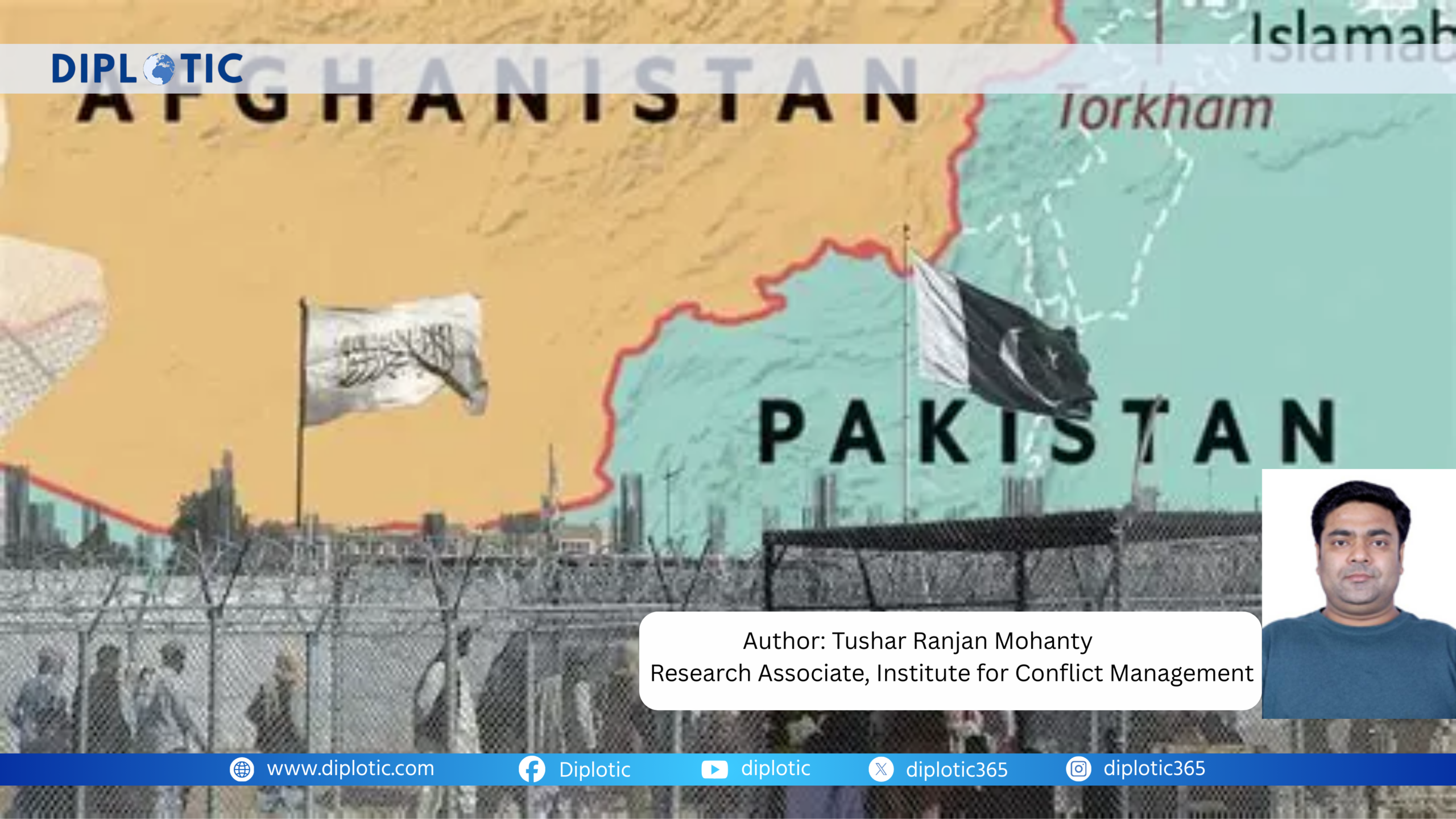
Author: Tushar Ranjan Mohanty, Research Associate, Institute for Conflict Management
On February 22, 2026, Pakistan carried out a series of predawn airstrikes across eastern and south-eastern Afghanistan, resulting in the deaths of at least 18 civilians, including women and children, and leaving several others injured. Pakistani accounts, however, claimed the strikes hit seven militant facilities, including the Banusi Madrasa in Bermal district and suspected hideouts in Khogyani, killing more than 80 militants, including senior commanders. A report in Dawn, citing security sources, stated that intelligence-based operations had destroyed centres linked to Tehreek-e-Taliban Pakistan (TTP), described as Fitna al-Khawarij.
Pakistan’s Ministry of Information and Broadcasting, in a statement on X, claimed the strikes targeted camps associated with TTP, its affiliates, and the Islamic State–Khorasan Province (ISKP). It linked the operation to recent suicide attacks in Pakistan, including incidents in Islamabad, Bajaur and Bannu, asserting these were directed by the Afghanistan-based terrorist leadership.
Pakistan’s State Minister for Interior, Talal Chaudhry, claimed nearly 70 militants were neutralised and accused Afghanistan of exporting terrorism. The Afghan government rejected these claims, stating that civilian areas, including homes and a madrassa, were struck, and condemned the operation as a violation of its sovereignty, warning of a measured response.
The February 22 airstrikes followed an escalation in militant violence within Pakistan, including a suicide attack in the Bannu District of Khyber Pakhtunkhwa just hours earlier. On the evening of February 21, a vehicle-borne suicide bomber targeted a Security Forces (SF) convoy in Bannu District, killing Lieutenant Colonel Shahzada Gul Faraz (43) and Sepoy Karamat Shah (28). The attack underscored the deteriorating security environment in the province.
Earlier, on February 16, at least 13 persons, including 11 SF personnel and two civilians, were killed and another seven injured in a vehicle-borne suicide attack in the Malangi area of Mamund tehsil (revenue unit) in the Bajaur District of KP. A six-year-old child was among those killed. The terrorists targeted a madrassa that had previously served as a hideout for Taliban affiliates and was reportedly under SF control at the time of the attack.
One of the deadliest attacks cited by Pakistan as a principal trigger for the February 22 airstrikes occurred on February 7, when a suicide bomber detonated explosives at the Khadijah al-Kubra Imambargah, a Shia place of worship, in the Tarlai Kalan area on the outskirts of Islamabad Capital Territory (ICT). The attack killed at least 36 Shia worshippers and injured over 169 others. The Islamic State Pakistan Province (ISPP) claimed responsibility.
Addressing the media, Interior Minister Mohsin Naqvi and Minister of State for Interior Talal Chaudhry stated that the suicide bomber had been identified. While clarifying that he was not an Afghan national, they disclosed that he had travelled to Afghanistan prior to the attack. Preliminary investigations indicated that the bomber, identified as Khan, had stayed in Afghanistan for approximately five months before returning to Pakistan. He is believed to have received training at the Mansoor Istashhadi training centre in Kunar Province, and to have travelled between the two countries multiple times.
The February 22 strikes must be viewed against the backdrop of a deteriorating security environment and strained bilateral relations following the Taliban’s return to power in Afghanistan on August 15, 2021. Pakistan has repeatedly accused the Afghan Taliban of providing safe havens to terrorist groups, including TTP and ISKP, alleging that these groups plan and execute attacks from Afghan sanctuaries, either with tacit approval or due to the Taliban’s inability to restrain them. The Taliban government, however, has consistently denied harbouring militants and maintains that Afghan soil is not permitted to be used against any other country.
These airstrikes do not constitute the first instance of Pakistan conducting cross-border operations inside Afghanistan to target alleged terrorist hideouts. Since the Taliban’s return to power in Kabul on August 15, 2021, Pakistan has carried out several aerial operations against suspected militant sanctuaries across the Afghanistan–Pakistan border, particularly targeting TTP and its affiliates, prominently including:
April 16, 2022: Predawn airstrikes on multiple targets in the Khost and Kunar provinces of Afghanistan killed at least 47 civilians and injured 23.
March 18, 2024: Pakistan conducted “intelligence-based anti-terrorist” airstrikes in the Spera District of Khost province and Barmal District of Paktika province in Afghanistan, killing eight people – five women and three children. A press release from the Pakistan Foreign Office said the prime targets of the operation were terrorists belonging to Hafiz Gul Bahadur Group – a TTP faction.
December 24, 2024: A series of Pakistani airstrikes in the Bermal District of Paktika province, Afghanistan, resulted in the death of at least 15 people, including women and children. TTP camps in the Murgha and Laman areas of Barmal District were targeted, including one that was used by Sher Zaman aka Mukhlis Yar, Commander Abu Hamza, Commander Akhtar Muhammad and the head of TTP’s media wing, Umar Media.
October 9, 2025: Pakistan initiated airstrikes in Afghanistan, targeting TTP hideouts in Kabul, Khost, Jalalabad, and Paktika. Code-named Operation Khyber Storm, these strikes aimed to neutralize TTP leaders. On October 16, Umar Media, a TTP mouthpiece, released an approximately 8-minute-long video featuring its ‘chief’ Noor Wali Mehsud, where he denied reports of his killing in the air strikes in Kabul.
These recurring cross-border operations underline the deepening mistrust between Islamabad and Kabul, with Pakistan, for years, accusing Afghan-based militant groups of orchestrating attacks on its soil, while the Taliban regime continues to reject such allegations and terms the strikes a breach of Afghan sovereignty. With the Taliban formalizing their vow of retaliation following the February 22, 2026, airstrikes, the Durand Line stands on a knife-edge, with all indicators pointing toward a significant and potentially sustained escalation of cross-border clashes in the coming days.




