

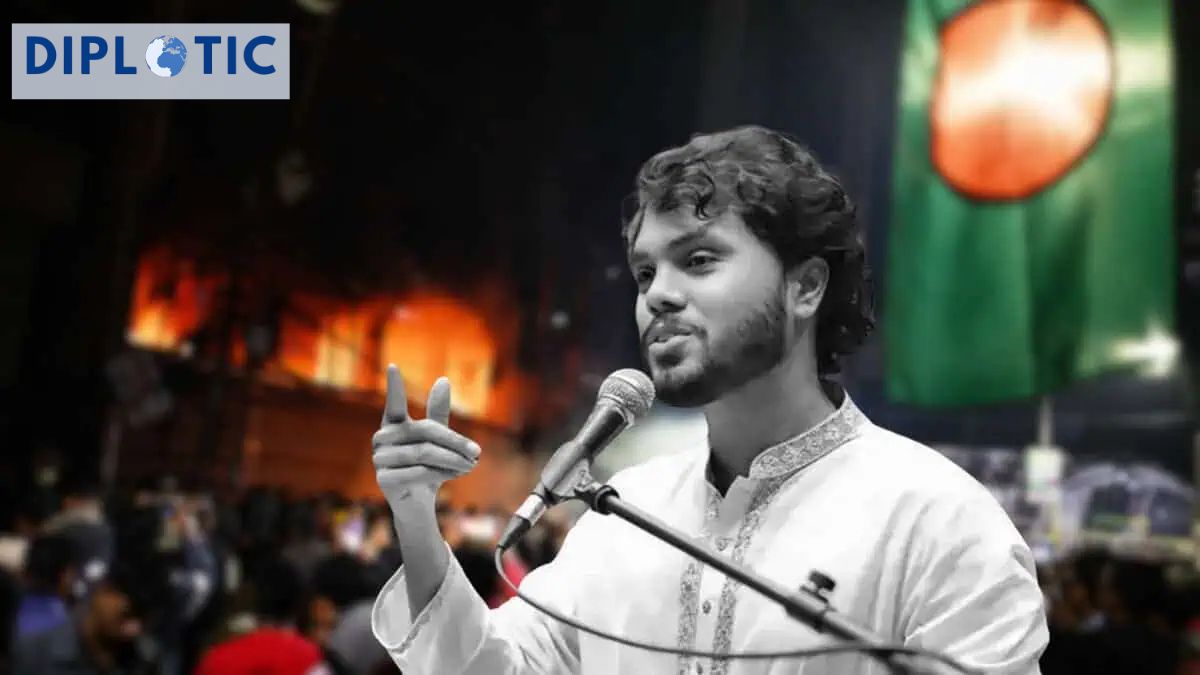
On 12 December 2025, Sharif Osman Hadi, a prominent youth leader, student movement figure, and vocal critic of established political forces, was shot in broad daylight in Dhaka while campaigning for Parliament. He was later flown to Singapore for treatment but died of his wounds on 18 December, igniting nationwide shock, protests, and a crisis of confidence in state institutions.
In a normal democracy, the killing of a political figure would trigger a swift, transparent investigation, speedy prosecution, and public accountability. Instead, the Hadi case has turned into a slow-motion crisis of justice, recasting the murder from a single tragic incident into a symptom of deeper systemic failure.
Why have so many questions about the case endured, and why does Bangladesh remain mired in controversy over Hadi’s death? The answer lies in a combination of inconsistent official narratives, political polarization, weak law enforcement follow-through, and an interim government that appears incapable of restoring trust.
A Murder That Shocked the Nation And a Confusing Investigation
The central facts of the crime are no longer in dispute:
Hadi was shot in the head by motorcycle-borne assailants near Paltan, Dhaka, while campaigning for the upcoming national election.
He was a well-known leader of Inqilab Mancha and a candidate for the Dhaka-8 constituency.
Law enforcement initially identified two primary suspects, Faisal Karim Masud and Md Alamgir Sheikh, as the shooter and the motorcycle attendant, respectively but despite police efforts, their whereabouts remain unconfirmed and likely outside the country.
On 6 January 2026, the Dhaka Metropolitan Police’s Detective Branch filed charges against 17 people in relation to the killing, including former activists associated with the Awami League’s student wing and local political figures.
Yet, nearly a month after the filing, key suspects are still at large or officially “unlocated,” and Bangladesh government sources have publicly acknowledged they cannot confirm where they are.
Mixed Narratives, Political Blame – Not Legal Certainty
What complicates the case emotionally and politically is the divergence of narratives from government, opposition, analysts and civil society:
Police have described Hadi’s murder as the result of a “political vendetta” linked to rival political sentiments.
Hadi’s own party insists the interim government and a “criminal syndicate” were behind the killing, an accusation the government vehemently denies.
As tensions rose, some protesters even demanded reversal of work permits for Indian citizens, reflecting how the case has been internationalized in the public imagination.
Meanwhile, political leaders outside the interim government, including those from major opposition parties, have called for swift, non-violent justice but also questioned the integrity of the state’s handling of the case.
Even foreign policy narratives became involved when Sheikh Hasina, Bangladesh’s former prime minister in exile, called accusations of Indian involvement “baseless” and argued the unrest was driven by internal failures and extremist manipulation, which only served to heighten the controversy.
This cacophony of blame from state officials, opposition leaders, protest movements, and international actors has obscured simple accountability and shifted focus from legal to political rhetoric.
Street Protests, Public Outrage — A Justice Crisis in Full View
The emotional impact on Bangladesh’s youth and civil society cannot be overstated:
Nationwide protests erupted immediately after the shooting, demanding the killers be found and held accountable.
Shahbagh, Dhaka University, and other public spaces became epicenters of demonstrations calling for justice.
Students even blocked sections of the Rajshahi-Dhaka highway, reflecting widespread anger that transcended Dhaka.
Organizations like Inqilab Mancha staged a “March for Justice” that traversed major capital intersections, pledging continued activism if the state did not act.
Such deep public engagement occurring during a sensitive political transition shows the assassination was more than a crime; it became a crystallization of broader anxieties about democracy, accountability, and political violence.
Why the Case Has Stalled Institutional and Political Fault Lines
Despite media attention and public outrage, several key factors have hindered progress:
Lack of Clear Custody of the Main Suspects
Police have publicly stated that suspects escaped to India but later retracted the certainty of their location.
This backtracking undermines confidence in law enforcement’s credibility, especially as Indian authorities have denied any knowledge of the suspects.
Political Polarization Impeding Neutral Investigation
The narrative oscillates between charges of “political revenge,” claims against the interim government, and counterclaims of foreign conspiracy. This politicization has crowded out a single, evidence-based judicial process.
Weak Forensic and Procedural Transparency
Although the police have spoken to CCTV footage, confessions, and electronic forensic evidence, independent confirmation of this evidence has not been systematically released. This opacity fuels suspicion and conspiracy theories.
Interim Government’s Leadership Deficit
The government has repeatedly failed to seal basic institutional credibility: promises of speedy trials have not materialized in clear, public schedules; communication has been fragmented; suspects remain at large; and political factions accuse each other rather than cooperate. These failures cast doubt on the state’s capacity to ensure justice especially on the brink of national elections.
Symbolism Over Substance – A Broader Crisis of Democratic Legitimacy
The unresolved Hadi case has come to symbolize not just a political assassination, but a larger breakdown of faith in government and justice mechanisms. It has:
Exposed weaknesses in law enforcement and cross-border cooperation
Fanned inter-party distrust
Activated street movements wary of state bias
Created fractures in how citizens interpret justice versus political power
For many Bangladeshis, the failure to quickly resolve the Hadi murder case represents the same problem they associate with the interim government’s broader performance: a lack of decisive, transparent, impartial governance.
Conclusion: The Legacy of a Killing And the Unfinished Quest for Justice
If justice delayed is justice denied, then the Hadi case is already a legacy of denial. The interim government’s inability or unwillingness to provide clarity and accountability has deepened public scepticism about both law enforcement capability and political neutrality.
His death has awakened youth movements and ignited protests, yet the state’s response has been fragmented and reactive rather than transparent and authoritative. This is why, months after Sharif Osman Hadi’s killing, Bangladesh still grapples with questions like:
Where are the killers? Who will stand trial? Why is the process stalled?
Until these questions are answered with evidence, not rhetoric, the Hadi killing will remain both a tragedy and a testament to a democracy struggling at the crossroads of justice and political survival.




