
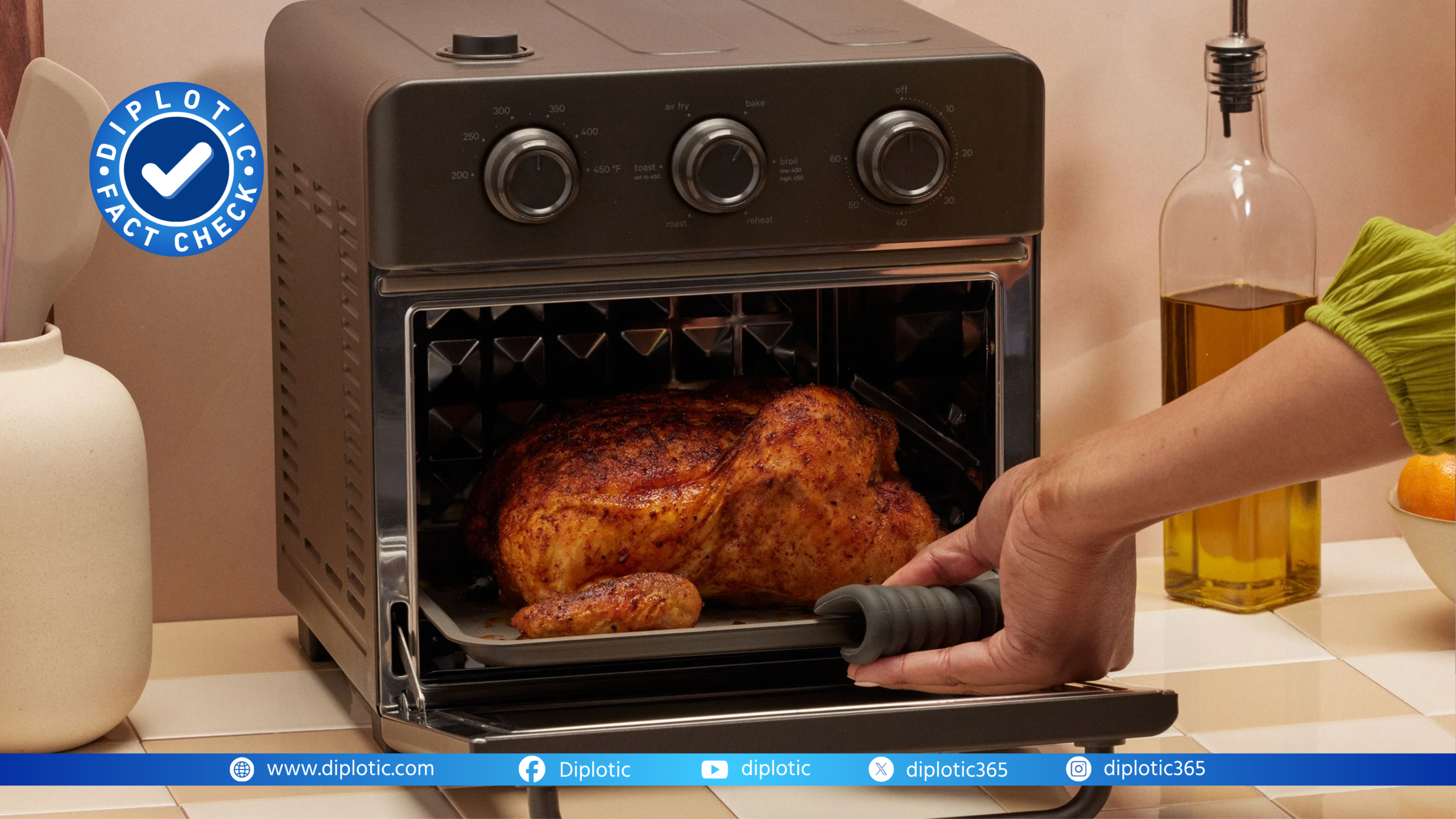
In recent years, air fryers have become one of the most popular kitchen appliances worldwide, marketed as a healthier alternative to deep frying. As consumer awareness about kitchen safety has grown, a new wave of products has emerged labeled “non-toxic air fryers,” with claims that they eliminate health risks associated with traditional air fryers. Social media posts and marketing materials suggest that standard air fryers may release harmful chemicals or cause cancer, while “non-toxic” versions are scientifically proven safer. This investigation examines the materials used in air fryers, the actual health risks associated with their use, and whether the distinction between “toxic” and “non-toxic” models is supported by scientific evidence.
Claim 1: Standard air fryers with PTFE (Teflon) non-stick coatings release toxic fumes when heated, posing health risks to users.
Evaluation: This claim requires careful examination of what is known about PTFE coatings and the conditions under which they may pose risks. PTFE, commonly known by the brand name Teflon, is widely used for its non-stick properties . At normal cooking temperatures, PTFE is considered safe. However, when overheated above 500°F (260°C), it can begin to break down and release fumes . This phenomenon, known as polymer fume fever, can cause flu-like symptoms in humans and can be fatal to birds .
The critical question is whether air fryers routinely reach these temperatures. Most air fryers have maximum temperatures around 400°F (200°C), which is below the 500°F threshold where PTFE degradation begins . Under normal use, therefore, PTFE coatings in air fryers are not heated to temperatures that would cause fume release. The risk arises only if the appliance malfunctions, is used improperly, or if the coating is damaged and flakes off.
The more significant concern may be the longevity of the coating rather than its inherent toxicity. As non-stick surfaces wear down over time—through scratching, abrasion, or general use—they can release microscopic particles into food . This has led many consumers to seek alternatives, even if the health risks of incidental PTFE particle ingestion are not well established.
Verdict: Misleading. PTFE coatings in air fryers are considered safe under normal cooking temperatures, which typically stay below the threshold where fume release occurs. The concern is more about durability and wear than acute toxicity, and claims of widespread toxic fume release during normal use are not supported by evidence.
Claim 2: Ceramic-coated air fryers are “non-toxic” and scientifically proven safer than PTFE-coated models.
Evaluation: Ceramic coatings are often marketed as a safer alternative to PTFE, and they do have genuine advantages . Ceramic coatings are generally free of PTFE and the associated concerns about overheating. They are also typically free of lead and cadmium, heavy metals that are regulated in cookware . For consumers seeking to avoid synthetic polymers entirely, ceramic represents a different class of material.
However, the claim that ceramic coatings are “scientifically proven safer” requires qualification. The safety advantage of ceramic is primarily about the absence of PTFE and the elimination of the overheating concern. Ceramic itself is not inherently toxic, and it does not release fumes under normal cooking conditions .
But ceramic coatings have their own limitations. They are generally less durable than PTFE coatings and can wear down more quickly . When ceramic coatings degrade, they may flake into food, though the particles are typically inert silica-based materials rather than synthetic polymers . The durability issue means that a ceramic-coated air fryer may need to be replaced sooner, and a degraded coating may trap food residue and become a hygiene concern .
There is no large-scale comparative study demonstrating that ceramic-coated air fryers produce measurably better health outcomes than PTFE-coated models used correctly. The safety advantage is theoretical—eliminating a risk that is already minimal under proper use conditions.
Verdict: True that ceramic lacks PTFE-related concerns, but overstated as “scientifically proven safer.” Ceramic coatings eliminate the specific risks associated with PTFE overheating, but they have not been shown to produce better health outcomes in normal use. The choice is more about material preference and durability than proven safety superiority.
Claim 3: Air fryers produce acrylamide, a potentially cancer-causing chemical, when cooking starchy foods at high temperatures, making them unsafe.
Evaluation: Acrylamide is a chemical that forms when starchy foods—such as potatoes, bread, and coffee beans—are cooked at high temperatures, typically above 250°F (120°C), through a process called the Maillard reaction . It is present in fried, roasted, and baked foods, and it has been classified as “probably carcinogenic to humans” by the International Agency for Research on Cancer .
The claim that air fryers produce acrylamide is true, but it requires context. Acrylamide formation is not unique to air fryers; it occurs in traditional frying, roasting, baking, and even toasting . The key question is whether air fryers produce more or less acrylamide than other cooking methods.
Studies have shown that air frying generally produces less acrylamide than deep frying because it uses less oil and often shorter cooking times . The lower oil content means fewer opportunities for the high-temperature reactions that produce acrylamide. However, acrylamide can still form, particularly when cooking starchy foods at high temperatures for extended periods .
Mitigation strategies are available and recommended. Soaking potatoes in water before air frying can reduce acrylamide formation . Cooking at lower temperatures, avoiding over-browning, and maintaining a varied diet are all ways to minimize exposure. The presence of acrylamide in air-fried foods does not make air fryers unsafe; it makes them similar to most high-heat cooking methods.
Verdict: True that acrylamide forms, but misleading as an indictment of air fryers. Acrylamide is produced in many high-heat cooking methods, and air frying generally produces less than deep frying. The risk can be mitigated through simple cooking practices, and air fryers are not uniquely dangerous in this regard.
Claim 4: Plastic components in air fryers can leach harmful chemicals like BPA when heated, making them unsafe.
Evaluation: Air fryers do contain plastic components, including casings, buttons, and sometimes internal parts. The concern about BPA (bisphenol A) is legitimate—BPA is a chemical used in some plastics that has been linked to hormone disruption and other health effects . When choosing an air fryer, looking for products labeled “BPA-free” is a reasonable precaution .
However, the risk of chemical leaching depends on several factors. The plastic parts most likely to be exposed to high heat are those in direct contact with cooking surfaces, which are typically metal or coated. The external casing and buttons are exposed to lower temperatures and are less likely to leach . Manufacturers of reputable brands use heat-resistant plastics designed for their intended applications .
The broader issue is that “BPA-free” does not mean “chemical-free.” Some BPA alternatives used in plastics may have their own safety profiles that are still being studied . The safest approach is to choose air fryers from reputable brands that are transparent about their materials and have third-party certifications like FDA approval, CE marking, or UL certification .
Verdict: Partially True but overstated. Plastic components can pose concerns if they contain BPA and are exposed to high heat, but reputable brands use heat-resistant, BPA-free materials designed for safe use. The risk is manageable through informed purchasing, not a reason to avoid air fryers entirely.
Claim 5: “Non-toxic” air fryers made from stainless steel or other inert materials are the only truly safe option for health-conscious consumers.
Evaluation: Stainless steel air fryer baskets and interiors do eliminate concerns about non-stick coatings and plastics. Stainless steel is inert, durable, and does not release chemicals under normal cooking conditions . For consumers who want to minimize exposure to synthetic coatings entirely, stainless steel represents a legitimate choice.
However, the term “non-toxic” itself is not regulated in cookware marketing. Any manufacturer can label their product “non-toxic” without meeting specific scientific criteria. The label is more a marketing claim than a certification of safety superiority .
Stainless steel also has practical trade-offs. It is not non-stick, meaning food may stick more readily, requiring more oil or more aggressive cleaning . Some stainless steel air fryers use small amounts of oil to achieve crispiness, somewhat offsetting the oil-reduction benefit that makes air fryers popular . The durability of stainless steel is excellent, but the cooking experience differs from non-stick models.
There is no scientific evidence that stainless steel air fryers produce measurably better health outcomes than PTFE or ceramic models used correctly. The choice is about personal preference regarding material exposure, durability, and cooking performance.
Verdict: False as an exclusive claim. Stainless steel air fryers eliminate concerns about coatings and plastics, but they are not the “only” safe option. PTFE and ceramic models are considered safe when used properly and maintained well. The “non-toxic” label is marketing language, not a scientific designation.
Claim 6: Air fryers require less oil than deep fryers, making them inherently healthier regardless of material concerns.
Evaluation: This claim is supported by the basic mechanism of air frying. Air fryers use hot air circulation to crisp food, requiring significantly less oil than traditional deep frying—typically at least 70 percent less oil . This reduction in oil leads to lower calorie and fat content in prepared foods, which is a genuine health benefit for most consumers .
However, “healthier” is relative. Air-fried foods are still processed at high temperatures and may contain acrylamide . They are not inherently “healthy” in the sense of being nutrient-dense; they are simply less unhealthy than deep-fried alternatives . A diet rich in whole, minimally processed foods remains the gold standard for health, regardless of cooking appliance.
The oil reduction benefit is independent of the material safety concerns discussed above. Even a stainless steel air fryer that eliminates coating concerns will still produce food with less oil than deep frying. Conversely, a PTFE-coated air fryer with durability concerns still delivers the oil-reduction benefit.
Verdict: True. Air fryers do use significantly less oil than deep fryers, which is a verifiable health benefit. This benefit exists regardless of the specific materials used in the appliance.
Claim 7: Regular cleaning and maintenance of air fryers is essential to prevent buildup that could lead to smoke, odors, and potential health risks.
Evaluation: This claim is supported by common sense and manufacturer recommendations. Food residue, grease, and oil can accumulate in air fryers over time, particularly in the heating element area . When this residue is reheated, it can produce smoke, unpleasant odors, and potentially harmful combustion byproducts .
Regular cleaning after each use—washing the basket and tray with warm, soapy water—prevents residue buildup . Periodic deeper cleaning, including wiping down the interior and checking the heating element for debris, is recommended to maintain safety and performance .
Neglecting cleaning can also lead to coating degradation. Food residue can scratch non-stick surfaces, accelerating wear and potentially leading to flaking . A well-maintained air fryer, regardless of coating type, will last longer and pose fewer safety concerns than a neglected one.
Verdict: True. Regular cleaning is essential for safe operation, regardless of the specific materials used. Residue buildup can cause smoke, odors, and accelerated wear.
Conclusion: The “Non-Toxic” Label Is Marketing, Not Science
The investigation reveals that the distinction between “toxic” and “non-toxic” air fryers is largely a marketing construct rather than a scientifically validated safety classification. PTFE-coated air fryers, used at normal cooking temperatures, do not release toxic fumes and are considered safe . Ceramic-coated models eliminate PTFE concerns but have their own durability limitations . Stainless steel models offer maximum material simplicity but sacrifice non-stick convenience .
The real health considerations for air fryer users are not about which coating is “toxic” but about proper use and maintenance: avoiding overheating, cleaning regularly, choosing reputable brands, and understanding that air frying reduces but does not eliminate acrylamide formation . The reduction in oil compared to deep frying is a genuine health benefit that applies across all models.
For consumers seeking to minimize chemical exposure, stainless steel models represent the most inert choice, but there is no evidence that they produce better health outcomes than PTFE or ceramic models used correctly. The “non-toxic” label should be treated with healthy skepticism—it is not regulated and does not indicate superior safety validated by science.
The broader lesson is that kitchen safety is about informed use, not about finding a single “safe” product. Reading manufacturer specifications, following temperature guidelines, cleaning regularly, and maintaining a varied diet are more important to health than choosing between PTFE, ceramic, or stainless steel. Air fryers, like any cooking appliance, are tools—their safety depends more on how they are used than on the marketing language on their boxes.