

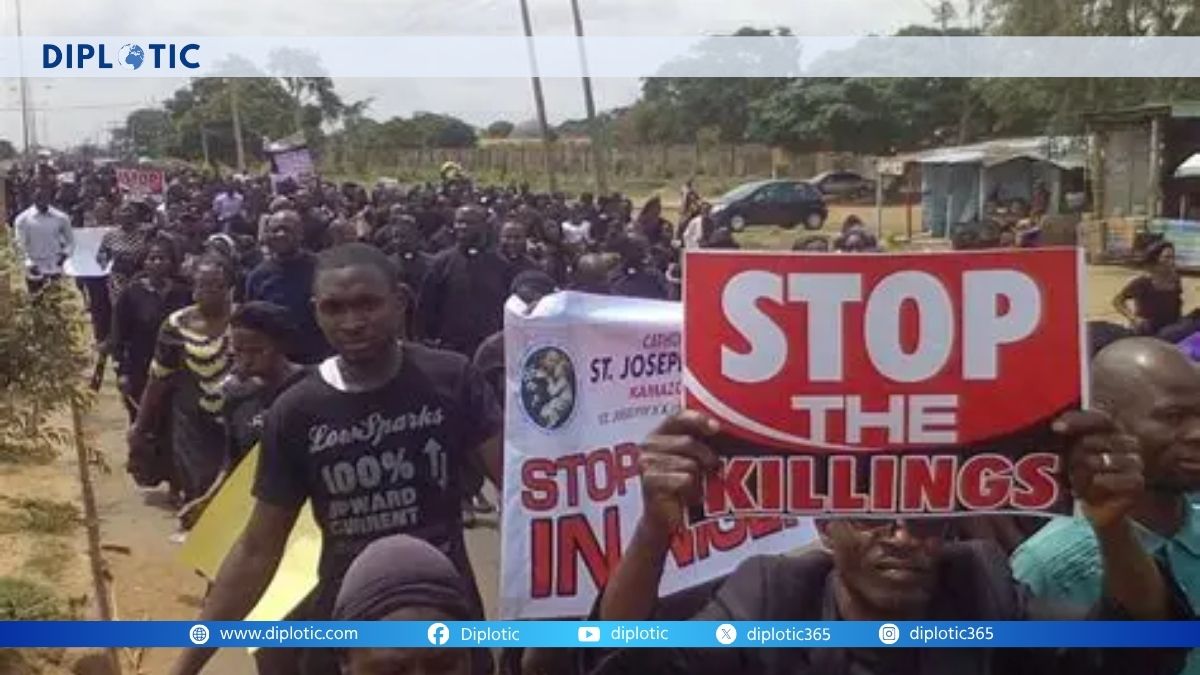
When a global music icon steps into the arena of international human rights, the world takes notice. Recently, rapper Nicki Minaj stood at a United Nations event organized by the U.S. mission and delivered a stark message, aligning herself with former President Donald Trump’s contentious claims of widespread Christian persecution in Nigeria. “In Nigeria, Christians are being targeted,” Minaj stated, describing burned churches and torn-apart families. This powerful endorsement from a celebrity with millions of fans brings a complex, violent conflict into the spotlight of Western popular culture. However, it also raises a critical question: does this high-profile narrative match the intricate and brutal reality on the ground in Nigeria, where violence is a multi-faceted crisis affecting millions regardless of faith? The answer lies not in simple binaries, but in a deeper investigation of the armed groups, their motives, and the dangerous consequences of oversimplifying a humanitarian tragedy.
The Complex Landscape of Violence in Nigeria
To understand the claims of religious persecution, one must first look at the nature of the violence itself. Nigeria, Africa’s most populous nation with approximately 220 million people, is roughly divided between a predominantly Muslim north and a predominantly Christian south. The instability, however, is not neatly divided along these lines. A multitude of armed groups operate across the country, each with different motivations. In the northeast, the jihadist factions Boko Haram and the Islamic State West Africa Province (ISWAP) have waged a long and brutal insurgency. While they have indeed targeted churches and Christians in high-profile attacks, their primary victims have been Muslims who reject their extremist interpretation of Islam. These groups view the Nigerian state, along with any form of secular or traditional authority, as their enemy.
Simultaneously, vast areas of central and northwestern Nigeria are plagued by violence from networks commonly referred to as “bandits.” These are criminal militias motivated largely by economic gain through kidnapping for ransom, cattle rustling, and resource theft. Their attacks are notoriously opportunistic. The same week Minaj spoke, a group of over 20 girls was abducted from a secondary school in Kebbi state. Local officials and the BBC confirmed that the abducted students were predominantly Muslim. In this same attack, a Muslim teacher and a Muslim security guard were killed. Just days later, in Kwara state, gunmen attacked a church, killing two people and abducting several worshippers. This pattern reveals a grim truth: the violence is pervasive and affects all communities. Analysts consistently note that deadly disputes are often more directly fueled by competition over scarce land and water, inter-ethnic rivalries, and a general collapse of security in rural areas than by purely religious doctrine.
The Political Narrative and Its Disconnect from Data
The assertion of systematic Christian persecution is a narrative that has been carefully cultivated and amplified by certain political circles in Washington. For months, right-wing campaigners and politicians have cited data from advocacy groups to argue that Nigeria is a hotspot for the targeted killing of Christians. However, independent verification of this data has proven difficult. Organizations that monitor political violence, such as the Armed Conflict Location & Event Data Project (ACLED), consistently report that the majority of victims of jihadist groups in Nigeria are Muslims. This is not to minimize the very real and horrific attacks on Christian communities, but to place them in a broader statistical context. The Nigerian government itself has pushed back strongly against the Trump-Minaj narrative, calling it a “gross misrepresentation of reality.” An official statement clarified that “terrorists attack all who reject their murderous ideology – Muslims, Christians and those of no faith alike.”
This disconnect highlights how complex, localized conflicts can be reshaped to fit a simpler, more politically useful framework abroad. The narrative of Christian persecution resonates powerfully with certain voter bases and aligns with a particular worldview of civilizational conflict. When a figure like Donald Trump pledges to send troops in “guns a-blazing,” it simplifies a deeply rooted crisis into a religious war, justifying a specific form of interventionist foreign policy. When this narrative is then echoed by a celebrity like Nicki Minaj, who commands a massive, young, and global audience, it gains immense cultural traction. Her statement that this is “not about taking sides” is arguably contradicted by the very act of focusing exclusively on one religious community, thereby rendering the suffering of others less visible to an international audience.
The Consequences of a Simplified Story
The danger of this oversimplified narrative is not merely academic; it has real-world consequences for policy, diplomacy, and the lives of Nigerians. Firstly, it risks alienating the very Nigerian government and security forces that the U.S. needs to cooperate with to combat extremism. By publicly accusing the state of allowing the killing of a specific group, the U.S. strains a critical diplomatic relationship. Secondly, within Nigeria itself, framing the conflict in purely religious terms can exacerbate the very tensions it purports to decry. It provides ammunition for those who wish to portray the crisis as a holy war, potentially fueling cycles of sectarian revenge attacks and making reconciliation more difficult.
Furthermore, a singular focus on religious identity can divert attention and resources from the root causes of the violence. The instability in Nigeria is fueled by a toxic mix of state failure, corruption, extreme poverty, climate change-induced desertification, and a massive youth unemployment crisis. These are the factors that create a fertile recruiting ground for both jihadist and criminal groups. A policy response based solely on protecting one religious community does nothing to address these underlying drivers. In fact, it may make the situation worse by ignoring the grievances of Muslim communities who also feel abandoned and victimized by the state. Effective counter-terrorism and peacebuilding require building broad, inclusive alliances across religious and ethnic lines. A narrative that inherently divides the population undermines this essential work.
A Call for Nuance in a Noisy World
Nicki Minaj’s intervention, while likely well-intentioned, underscores a recurring challenge in how complex foreign crises are understood in the West. The platforms of celebrity and political soundbites are not well-suited for nuance. The true story in Nigeria is one of a nation under assault from multiple directions, where suffering is a universal experience. A Muslim mother in Kebbi mourns her abducted daughter with the same depth of grief as a Christian family in Kwara mourns their lost loved ones. To elevate one form of suffering above another, based on a political or cultural agenda, is to fail in our basic humanity. The path forward requires listening to the data, heeding the analysis of on-the-ground experts, and amplifying the voices of Nigerians themselves who are calling for comprehensive security, justice, and development for all. The attention Minaj has brought to Nigeria’s pain is a powerful opportunity, but it must be channeled toward a complete and truthful picture, lest it inadvertently deepen the divides it seeks to heal.




