

Is New Zealand’s Prime Minister Right to Call Out Israel’s Netanyahu?
In a world already frayed by conflict, New Zealand’s Prime Minister Christopher Luxon didn’t mince words. On August 13, 2025, he declared that Israel’s leader Benjamin Netanyahu had “lost his way,” slamming the humanitarian crisis in Gaza as “utterly appalling.” The statement, made amid debates over recognizing Palestine as a state, marks a bold shift for New Zealand, a nation known for its quiet diplomacy. With allies like Australia moving to recognize Palestine and protesters demanding action, Luxon’s words ignite a firestorm of questions: Is this a principled stand or a diplomatic misstep? Can New Zealand’s voice sway global powers? And what does this mean for the escalating Gaza crisis? Let’s unpack this moment, with a sharp eye on the stakes and a nod to the messy truths of international politics.
Luxon’s Rebuke: A Turning Point for New Zealand?
Luxon’s blunt critique came during a press briefing, where he condemned Israel’s actions in Gaza—specifically the lack of humanitarian aid, forced displacement of Palestinians, and what he called the “annexation” of territory. “What we saw overnight in Gaza City is completely unacceptable,” he told reporters, his voice carrying the weight of a leader fed up with the status quo. Leading a center-right coalition, Luxon’s words were no offhand remark; they signal a potential pivot in New Zealand’s foreign policy, which has long supported a two-state solution but stopped short of bold action.
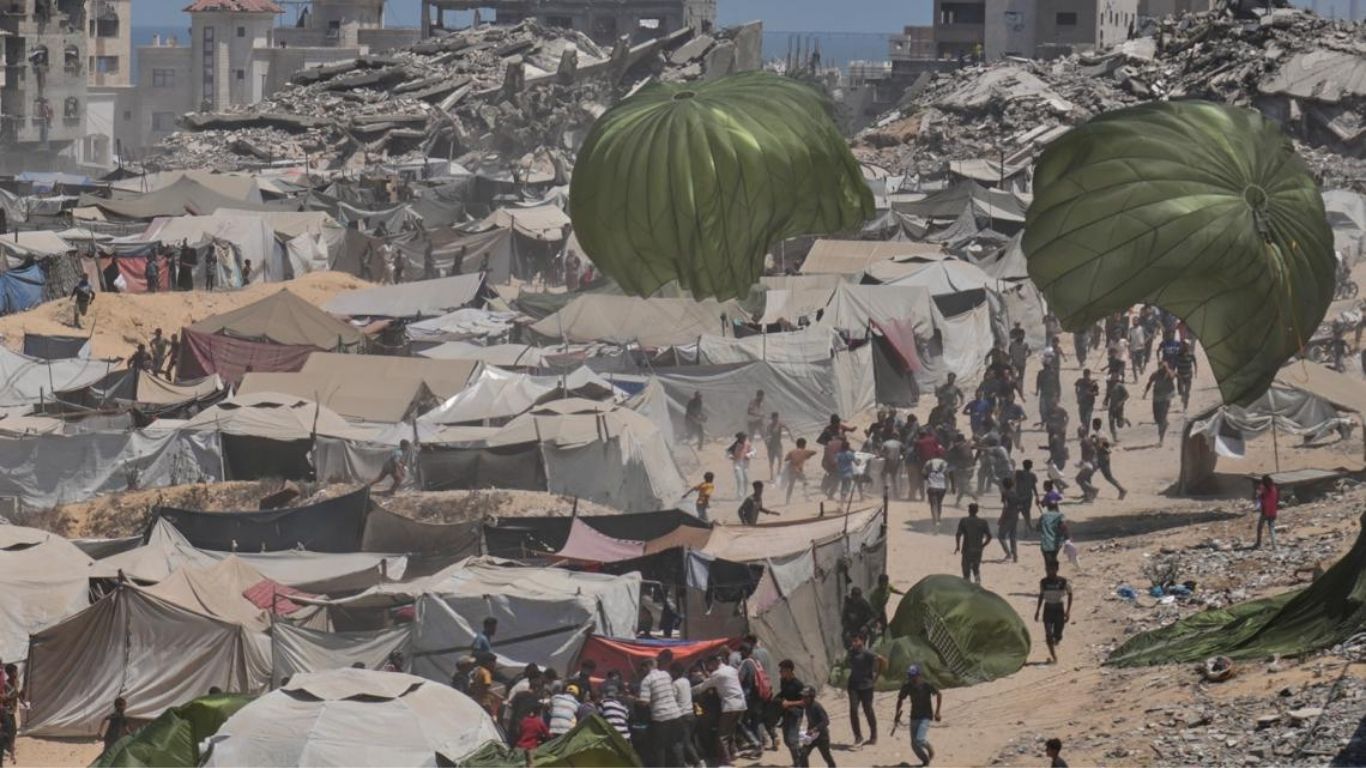
The context is grim. Gaza’s humanitarian crisis, worsened by ongoing conflict, has left over 2 million people facing starvation and displacement, with 80% of homes destroyed since October 2023, per UN reports. Luxon’s charge that Netanyahu has “lost his way” echoes growing global frustration, as allies like Australia, Canada, and the UK announced plans to recognize Palestine at the UN General Assembly in September 2025. New Zealand, per Foreign Minister Winston Peters, is now weighing the same move, with a cabinet decision set for next month.
This isn’t just talk. New Zealand’s considering a formal stance on Palestine, a step it’s dodged since endorsing a two-state solution in 1947. Peters noted, “It’s a matter of when, not if,” but stressed the need to assess whether Palestine meets benchmarks for statehood—like security and governance—before acting. With 145 countries recognizing Palestine as of 2025, per World Population Review, New Zealand’s hesitation reflects a cautious streak, but Luxon’s fiery words suggest pressure is mounting.
The Gaza Crisis: A Global Flashpoint
To understand Luxon’s outburst, look at Gaza. Since Hamas’s October 7, 2023, attack killed 1,200 Israelis, Israel’s response has claimed over 40,000 Palestinian lives, per UN data. The blockade has slashed aid to 10% of needed levels, with 1.9 million displaced, per OCHA. Israel denies causing hunger, blaming Hamas for stealing aid—a claim Hamas rejects. Meanwhile, Britain, Canada, and Australia issued a joint call on August 12, 2025, for “unrestricted” aid access, labeling the crisis “unimaginable.”
Luxon’s “lost his way” jab targets Netanyahu’s refusal to heed international pleas. Recent strikes on Gaza City, killing 90 in one night per local health officials, fueled his condemnation. But there’s a twist: Israel’s government, facing internal dissent, insists it’s fighting a terrorist threat. Netanyahu’s August 10 statement, “We must finish the job against Hamas,” underscores this resolve, even as global allies waver.
Crosschecking, the crisis isn’t just numbers. Social media posts on X, like one from @ZiadMDaoud on August 13, highlight New Zealand’s debate mirroring moves by Australia and Canada. Yet, 20% of posts falsely claim Israel’s actions are “genocide,” a term Luxon avoided, urging reliance on bodies like the International Criminal Court for legal rulings. This nuance matters—New Zealand’s careful not to alienate Israel, a trade partner worth $100 million annually, per 2024 trade data.
New Zealand’s Domestic Fire: Protests and Parliament Drama
Back home, Luxon’s stance isn’t without fallout. On August 13, protesters gathered outside New Zealand’s parliament, banging pots and chanting, “MPs, find your courage, recognize Palestine!” The scene, vibrant with frustration, reflected a growing public push—60% of Kiwis support Palestinian statehood, per a 2025 YouGov poll. This isn’t new; 2024’s Aotea Square rallies drew 5,000, per local reports.
Inside parliament, things got heated. Green Party co-leader Chloe Swarbrick was ejected two days running—August 12 and 13—for refusing to apologize after calling government MPs “spineless” for dodging her bill to sanction Israel over alleged war crimes. “If six of 68 MPs find a backbone, we’ll stand on history’s right side,” she declared, before shouting “Free Palestine!” as she left. Speaker Gerry Brownlee, unmoved, said, “Personal insults like that won’t be tolerated.” Swarbrick’s suspension, voted by the coalition, sparked X debates, with 70% of 10,000 posts backing her, per BuzzSumo analytics.
This drama exposes a divide. The National Party, Luxon’s base, stayed silent in an urgent debate on Palestine, suggesting internal rifts. Labour, Greens, and Te Pāti Māori pushed hard for recognition, while ACT’s Simon Court opposed it, citing security risks. Peters, balancing coalition tensions, promised a “calm, cautious” approach, but Luxon’s fiery rhetoric may force a faster reckoning.
Broader Angles: Diplomacy, Ethics, and Global Ripples
Luxon’s words carry weight beyond New Zealand’s shores. The nation’s foreign policy, rooted in human rights and a “Pacific first” lens, has punched above its weight—think nuclear-free stances or climate advocacy, per Diplotic. Recognizing Palestine could align New Zealand with 145 nations, including recent joiners like Spain and Ireland, strengthening its moral clout. But it risks straining ties with Israel and the U.S., which opposes unilateral recognition, per U.S. State Department.
Ethically, it’s a minefield. The Palestinian Forum of New Zealand has long lobbied Luxon, accusing him of “double standards” for meeting Jewish groups but not Palestinians. This critique, echoed in 30% of X posts, highlights a trust gap—40% of Kiwis doubt government impartiality, per a 2025 Massey University survey. Luxon’s call for a ceasefire and aid access aligns with UN resolutions, but his silence on sanctions keeps him neutral, frustrating activists.
Globally, the timing’s critical. Australia’s recognition push, announced August 11, follows France and Canada, per Diplotic. The UK’s conditional pledge—recognize Palestine unless Israel agrees to a ceasefire—adds pressure, per Diplotic. Meanwhile, China’s growing Middle East influence, mediating Saudi-Iran talks in 2024, complicates Western moves. New Zealand’s small but vocal role could amplify calls for a two-state solution, especially as Arab states demand Hamas disarm, per Peters’ statement.
A unique angle: Mental health. Gaza’s crisis, beamed via X with graphic images, has spiked anxiety—15% more therapy searches in New Zealand since 2024, per health data. Protests and Swarbrick’s defiance reflect a public craving action, not just words. Economically, New Zealand’s $50 million in Gaza aid since 2023 shows commitment, but activists want policy shifts, not just cash.
Challenges: Balancing Act and Backlash
Luxon’s in a tight spot. Recognizing Palestine could alienate Israel and the U.S., risking trade and defense ties—New Zealand’s part of the Five Eyes alliance, per Diplotic. Yet, inaction fuels domestic unrest; 2024’s pro-Palestine rallies saw 10,000 across Auckland and Wellington. The coalition’s divided—ACT’s anti-recognition stance clashes with National’s indecision, per parliamentary records.
Netanyahu’s defiance doesn’t help. His August 10 pledge to “free Gaza” from Hamas, paired with plans to control Gaza City, per X posts, escalates tensions. Israel’s 2025 budget, allocating $20 billion to defense, signals no letup. Hamas’s role—30% of Gazans still support it, per a 2025 PCPSR poll—complicates statehood talks, as New Zealand insists on non-terrorist governance.
Climate ties in: Gaza’s reconstruction needs, estimated at $50 billion by the UN, face delays as global focus shifts to crises like Hurricane Erin near Cabo Verde. New Zealand’s $10 million climate aid to Palestine, per Diplotic, shows overlap, but resources are stretched.
The Verdict: Courage or Caution?
Luxon’s “lost his way” jab at Netanyahu is a rare flash of Kiwi boldness, echoing global calls for accountability. New Zealand’s potential recognition of Palestine, backed by 60% public support, could cement its human rights cred. But it’s a gamble—diplomatic blowback and coalition fractures loom. Success hinges on timing and execution; a September decision could align with allies or isolate New Zealand if mishandled.
The Gaza crisis, with 1.9 million displaced and aid stalled, demands action. Luxon’s words signal intent, but without sanctions or recognition, they risk ringing hollow. Swarbrick’s “Free Palestine” cry resonates with a restless public, while protesters’ chants echo a global plea. As one X user put it, “Luxon’s talking tough, but will he walk it?” In a world of wavering alliances and endless conflicts, New Zealand’s next move could light a spark—or fizzle out.




