

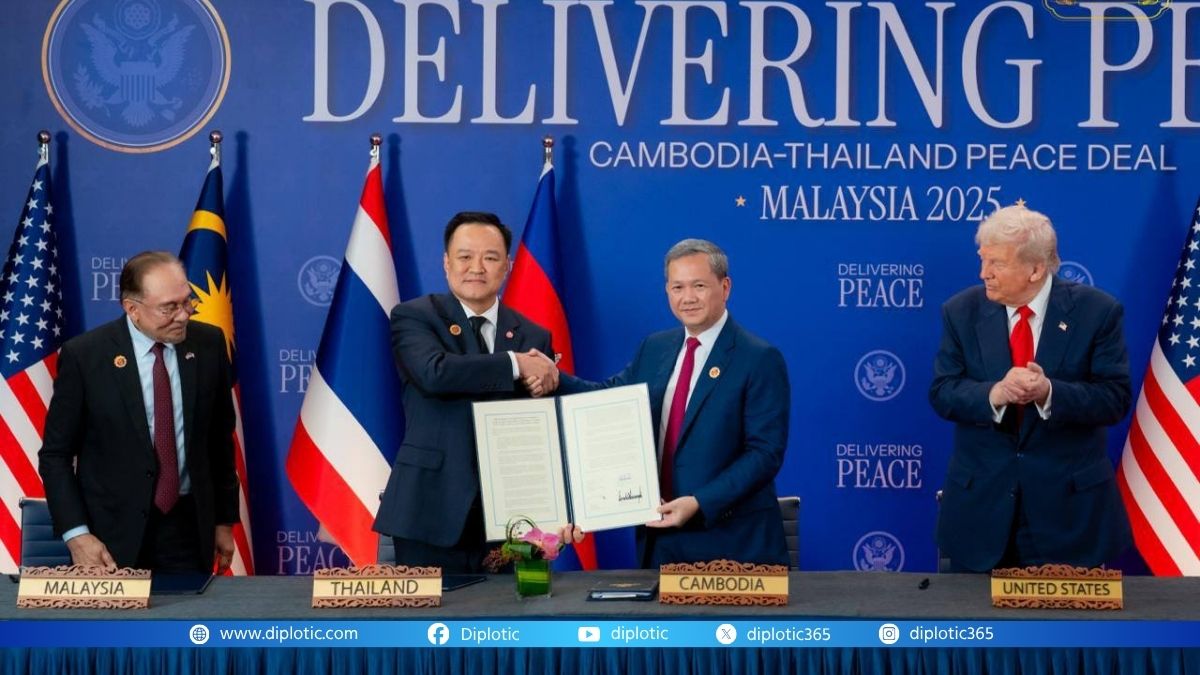
Through trade, diplomacy, and strategic leverage, Donald Trump’s second administration is reshaping U.S.-Cambodia relations in a daring geopolitical move that marks Washington’s first real offensive in China’s backyard.
A New Chapter in U.S.-Cambodia Relations
For decades, U.S.-Cambodia relations have been defined by tension, mistrust, and missed opportunities. Human rights disputes, sanctions, and Cambodia’s deepening ties with Beijing created one of Washington’s most difficult bilateral relationships in Southeast Asia. Now, under President Donald Trump’s second administration, that dynamic appears to be shifting dramatically, with Cambodia unexpectedly emerging as a critical battleground in the intensifying U.S.-China strategic rivalry.
During the recent Association of Southeast Asian Nations (ASEAN) summit in Malaysia, Trump made a series of surprise announcements that could reshape the region’s geopolitical landscape. In addition to attending key regional security dialogues, Trump signed a new trilateral agreement with Cambodia, Malaysia, and Thailand aimed at securing critical minerals and reducing tariffs on selected Cambodian exports to the U.S.
This move represents the first tangible sign that Washington is actively courting Phnom Penh rather than criticizing it, a calculated reversal of decades of policy marked by moral pressure and diplomatic isolation.
From Adversary to Opportunity
Historically, Washington’s relationship with Phnom Penh was driven more by values-based diplomacy than by strategic interest. The U.S. imposed sanctions over democratic backsliding, condemned human rights violations, and criticized Cambodia’s growing dependence on Chinese aid and investment. Meanwhile, Beijing’s influence expanded rapidly, funding major infrastructure projects, military cooperation, and the controversial Ream Naval Base on Cambodia’s coast, a development seen by Washington as part of China’s broader Indo-Pacific strategy.
Trump’s latest outreach, however, marks a distinct shift from this paradigm. Instead of attempting to isolate Cambodia, his administration appears to be engaging it through economic incentives and pragmatic diplomacy, seeking to reduce Beijing’s monopolistic influence. The focus on critical minerals essential for renewable technologies and defense manufacturing underscores Washington’s strategic intent to diversify supply chains away from China.
Diplomacy Meets Theater: The ASEAN “Peace Deal” Moment
Perhaps the most headline-grabbing development came during the ASEAN summit’s closing ceremony, when Trump presided over what he called a “peace deal” between Cambodia and Thailand following months of escalating border clashes. While technically a ceasefire, the symbolic optics of Trump brokering a deal between two Southeast Asian neighbors played well both regionally and domestically.
In a move that underscored the diplomatic theatrics, Cambodian Prime Minister Hun Manet later nominated Trump for the Nobel Peace Prize, praising his “extraordinary statesmanship” and efforts to prevent further bloodshed. Whether the nomination holds substantive merit or not, it served as a deft piece of political maneuvering appealing directly to Trump’s well-known fascination with international accolades while cementing Phnom Penh’s pivot toward closer ties with Washington.
Strategic Ripples Across China’s Backyard
Beijing has long regarded Cambodia as one of its most reliable allies in Southeast Asia, a steadfast supporter of Chinese positions within ASEAN, especially on the South China Sea. But Trump’s recent moves suggest that Washington may have found a wedge to disrupt that alignment.
By offering trade incentives and high-level diplomatic recognition, the U.S. is undercutting Beijing’s economic monopoly and challenging its narrative of inevitable regional dominance. Cambodia, for its part, appears eager to rebalance its foreign policy after years of near-total dependence on China, which has led to growing domestic discontent over debt, land acquisitions, and sovereignty concerns.
Analysts warn, however, that such shifts could trigger renewed competition and even coercive tactics from Beijing, particularly if U.S. engagement expands into defense cooperation or infrastructure projects.
Economic Pragmatism Meets Geopolitical Strategy
Trump’s approach to Southeast Asia in his second term reflects a broader doctrine: economic pragmatism as a tool of geopolitical influence. Rather than leading with democratic ideals or human rights, traditional pillars of American foreign policy, his administration is leveraging market access, trade deals, and high-profile diplomacy to pull regional actors closer to the U.S. orbit.
For Cambodia, this could mean expanded export opportunities, renewed development financing, and potentially even military assistance. For Washington, it means strategic access and influence in a region where China’s dominance once seemed unshakable.
The Road Ahead
The emerging U.S.-Cambodia thaw is far from guaranteed. Phnom Penh will likely continue to balance between Washington and Beijing to extract maximum benefit from both powers. Moreover, skepticism remains high among regional observers who question the sustainability of Trump’s foreign policy commitments, especially given his tendency to personalize diplomacy and prioritize symbolic gestures over institutional strategy.
Still, Trump’s latest diplomatic offensive has undeniably shifted the regional narrative. For the first time in years, the United States is no longer merely reacting to China’s maneuvers in Southeast Asia; it is playing offense, and Cambodia has become the proving ground for that strategy.
Conclusion
Whether this newfound engagement represents a lasting realignment or a fleeting tactical maneuver, one fact is clear: Southeast Asia’s geopolitical chessboard is changing rapidly. And in Cambodia, Washington may have finally found a way to turn China’s own backyard into a contested space, signaling a bold, if unpredictable, new phase in the global power struggle between the world’s two superpowers.




