

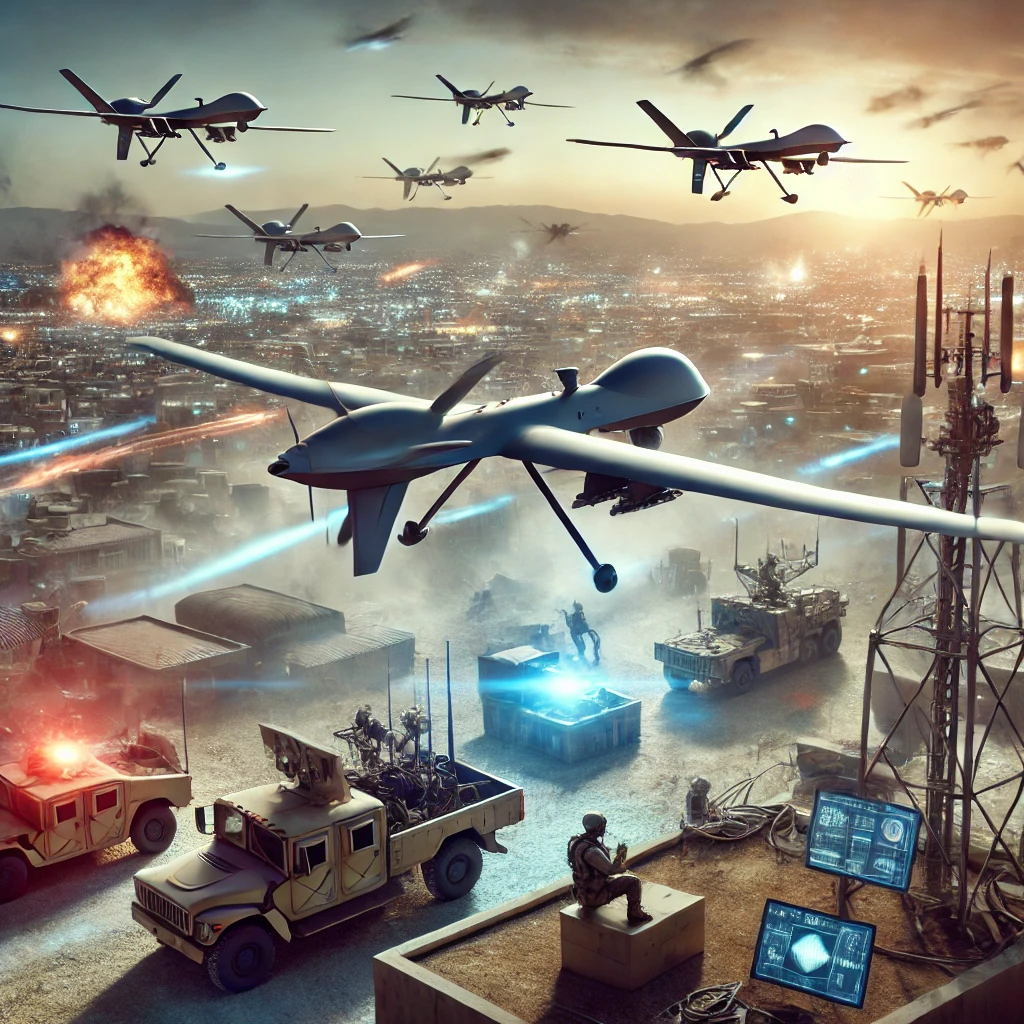
The Facade of Neutrality
Neutrality, under international law, demands that a state refrain from aiding belligerents in an armed conflict. The 1907 Hague Conventions (V and XIII) explicitly bar neutral states from supplying arms to warring parties on a government-to-government basis, though private exports are permitted if applied impartially. Yet, in today’s interconnected arms market, neutrality is more a diplomatic posture than a strict practice. Countries like Switzerland, Austria, and even less-expected players like Turkey and the UAE have been implicated in channeling weapons to conflict zones through intermediaries, exploiting gaps in oversight and the complexity of global trade.
The Global Arms Trade
The global arms trade, valued at $2.2 trillion from 2020–24 according to the Stockholm International Peace Research Institute (SIPRI), thrives on opacity. Neutral states, often with robust defense industries, play a role in this ecosystem, using third-party routes—middlemen countries, private firms, or shell companies—to distance themselves from the end user. This isn’t just about profit; it’s about geopolitical leverage, strategic alliances, and sometimes sheer opportunism.
Mechanisms of Covert Arms Transfers
Third-Party Laundering
Neutral countries often route arms through allied or less-regulated states to obscure their origin. For instance, in the Nagorno-Karabakh conflict (2020), Azerbaijan received artillery from Slovakia and rocket launchers from Czechia, shipped via an Israeli company, despite both European nations’ nominal neutrality.
Similarly, Amnesty International’s 2024 investigation into Sudan’s conflict revealed that blank guns from Turkey, a NATO member with a neutral stance in some conflicts, were smuggled into Darfur via intermediaries. These guns, made by firms like Özkursan and Voltran, are easily converted into lethal weapons, flooding black markets across North Africa. The process is straightforward but slick. A neutral country’s arms manufacturer sells to a private company or a friendly nation with lax export controls.
That intermediary then redirects the weapons to a conflict zone, often through ports or borders with minimal scrutiny. “The supply chain taking arms to the world’s most critical war grounds was hidden by a lack of transparency,” said Carlo Tombola of The Weapon Watch, exposing how European ports often fail to check ships carrying such cargo.
Exploiting Legal Loopholes
The Arms Trade Treaty (ATT), adopted in 2014, requires states to assess the risk of arms transfers facilitating international humanitarian law (IHL) violations. Yet, enforcement is spotty. Neutral states like Switzerland, a hub for small arms production, argue that private exports by companies like SIG Sauer don’t violate neutrality since they’re not government-driven.
In 2023, Swiss-made rifles surfaced in Yemen, likely routed through Gulf intermediaries, despite Switzerland’s strict neutrality laws. The loophole? Private firms face fewer restrictions, and end-user certificates—meant to ensure weapons stay with the intended buyer—are easily forged or ignored. Turkey’s role is even murkier. While officially neutral in conflicts like Ukraine-Russia, it supplied 2.9% of Azerbaijan’s arms imports (2011–20), including drones used in Nagorno-Karabakh. These transfers often pass through shell companies or allied states, bypassing ATT scrutiny. “Many countries don’t release customs data, so clandestine transfers stay off the radar,” notes Amnesty’s Sudan report, highlighting how Turkey’s blank gun exports evade tracking.
Proxy States and Geopolitical Motives
Neutral countries also leverage proxy states to advance strategic goals. The UAE, despite its neutral posturing in some conflicts, was accused by Sudan’s UN representative in 2024 of arming the Rapid Support Forces (RSF) in Darfur via Chad, using airports like Am Djarass to ship weapons and evacuate fighters.
The UAE denied this, but UN and Amnesty investigations confirmed supply lines from Libya, South Sudan, and the Central African Republic, often involving UAE intermediaries. This aligns with the UAE’s broader strategy to counter Iranian influence in Yemen, using arms flows to shape regional power dynamics.
Similarly, Belarus, neutral in many conflicts, supplied 7.1% of Azerbaijan’s arms (2011–20), including tanks and rockets, driven by its need for Azerbaijani oil to reduce Russian dependence. These transfers, routed through intermediaries, show how economic motives can trump neutrality pledges. “Money beats morals,” quips the World Peace Foundation, noting that wealth and military spending often dictate arms flows, not ethical export policies.
Key Players and Their Roles
Switzerland: The Neutral Arms Hub
Switzerland, synonymous with neutrality, is the world’s 12th-largest arms exporter, with companies like SIG Sauer and Rheinmetall producing small arms and ammunition. In 2022, Swiss neutrality was tested when Germany requested to re-export Swiss-made ammunition to Ukraine. Switzerland refused, citing its Neutrality Act, but private exports to intermediaries like the UAE continued, some of which reached Yemen’s Houthi rebels. The motive? Profit and maintaining trade ties with Gulf states, which spent $27 billion on arms imports in 2020–24. Switzerland’s defense industry employs 13,000 people and generates $2 billion annually, creating pressure to keep exports flowing.
Turkey: The NATO Neutral
Turkey walks a tightrope, balancing NATO membership with neutral stances in conflicts like Ukraine-Russia. Yet, it’s a major arms supplier, exporting $1.7 billion in weapons in 2024, including drones to Azerbaijan and blank guns to Sudan. Its motives blend economics—arms exports support 80,000 jobs—and geopolitics, as Turkey seeks influence in Central Asia and the Middle East. By routing arms through private firms or allies like Israel, Turkey maintains deniability while advancing its agenda.
UAE: The Shadow Broker
The UAE, neutral in many conflicts, is a key transshipment hub. Its ports, like Jebel Ali, handle massive arms flows, some destined for conflict zones like Sudan and Yemen. In 2024, Amnesty documented UAE drones and vehicles reaching Sudan’s RSF via Chad, breaching UN sanctions. The UAE’s motive is clear: countering Iran’s influence while securing economic ties with Western arms suppliers like the US and UK, which supplied 52% of Middle East arms imports in 2020–24.
Consequences of Covert Arms Flows
These covert arms flows have dire impacts. In Sudan, Turkish and UAE-supplied weapons have prolonged a civil war that killed 15,000 people in 2024 alone, with 8 million displaced. In Yemen, arms from neutral states like Switzerland and the UAE have fueled a conflict that claimed 233,000 lives by 2023, exacerbating a humanitarian crisis.
The World Peace Foundation notes that arms transfers increase the likelihood of conflict escalation and prolong wars by providing belligerents with the means to fight on. Civilians bear the brunt. In Sudan, 90% of conflict-related sexual violence involves small arms, often supplied through neutral intermediaries.
The UN warns that unchecked arms flows to conflict zones risk diversion to terrorists and organized crime, as seen in Libya, where post-2011 stockpiles armed Hamas in Gaza. “Weapons are the fuel of conflicts,” said UN disarmament official Izumi Nakamitsu, urging tighter controls.
Legal and Ethical Challenges
The law of neutrality, rooted in the Hague Conventions, is clear: neutral states must not aid belligerents directly. Yet, scholars like Markus Krajewski argue that modern conflicts blur these lines, especially when neutral states support victims of aggression, as seen with Ukraine.
The UN Charter’s Article 51, which upholds the right to self-defense, complicates matters—some argue it justifies arms supplies to states like Ukraine, even from neutrals. But when weapons reach groups like Sudan’s RSF or Yemen’s Houthis, often via neutral intermediaries, they violate the ATT and IHL, risking war crimes liability.
Ethically, the hypocrisy stings. “You have ministers calling wars dirty while their countries arm the fighters,” said Sarah Roussel of an NGO critiquing France’s Yemen exports, a sentiment that applies to neutrals like Switzerland and the UAE. Publicly, these nations champion peace; privately, their arms fuel violence, undermining trust in international law.
Solutions to Curb Illicit Arms Trade
Stopping covert arms flows requires bold action. The ATT’s Diversion Information Exchange Forum, launched in 2023, helps states track illicit transfers, but participation is voluntary and spotty. The UN Register of Conventional Arms captures 90% of global arms flows but lacks enforcement teeth. Proposals include:
- Stricter End-User Controls: Mandating verifiable end-user certificates and post-shipment audits to prevent diversion.
- Port Inspections: Enhancing checks at transshipment hubs like the UAE’s Jebel Ali and Turkey’s Istanbul ports.
- Sanctions Enforcement: Strengthening UN arms embargoes, as in Sudan, with penalties for neutral states caught funneling arms.
- Transparency: Requiring all states, including neutrals, to publish detailed arms export data, closing the “mirror data” gap.
The Reality of Neutrality
Neutral countries aren’t just bystanders; they’re players in a high-stakes game, funneling arms through third-party routes to conflict zones while waving the flag of impartiality. Switzerland’s rifles, Turkey’s drones, and the UAE’s logistics keep wars burning. The motives—profit, influence, or strategic hedging—are as old as war itself, but the consequences are modern: prolonged conflicts, civilian suffering, and eroded global trust. As long as legal loopholes and geopolitical games persist, neutrality will remain a convenient mask for those who arm the world’s wars while claiming clean hands.




