

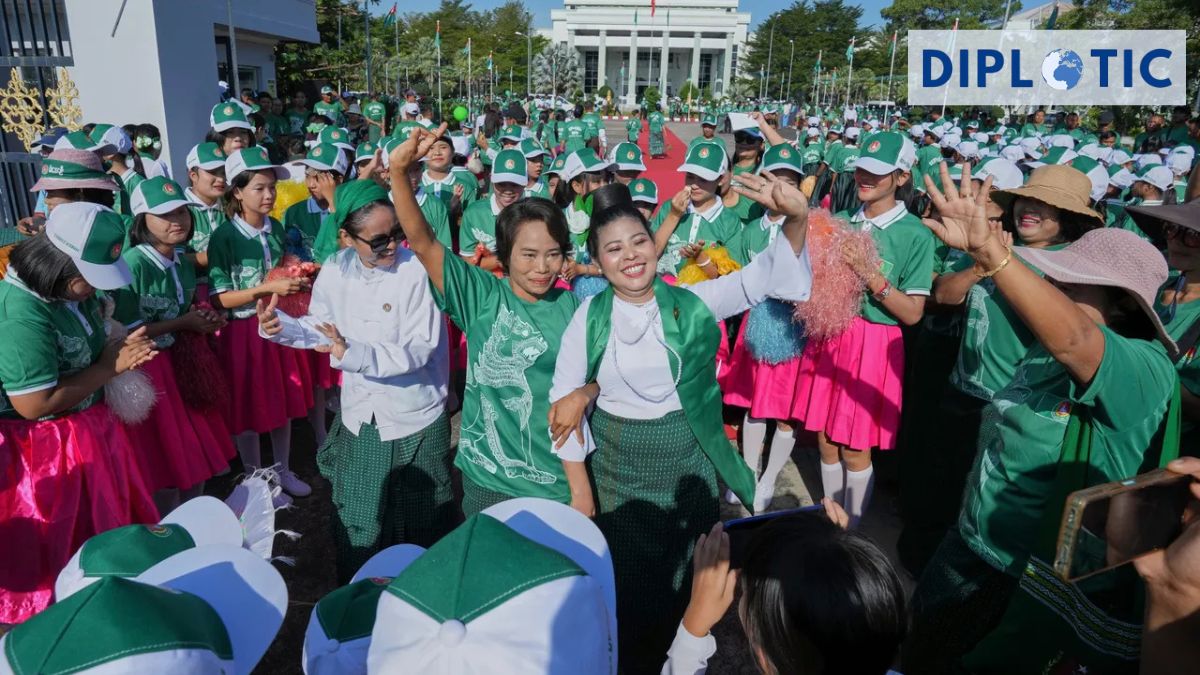
Myanmar’s military-staged election is drawing sharp criticism as citizens prepare to vote without faith, freedom, or fair choice under junta rule.
A Nation Voting Without Belief
“We will vote but not with our hearts.”
This quiet but powerful statement now echoes across Myanmar as the country prepares for an election orchestrated by its ruling military junta. For millions of ordinary citizens, the upcoming poll represents not a celebration of democracy but a painful ritual performed under surveillance, fear, and deep political disillusionment.
Four years after the military seized power in a coup that overturned the results of Myanmar’s 2020 democratic election, the generals are once again asking the public to the ballot box. But critics, rights groups, and much of the population say this election is designed not to restore democracy but to legitimize continued military control.
An Election Shaped by Control, Not Choice
Myanmar’s ruling junta has framed the vote as a return to constitutional order. Yet on the ground, the conditions resemble an election managed by coercion rather than consent. Dozens of political parties have been disbanded, thousands of opposition activists remain detained, and independent media has been virtually silenced.
The military’s election law severely restricts who can run, how campaigns can operate, and what voters are allowed to hear. With Aung San Suu Kyi and much of her party leadership imprisoned, the political field has been effectively cleared of real competition.
For many voters, the outcome already feels predetermined.
Fear at the Polling Booth
Across towns and villages, residents speak quietly about the vote often glancing over their shoulders before answering even simple questions. In some areas, households have been warned that failure to participate may attract unwanted attention from authorities.
“We will go because we have to,” said one schoolteacher from central Myanmar. “But we are not choosing our leaders. We are just following orders.”
The presence of soldiers near polling centers has further reinforced the perception that this is a controlled exercise rather than a free civic act.
The Junta’s Legitimacy Strategy
For Myanmar’s generals, the election is a strategic move not only domestically but internationally. By holding a vote, the junta hopes to gain a degree of legitimacy and weaken global pressure over human rights abuses, political detentions, and the ongoing civil conflict.
Analysts say the military aims to install a civilian-faced government that still answers directly to top generals, similar to arrangements seen in earlier periods of Myanmar’s political history.
“It’s about changing the label, not the system,” one regional security expert noted. “They want to look constitutional while retaining full control.”
International Skepticism Remains Strong
Foreign governments and international organizations have largely rejected the credibility of the upcoming vote. The United Nations, Western democracies, and several Asian neighbors have warned that an election held without genuine political freedom cannot be considered legitimate.
Many countries continue to maintain sanctions on junta leaders and military-linked businesses. Observers warn that recognizing the results could set a dangerous precedent by validating authoritarian rule through controlled electoral processes.
A Public Caught Between Compliance and Resistance
Inside Myanmar, people are caught between quiet defiance and forced compliance. Some plan to submit blank ballots. Others will cast protest votes, even though they know their choices may not change the final result. Many simply want to avoid drawing attention.
For families already struggling with inflation, job losses, and displacement caused by ongoing fighting, political ideals have been replaced by survival instincts.
“Democracy feels very far away,” said a shop owner in Mandalay. “Right now, we just want to live without fear.”
A Divided Political Landscape
Armed resistance groups, pro-democracy organizations, and ethnic militias have openly rejected the election, calling it a political trap designed to weaken resistance movements. In some conflict-affected areas, polling is unlikely to take place at all.
This fragmented landscape further undermines the junta’s claim of conducting a nationwide democratic exercise.
What Comes After the Vote?
Even if the election proceeds on schedule, Myanmar’s political crisis will not be resolved. The country remains deeply divided, economically strained, and locked in an unresolved internal conflict.
Without inclusive dialogue, the release of political prisoners, and meaningful reforms, the vote is unlikely to bring stability and could instead harden divisions and prolong unrest.
Conclusion: Democracy in Form, Not in Spirit
Myanmar’s upcoming election may feature ballots, polling stations, and official results, but for many citizens, it lacks the most important element of democracy: genuine choice.
“We will vote,” one resident said softly, “but our hearts are not in it.”
That sentiment reflects a nation forced to participate in a political performance it no longer believes in an election shaped by control rather than consent, and by fear rather than freedom.




