

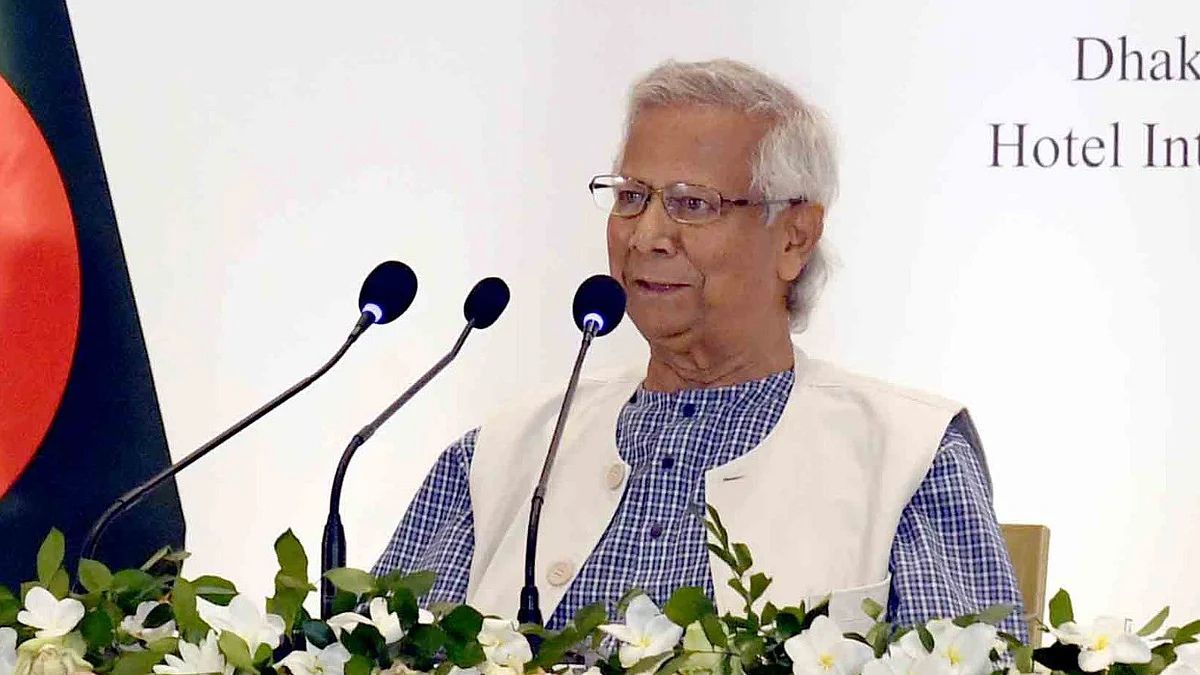
Bangladesh’s interim government is under intense scrutiny as its chief adviser, Muhammad Yunus, reportedly contemplates resignation amid escalating political tensions and mounting public protests. The Nobel Peace Prize winner, hailed internationally for his pioneering work in microfinance, now finds himself at the heart of a growing storm at home.
With opposition parties stepping up pressure and nationwide protests flaring, Yunus has allegedly told close aides that he “cannot work like this.” But behind the emotional statement lies a deeper question, which started as quiet rumors, has now ignited national debate. Is Yunus truly want to resign or is this emotional blackmail designed to pressure political actors?
Yunus Really Wants to Resign, or Emotional Blackmail?
The phrase, now trending on Bangladeshi social media and debated across political talk shows, has become a reflection of the public’s divided sentiment. The 84-year-old Nobel laureate has expressed frustration over the inability of political parties to cooperate with his caretaker government.
Nahid Islam, a former cabinet member under Yunus and current leader of the National Citizen Party, confirmed that the 84-year-old adviser is indeed contemplating resignation. “He feels embarrassed. He believes the political environment is too toxic for him to function independently,” Nahid told BBC Bangla.
“He says he’s thinking about it. He feels like the situation is such that he won’t be able to work,” said Nahid Islam, who met Yunus privately on Thursday.
However, critics argue that the public airing of these frustrations without a formal resignation may be a calculated move. “This could be strategic pressure. A resignation threat amid protests might be designed to rally sympathy or force parties into compromise,” said a senior political analyst based in Dhaka.
The sentiment is echoed in political circles, where the phrase “Yunus really wants to resign, or emotional blackmail?” is becoming shorthand for skepticism about the adviser’s true intentions.
Army Chief Breaks Silence on Myanmar Corridor Tensions
Amid the domestic political drama, General Waker-uz-Zaman, the Chief of Army Staff, made his first public comments on the volatile situation along the Myanmar border.
Speaking to reporters during a briefing on Thursday, General Waker-uz-Zaman, the Chief of Army Staff, emphasized that the military is “closely monitoring” developments along the southeastern corridor adjacent to Myanmar.
“We are vigilantly monitoring the developments along the southeastern frontier. The security of the Myanmar corridor is critical to our national integrity.”
“We are fully aware of the risks posed by the instability in Myanmar. Any movement across the corridor will be met with a firm and coordinated response,” General Zaman stated. He assured that “national sovereignty and internal stability remain our highest priority.”
He assured the public that the Bangladesh Army is fully prepared to safeguard the border, citing recent tensions related to cross-border movements and the growing humanitarian crisis due to Myanmar’s ongoing internal conflict.
The Army Chief’s comments come amid increasing tension on the Bangladesh-Myanmar border, where recent cross-border skirmishes and refugee movements have raised alarms. Observers believe Yunus’s caretaker administration may be overwhelmed by multiple fronts political unrest, opposition pressure, and regional instability.
Rising Political Tensions
On the political front, the Bangladesh Nationalist Party (BNP) staged a massive protest in Dhaka on Thursday, demanding a concrete roadmap for elections to be held by December. The party warned it may withdraw its support for the interim government unless clear electoral plans are announced soon.
The BNP’s growing frustration reflects broader discontent with Yunus’s leadership, which, despite his international reputation, has been criticized for indecision and lack of political grounding.
Cabinet Divided, Nation on Edge
Nahid Islam, who resigned from Yunus’s interim cabinet to launch his own political party, urged the adviser not to resign. “I went to meet him because the country is in crisis. He should not abandon the process now,” Nahid said.
Still, Yunus reportedly told his cabinet, “I cannot work like this. The political parties cannot reach a common ground.”
Insiders say Yunus feels “somewhat embarrassed” by his inability to act independently due to constant political interference and public pressure.
Where Does This Leave Yunus?
Inside the interim cabinet, divisions appear to be growing. Yunus has reportedly asked for full political support or he will consider walking away. “He said, ‘I cannot work like this. The political parties cannot reach a common ground,’” said one official close to the adviser.
Nahid Islam, who resigned from the interim cabinet to form his own party, still urged Yunus to stay. “I met him to ask that he not resign. The country needs stability now more than ever,” he said.
Yet, Yunus’s hesitation to clarify his intentions is drawing mixed reactions. Is this a principled stance by a global icon disillusioned by political infighting? Or a tactical ploy to gain leverage in a moment of deep national crisis?
For now, Bangladesh waits on the streets, in government offices, and at military outposts near Myanmar for answers.
What Lies Ahead?
As Bangladesh stands at a crossroads, uncertainty looms large. Yunus’s potential resignation could throw the fragile interim arrangement into chaos, just months ahead of planned national elections.
Whether his threats are a sincere reflection of a statesman overwhelmed by dysfunction or a calculated maneuver to regain political control, the implications are profound.
With the military on alert, the opposition mobilized, and the caretaker government on shaky ground, all eyes are now on Yunus and whether he stays or goes.




