

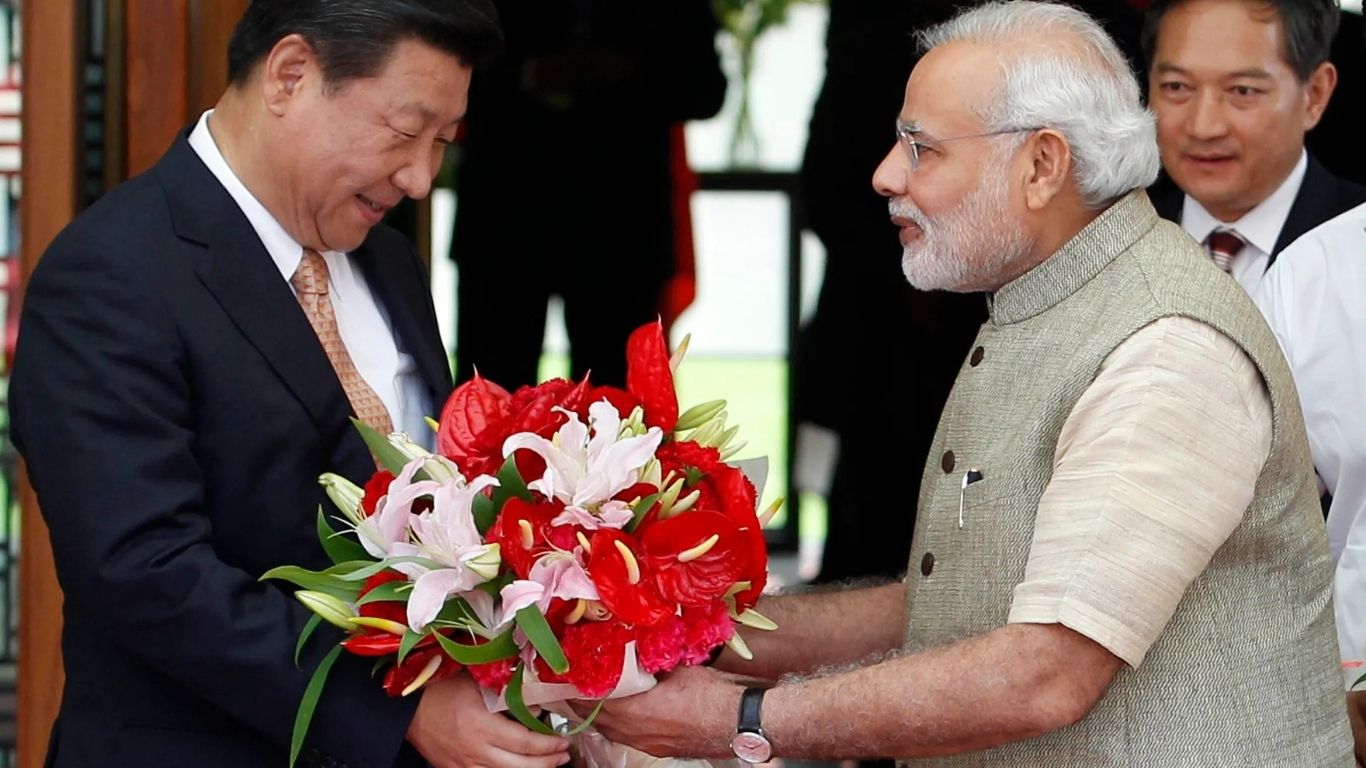
Indian Prime Minister Narendra Modi’s recent visit to China comes at a defining moment in global geopolitics and economics. With US President Donald Trump imposing steep tariffs on Indian exports, and China itself facing mounting trade pressures from Washington, the meeting between the two Asian giants signals more than just a diplomatic engagement it could reshape the future of Asian trade and global economic balance.
US Tariffs Push India Toward Beijing
Since last week, tariffs on Indian exports such as diamonds and prawns entering the US have surged to 50%. Washington framed this move as retaliation for India’s continued purchase of Russian oil. For New Delhi, the economic shock is significant. The United States is one of India’s largest export markets, and the sudden increase threatens to dent India’s vibrant export sector and slow down its growth ambitions.
China faces a similar dilemma. Sky-high tariffs from Washington are squeezing Chinese exports and undermining President Xi Jinping’s plans to revive his country’s sluggish economy. Against this shared backdrop of pressure from the US, both Modi and Xi may find common ground for cooperation.
Why India-China Relations Matter Globally
India and China are not just neighbors they are economic powerhouses. China is the world’s second-largest economy, while India, with its $4 trillion economy and a $5 trillion stock market, is projected by the IMF to become the third-largest by 2028.
For decades, global attention has focused primarily on US-China relations. But as Qian Liu, CEO of Beijing-based Wusawa Advisory, notes, it is time to shift focus to the relationship between China and India. Together, their cooperation or rivalry will influence global supply chains, trade flows, and regional stability.
Yet, the relationship is fraught with challenges. The two nations have long-standing territorial disputes, including the deadly clashes in Ladakh’s Galwan Valley in 2020. Those tensions spilled over into economics, as India restricted Chinese investments, slowed infrastructure projects, and banned more than 200 Chinese apps, including TikTok.
A Shift in India’s Position
Despite these hostilities, Modi’s trip suggests a recalibration in India’s foreign policy. India once aligned closely with the US as a counterweight to China. However, Washington’s unpredictable stance, now punishing New Delhi with tariffs has left India questioning that alignment.
Experts say Modi’s visit feeds into the multipolar narrative both India and China support: a world order not dominated by any single superpower. By engaging Beijing, India signals to Washington that it has options beyond the West.
Modi attended the Shanghai Cooperation Organisation (SCO) summit, a regional bloc including China, Russia, Pakistan, and Iran. Although the SCO has often been dismissed as ineffective, India’s renewed interest shows it sees value in alternative platforms for regional influence especially amid souring ties with the US.
The Economic Case for Cooperation
On the economic front, there are clear incentives for collaboration. India continues to rely heavily on China for raw materials and manufacturing inputs. Lowering import duties would ease costs for Indian businesses, particularly in electronics and pharmaceuticals.
China, on the other hand, seeks greater access to India’s 1.45 billion-strong consumer market. With US markets shrinking and Southeast Asian markets already saturated, India presents a major opportunity. From consumer electronics to social media platforms, Beijing would welcome chances to expand its footprint.
There is also potential for cooperation in global supply chains. As Asia becomes the hub of manufacturing and services, the concept of “Make in Asia for Asia” gains traction. For example, Apple already produces AirPods and wearables in Vietnam and iPhones in India, showing that regional supply chains can complement rather than compete.
Small Wins on the Table
Experts caution that a full reset in India-China ties will be difficult. Border disputes, water conflicts over China’s hydroelectric projects, and Beijing’s close ties with Pakistan remain unresolved sticking points.
However, smaller steps are expected. Both sides have already announced the resumption of direct flights, a move that will benefit business and tourism. Visa relaxations are also likely, along with modest economic agreements to boost trade. Faster visa approvals could help Indian professionals working with Chinese partners, while Beijing could explore limited investment opportunities in India.
Even symbolic gestures, such as allowing cultural exchanges or restarting some stalled infrastructure projects, would help thaw relations.
Regional and Global Implications
India is also carefully balancing its ties with other Asian powers. Modi’s stop in Japan before arriving in China highlights Delhi’s intent to work closely with ASEAN nations and Tokyo. Closer cooperation between India and China could also benefit Southeast Asia, where supply chains are increasingly interconnected.
Meanwhile, Russia remains a critical player. Moscow has encouraged trilateral talks with Beijing and Delhi, envisioning a partnership where China brings manufacturing strength, India contributes services, and Russia supplies energy. Such an alliance could reduce dependence on the US and reshape global trade flows.
A Signal to Washington
Ultimately, Modi’s visit to China is about more than bilateral ties. It sends a clear signal to Washington that India will not be boxed in by US pressure. By showing openness to dialogue with Beijing, Delhi underscores its strategic autonomy and reinforces its role in a multipolar world.
However, one meeting cannot erase decades of mistrust. India and China remain rivals in many respects, and building genuine trust will take time. Still, in a world increasingly defined by uncertainty, their willingness to talk and to explore areas of economic cooperation marks an important step.
Conclusion
India and China stand at a crossroads. Both face economic headwinds from US tariffs, and both seek greater influence in shaping the global order. While their relationship remains deeply complex, small wins like resuming flights, easing visas, and modest trade deals could pave the way for larger cooperation.
For India, Modi’s visit is not about choosing China over the US but about broadening its strategic options. For China, engaging India is a chance to showcase Global South solidarity and diversify its economic partnerships.
If managed carefully, this could mark the beginning of a cautious but meaningful reset one that has implications not just for Asia, but for the world.




