

A Shifting Narrative
For over a decade, Narendra Modi has been the man who seemingly could do no wrong. Riding wave after wave of electoral success, immune to scandals that would sink most leaders, and armed with a loyal media and an even more loyal voter base — he had become more than a prime minister. He was a brand. A phenomenon.
But over the past twelve months, something shifted.
The same leader who once dictated the national narrative now found himself responding — often belatedly, awkwardly, or not at all — to a cascade of crises. From Delhi to Washington, from farmers’ fields to Bengal’s cultural heart, backlash after backlash struck, chipping away at the image of Modi the Invincible.
Let’s rewind the clock and follow the trail.
The American Slap
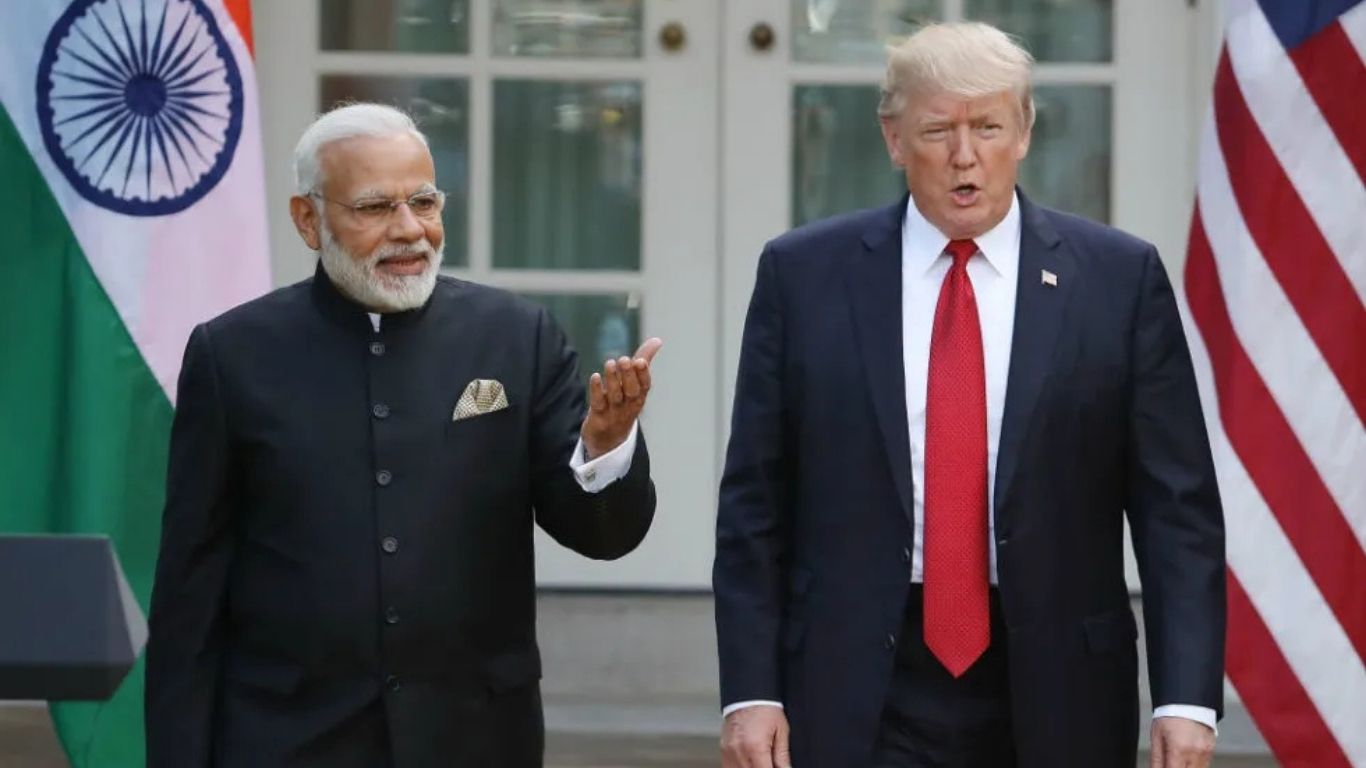
It began, unexpectedly, not at home — but thousands of miles away, in Washington, D.C.. In August 2025, the United States — India’s so-called “natural ally” — imposed a massive 50% tariff on key Indian exports. Textiles, generics, machinery — all suddenly became expensive on American shelves.
The reasons were layered: alleged patent violations, trade imbalance, and India’s growing assertiveness in non-aligned diplomacy. But the message was blunt — Washington was no longer buying into the handshake-and-hugs diplomacy. The optics of Modi’s bear hugs hadn’t translated into protection for Indian interests.
Indian exporters are now stunned. Some wept on live TV. The rupee is trembling. But more telling was the silence — New Delhi seemed unprepared, caught off guard, as if their American friends had betrayed them without warning.
It isn’t just a trade dispute. It is a crack in Modi’s international armor.
Manipur: The Silence That Screamed
Back home, the northeast was burning — again.
Manipur, a state long overlooked, descended into ethnic violence for the second consecutive year. Villages torched. Women paraded naked. Thousands displaced. Yet, Modi — known for his dramatic speeches and instant reactions — remained absent.
For months, he refused to visit, even as images of bloodied civilians and grieving mothers flooded screens. Opposition leaders made the trip. Civil society screamed. But the prime minister stayed quiet.
This wasn’t just a governance failure — it became a moral failure, a moment when the nation asked, “Why won’t he speak?”
In that silence, Modi’s carefully built image as a decisive protector of Indian unity began to collapse — at least in the eyes of many.
The Youth Uprising
As if the unrest in Manipur wasn’t enough, India’s students — Modi’s future voters — turned against him.
A series of shocking paper leaks in NEET and UGC-NET, two of India’s most crucial entrance exams, exposed deep rot in the examination system. For millions of students who studied day and night, their dreams were shattered — not by failure, but by a broken system they couldn’t trust.
Protests erupted in Kota, Delhi, Patna. Students held up signs saying: “We studied. You failed.”
Social media turned hostile. Influencers who once campaigned for BJP voiced their anger. Modi, who had spent years branding himself as the leader of a rising youth nation, now found that very youth rising against him.
The Return of the Farmers
It was déjà vu on Delhi’s borders.
In early 2025, the farmers came back. Their beards were longer, their skin more weathered, but their spirit was intact. They brought stories of unfulfilled promises, MSP betrayal, and mounting debt. The government had repealed the farm laws in 2021, but the farmers said, “Repeal was a pause. We want resolution.”
They weren’t wrong. For all the grand gestures, nothing substantial had changed. They camped. They chanted. They blocked highways again. And this time, more Indians listened.
It was no longer just about farming. It was about trust.
The Bengali Language Controversy
Then came the cultural landmine — one that Modi’s party stepped on with full force.
In a circular leaked from Delhi Police, Bengali was referred to as a “foreign” language — hinting at it being Bangladeshi. What may have been a bureaucratic oversight turned into a political inferno.
West Bengal erupted. Writers, artists, students — even apolitical figures — slammed the government for “linguistic insult.” Mamata Banerjee seized the moment, declaring it proof that the BJP was “anti-Bengali, anti-culture, anti-India.”
For a party already struggling in Bengal, it was a disaster — not just electoral, but emotional.
The Fall After the Rise?
This wasn’t one scandal. This wasn’t one mistake.
This was a pattern of erosion — institutional, diplomatic, cultural.
Modi still has power. He still has his base. He still controls the narrative in many quarters.
But for the first time in years, he has spent more time defending than declaring, responding than leading.
And that alone tells a story.
Because even for Narendra Modi, the man who rose from Gujarat to global glory, there comes a year when the world begins to push back.




