

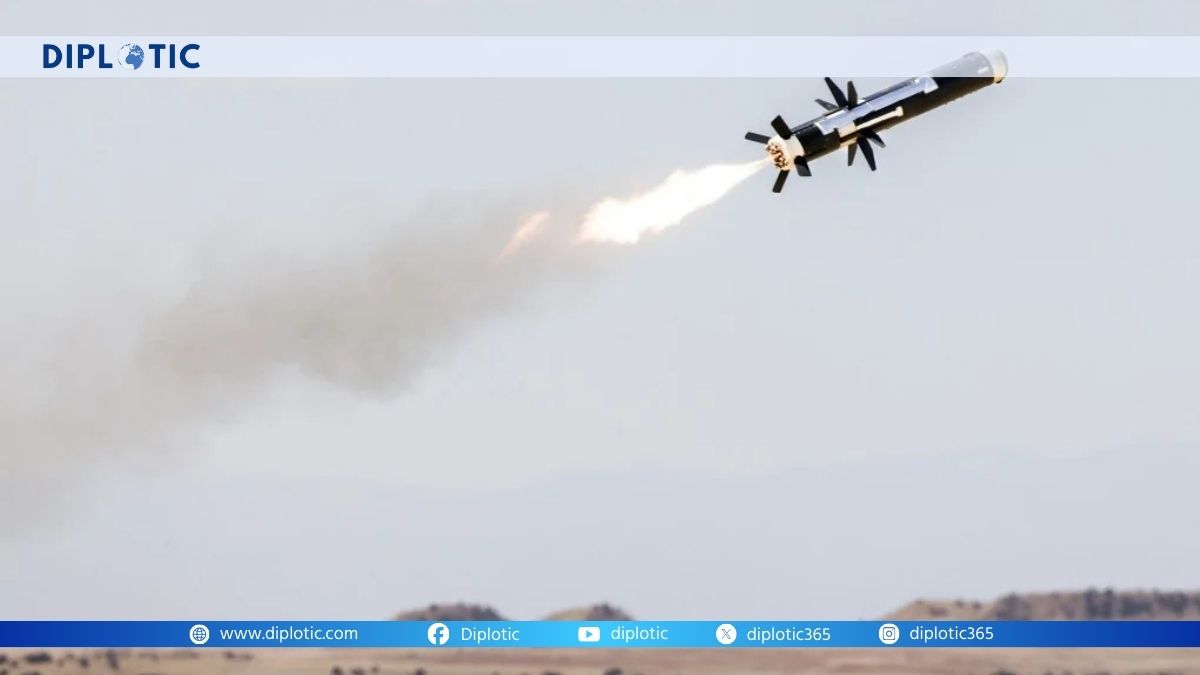
In an era of rapidly advancing missile technology, the promise of an impenetrable national shield has proven to be a perilous illusion. Recent conflicts have delivered sobering lessons: Israel’s vaunted Iron Dome was breached by Iranian salvos, and in South Asia, advanced air defense systems reportedly struggled during intense exchanges. These events form the backdrop for a major strategic announcement from New Delhi. In 2025, Prime Minister Narendra Modi revived the long-dormant “Sudarshan Chakra” project, envisioning a comprehensive, AI-powered missile defense network to be deployed across India by 2035. This ambition represents more than a technical upgrade; it is a statement of national power aimed at overcoming past humiliations and securing a dominant position. However, the pursuit of this high-tech shield raises profound questions about its feasibility, its impact on regional stability, and whether it will ultimately create a dangerous illusion of security that accelerates a costly and destabilizing arms race with Pakistan and China.
What Are the Origins and Ambitions of the Sudarshan Chakra?
The Sudarshan Chakra is not a new concept but a revived ambition with a complex history. Initially proposed in the 1990s by former President A.P.J. Abdul Kalam, the project lay dormant for years until it was championed by Dr. V.K. Saraswat, the head of India’s Defense Research and Development Organization (DRDO) from 2009 to 2013. Saraswat laid out an ambitious two-phase plan. The first phase aimed to develop a shield against ballistic missiles from Pakistan with ranges up to 2,000 kilometers. The more daunting second phase would target longer-range missiles from China, with ranges extending to 5,000 kilometers. The technical vision involved a two-tiered interception system: one layer operating within the Earth’s atmosphere (endoatmospheric) and another in the reaches of outer space (exoatmospheric). Despite optimistic projections of readiness by the early 2010s, the project stalled after Saraswat’s retirement, overshadowed by other priorities and technical hurdles. Its revival by Prime Minister Modi in 2025 is directly linked to recent regional tensions. Following reported shortcomings of India’s existing air defenses, including its Russian-made S-400 systems, during a period of escalation with Pakistan, the government is framing the Sudarshan Chakra as the cornerstone of a new modernization drive. It is portrayed as an integrated system blending surveillance, cybersecurity, and multi-layered missile interception, from drones to ballistic missiles, all orchestrated by artificial intelligence.
What Are the Technical and Strategic Challenges of Building a National Shield?
The technological obstacles facing the Sudarshan Chakra project are immense, casting doubt on its promised invulnerability. Recent global conflicts provide a cautionary tale. The limited effectiveness of the Iron Dome against a large-scale, sophisticated Iranian attack demonstrated that even the world’s most battle-tested systems have saturation points and can be overwhelmed. Similarly, reports of vulnerabilities in advanced systems like the S-400 against new missile technologies highlight a relentless cat-and-mouse game between offensive and defensive arms. For India, the challenge is magnified by geography and scale. Defending a vast territory against potential threats from two fronts is a problem orders of magnitude more complex than defending a smaller, denser area like Israel. A truly effective defense requires the ability to intercept missiles in their initial “boost phase,” just minutes after launch, which demands persistent, real-time satellite surveillance—a capability where India currently has limitations. Furthermore, the rapid development of hypersonic missiles by neighboring China, which travel at extreme speeds in the “near-space” altitude band, threatens to render planned interceptors obsolete before they are even fully deployed. These technical realities suggest that the Sudarshan Chakra, while advanced, may never achieve the complete protection it promises, remaining vulnerable to saturation attacks, technological countermeasures, and the sheer complexity of defending against a diverse and evolving missile arsenal.
How Is the Project Shaped by Regional Politics and National Identity?
The push for the Sudarshan Chakra cannot be separated from the deep-seated political and ideological currents within India’s strategic thinking. Analysts argue the project is driven as much by prestige and national narrative as by pure military necessity. It is seen as an attempt to overcome the perceived humiliation of past military setbacks and to cement India’s status as a major global power, aligning itself with nations like the United States and Israel that pursue advanced missile defense architectures. This ambition is intertwined with a domestic political narrative of civilizational resurgence and technological prowess. However, this posture is viewed with intense suspicion in Pakistan, where it is interpreted as the latest move in a historically “revisionist” Indian strategy aimed at undoing Pakistan’s sovereignty. From this perspective, the missile shield is not a defensive tool but an offensive enabler—a technology that could theoretically allow India to launch a first strike under the illusion of protection from retaliation. This perception makes the Sudarshan Chakra a profoundly destabilizing development in the region, as it is seen not as a shield for peace, but as a sword cloaked in defensive armor, designed to support more aggressive military doctrines against Pakistan.
What Will Be the Regional Response to an Indian Missile Shield?
The announcement of the Sudarshan Chakra is almost certain to trigger a dangerous and expensive action-reaction cycle in South Asia, fundamentally altering the strategic calculus for both Pakistan and China. In strategic military theory, the deployment of a major missile defense system by one nation is often perceived by its rivals as a threat to their own deterrent capability. The likely consequence is that they will feel compelled to develop and deploy more missiles, more sophisticated warheads, and more advanced penetration aids to ensure their weapons can overwhelm or bypass the new shield. For Pakistan, which maintains a strategic balance with India through a focus on its missile arsenal, the Sudarshan Chakra represents an existential challenge to its deterrent. The expected response would be a significant acceleration of its own missile programs, potentially with increased assistance from its ally, China. China itself, facing the second-phase threat of the Indian system, may respond by further enhancing its already formidable missile forces and providing more advanced technology to Pakistan. This dynamic creates a classic security dilemma: India’s effort to make itself more secure could make the entire region less secure, spurring a new, multi-directional arms race in missiles, anti-satellite weapons, and cyber-electronic warfare capabilities. The “Indo-Pak-China security triangle” would enter a new phase of heightened competition and mutual suspicion.
Does the Pursuit of a Shield Lower the Threshold for Conflict?
The most critical danger posed by the Sudarshan Chakra project may be its psychological impact on crisis stability. If Indian leaders come to believe, even mistakenly, that their national shield provides robust protection, they might be tempted to adopt riskier military policies or be less cautious during a confrontation with Pakistan. This false sense of security could lower the threshold for conflict, making conventional warfare appear more thinkable. However, this is a dangerous illusion. Given the technical challenges and the certainty of countermeasures, the shield would not be foolproof. In a real crisis, Pakistan would likely launch salvos designed to saturate and penetrate it. The result could be a catastrophic miscalculation: India, believing itself protected, might escalate a conflict, only to find its cities still vulnerable to a retaliatory strike. This scenario increases the risk of a conventional clash spiraling out of control, with both sides facing immense pressure to use their weapons before they are destroyed. Rather than fostering stability, the Sudarshan Chakra could therefore introduce a new layer of instability and uncertainty into an already volatile region, making crises harder to manage and escalation more likely.
The revival of the Sudarshan Chakra project marks a pivotal moment in South Asia’s military history, reflecting India’s great-power aspirations and its desire to overcome perceived vulnerabilities. Yet, the pursuit of this technological shield is fraught with paradox. It seeks to create security but will likely incentivize greater insecurity, prompting rivals to build more and better missiles. It aims to provide protection but may foster a dangerous overconfidence that increases the risk of conflict. The recent demonstrations of missile defense limitations in Ukraine and the Middle East serve as a stark warning: in the modern missile age, perfect defense is an unattainable dream. The immense resources devoted to the Sudarshan Chakra might be better invested in diplomatic channels and confidence-building measures aimed at addressing the root causes of regional tension. Without such parallel efforts, this drive for a high-tech shield risks plunging South Asia into an endless, expensive, and perilous arms race, where the pursuit of absolute security guarantees only greater instability for all.




