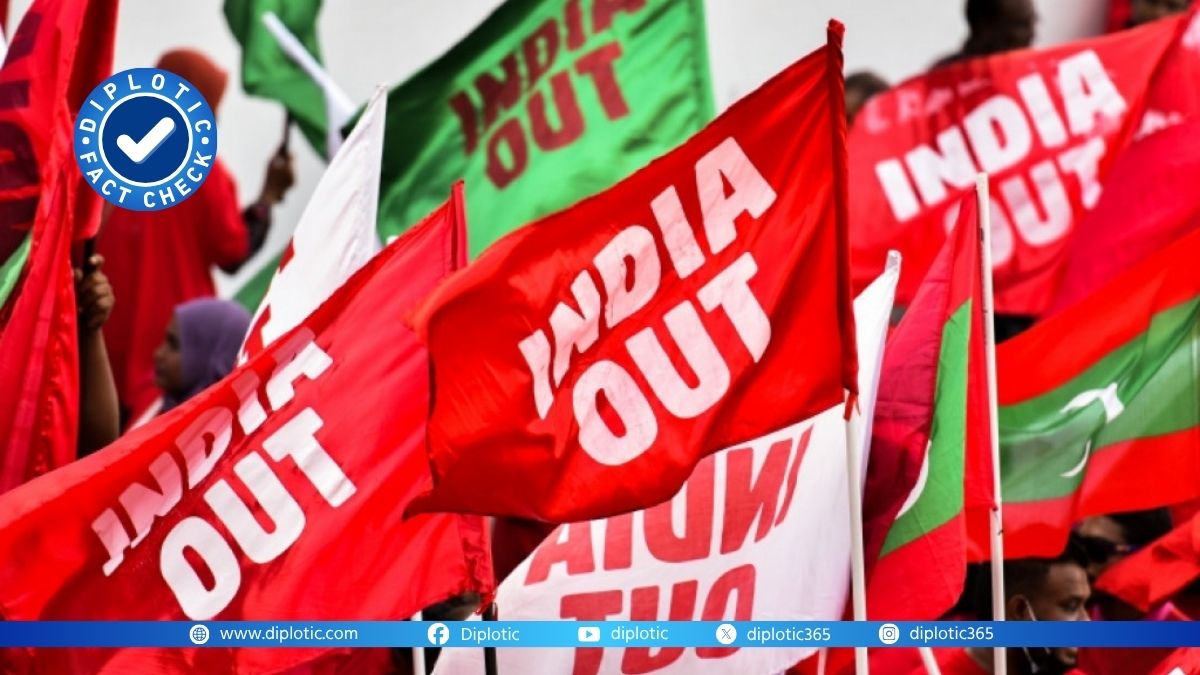
Imagine a postcard-perfect paradise: turquoise lagoons, overwater bungalows, and honeymooners snapping selfies. Now picture that same spot—Maldives—erupting in chants of “India Out.” Billboards defaced, social media ablaze, and protesters waving signs demanding New Delhi’s exit. It wasn’t a movie plot; it was 2020-2023, when this tiny Indian Ocean nation of 500,000 souls turned a neighborly bond into a battle cry.
Why does this sting? Maldives sits like a strategic necklace in the Indian Ocean, a chokepoint for $1 trillion in annual trade. India sees it as a backyard ally for security and aid; China eyes it for Belt and Road ports. The “India Out” wave crashed during elections, flipping governments and freezing tourism—India’s visitors dropped 42% in early 2024. But was this the people’s raw fury against “big brother” India, or a scripted play by politicians chasing votes and Beijing’s favor? As ties thaw in 2025—with President Mohamed Muizzu now calling India a “true friend” during Modi’s July visit—we peel back the layers. This isn’t just island drama; it’s a lesson in how small nations surf great-power waves, where sovereignty clashes with survival. Buckle up: five claims, street truths, and the messy geopolitics that turned slogans into policy.
Claim 1: The “India Out” Slogan Sparked from Everyday Folks Tired of Indian Overreach
Street corners in Malé buzzed with it: fishermen and teachers claiming India’s aid came with strings—military bases disguised as hospitals, helicopters spying on atolls. The narrative? A grassroots pushback against a neighbor treating Maldives like a colony.
Cross-check: Dig into origins, and the fairy tale frays. The hashtag #IndiaOut didn’t bubble up from beach chats; it launched in late 2018, right after India’s $1.4 billion bailout during a debt crunch. Opposition leader Abdulla Yameen—ex-president, pro-China icon—revived it in 2020 from prison, where he sat for money laundering. His Progressive Party of Maldives (PPM) and allies like the People’s National Congress (PNC) amplified it via coordinated Twitter storms: 5,800 tweets in one week of 2022, mostly retweets from 389 party-linked accounts, racking 7.7 million impressions—double Maldives’ population. No viral folk song; just opposition bots and billboards.
History whispers why it stuck. Maldives’ 2008 democracy bloom ended a sultanate cozy with India since 1965’s independence treaty. But Yameen’s 2013-2018 rule soured ties—China’s $1.37 billion loans flooded in, building bridges while India boycotted over rights abuses. Theoretically, it’s “asymmetric dependence”: tiny Maldives fears India’s 1.4 billion shadow, echoing colonial hangovers where aid feels like leashes. Yet, contradictions glare: the “overreach” targeted? Just 77 Indian techs flying donated choppers for medevacs, not tanks. Ethical snag: if it’s “people’s voice,” why did protests fizzle post-election, replaced by 2025’s “India First” U-turn?
Deeper implication: This “grassroots” myth trades short-term nationalism for long-term loans—China’s debt now 20% of Maldives’ GDP, versus India’s grant-based help. Witty aside: If overreach is the sin, why cheer Chinese research ships docking for “replenishment” that spies on sea lanes?
Verdict: False. It was opposition fireworks, not folk fire—fueled by fears, but lit by politicians.
Claim 2: Protests and Social Media Storms Proved Widespread Public Hatred for India
Videos flooded feeds: crowds in Addu Atoll burning Indian flags, youth chanting against “hegemony.” X posts hit 10,000+ with #IndiaOut by 2023, painting a nation united in rage. Claim: This was organic fury, not fake.
Verify: EU observers at 2023 polls called it “disinformation” from PPM-PNC, who “deployed anti-India sentiments” to scare voters about phantom bases. Social media? A 2024 DFRAC analysis traced amplification to party mouthpieces like Dhiyares news, echoing Bangladesh’s similar anti-India push. Protests peaked pre-vote—hundreds in Malé, sure—but turnout? Just 53% undecided swung to Muizzu on sovereignty fears, per Baani Center polls. Post-win? Silence. By 2024 parliamentary polls, PNC swept 71/93 seats, but “India Out” vanished from stump speeches—replaced by housing pleas.
Context enriches: Maldives’ atolls breed isolation—news travels via WhatsApp, ripe for rumors. Geopolitics amps it: China’s “win-win” loans versus India’s “strings” narrative fits Yameen’s jail-time playbook. Trade-off: Rage wins votes but scares tourists (India’s 25% share). Hypocrisy bites: Muizzu mocked Modi in 2023; by 2025, he’s guest-of-honor in Delhi. Wider fallout? Ethnic Indians (5% population) faced slurs, turning paradise prickly.<grok:
Verdict: Misleading. Storms brewed in echo chambers, not every home—amplified anger, diluted truth.
Claim 3: Muizzu’s 2023 Win Was a Clear Mandate from Voters Rejecting India
Muizzu snagged 54% in the runoff, campaigning on “India Out” as his North Star. Claim: Voters spoke—pack up the helicopters, pivot to China.
Facts first: First round? 46% for Muizzu, 39% for pro-India Solih, with 53% undecided. Runoff turnout dipped to 75% from 82% in 2018—anger mobilized, but apathy ruled. EU report: Campaign thrived on “anxiety over Indian influence,” not policy deep-dives. By 2024, PNC’s supermajority (71 seats) came on economic promises, not anti-India chants—MDP (pro-India) cratered to 12 seats amid voter fatigue.
Historical hook: Elections here swing like monsoons—Yameen’s 2013 win birthed “India Out” amid graft scandals; Solih’s 2018 landslide buried it for “India First.” Philosophy nod: Sovereignty’s a siren’s song in debt-trapped isles (Maldives owes $3B+). Contradiction: Muizzu withdrew the 77 Indians by May 2024, but invited Indian firms for radars and harbors by August. Ethical bind: Was it rejection, or a bargaining chip? Implications: Voters got sovereignty theater, but China’s stalled Sinamale’ bridge extension leaves bills unpaid.
Verdict: Partially True. It rode the wave to victory, but the tide turned fast—votes for change, not eternal grudge.
Claim 4: The Campaign Exposed Real Fears of Indian Military Bases and Debt Traps
Core gripe: India’s “generous” $4B aid since 1981 hides bases on Uthuru Thila Falhu, turning Maldives into a Delhi outpost. Plus, loans as leverage.
Reality: No bases— just gifted Dhruv helicopters and Dorniers for disaster ops, crewed by Indians at Maldivian request. India’s aid? 80% grants, no-interest lines—versus China’s commercial loans at 6-7%. Fears? Yameen-era rumors, debunked by Nasheed (ex-president) as “baseless.” Post-2023, Muizzu scrapped a hydrography pact but inked new defense training.
Geopolitics lens: Indian Ocean’s a chessboard—India’s SAGAR (Security and Growth for All) counters China’s “String of Pearls.” But Maldives’ fears echo small-state paranoia, post-1988 coup attempt India thwarted. Trade-off: Rejecting “traps” invites Beijing’s, whose Pokhara airport in Nepal mirrors Maldives’ debt woes. Hypocrisy: Muizzu visited China first, but India’s $93M 2023-24 spend outpaced China’s delays. Deeper: It stokes Islamophobia—campaigns linked Indian “meddling” to cultural erosion, per 2024 HRW.
Verdict: Misleading. Fears were real but fabricated—smoke without fire, except for the debt one aimed at the wrong lender.
Claim 5: Post-Election Actions Showed Lasting Public Backlash Against India
Muizzu delivered: Indians out by March 2024, China ties upgraded, Modi boycotted. Claim: People approved—proof of true voice.
Check: Actions flipped like a dhoni in a squall. By August 2024, Muizzu hailed India as “closest ally” during Jaishankar’s visit; Modi’s July 2025 trip sealed pacts on security and economy. Tourism rebounded—Indians back to 20% share. X sentiment? From rage (#IndiaOut peaked 2023) to reset posts (“From Out to In”).
Social fabric: Maldives’ 99% Muslim youth crave jobs, not jihad—campaigns tapped radical fringes, per 2022 speaker claims of ISIS links.<grok: Theory: Ethical twist: Public voice? Or elite pivot, leaving atoll folks with higher bills? Wider: It risks “boomerang sovereignty”—push away aid, invite isolation, as 2025 floods saw Indian ships first on scene.
Verdict: Uncertain. Early moves matched the script, but 2025 rewrites scream pragmatism over principle.
Beyond the Ballot: When Slogans Sink Ships
Pull back the curtain: “India Out” wasn’t a people’s poem—it was a politician’s prop, blending valid sovereignty jitters with Yameen-Muizzu opportunism and Chinese cash. Elections amplified it (54% for Muizzu), but polls showed apathy, not avalanche. The fearless call: Hypocrisies rule—Yameen decried Indian “hegemony” while pocketing Beijing’s billions; Muizzu preached independence, then hugged Modi for loans. Strategic slip: Small states like Maldives thrive on balance, not binaries—alienate India (life-support neighbor), and China’s “friendship” turns collector.
For atoll dwellers, the cost? Delayed bridges, radical whispers, and a tourism dip that hit maids harder than ministers. Ethical mirror: True voice demands facts over fear-mongering. As 2025 dawns with joint exercises and credit lines, Maldives teaches: Geopolitics isn’t zero-sum—it’s about neighbors who show up, not slogans that sail away. Will Malé own the flip-flop with an apology? Or let the tide decide? One thing’s sure: In the Indian Ocean, waves change, but islands endure.