

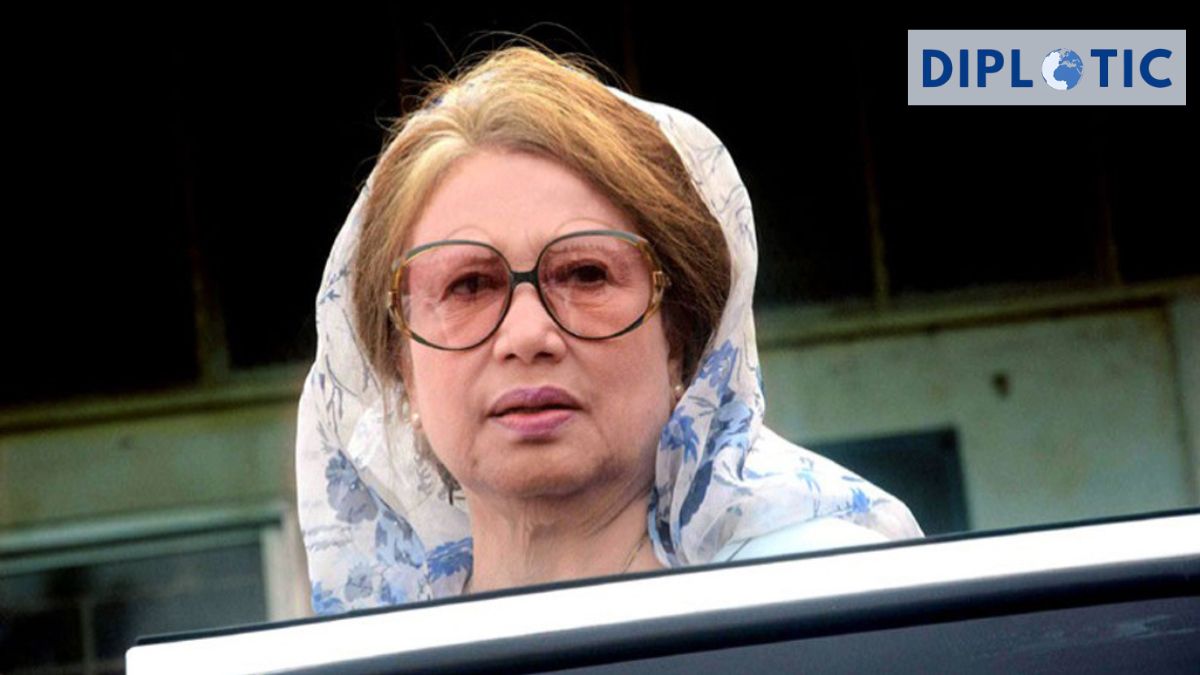
On December 30, 2025, Bangladesh lost one of its most enduring political figures when Khaleda Zia, the country’s first female prime minister, died at the age of 80 after a long illness. She had been battling advanced liver cirrhosis, diabetes, heart issues, and other conditions, spending her final weeks in a Dhaka hospital. Her party, the Bangladesh Nationalist Party (BNP), announced the news, prompting national mourning and tributes from across the political spectrum, including from interim leader Muhammad Yunus and even her longtime rival Sheikh Hasina, now in exile. Known for her reserved manner and strong leadership, Khaleda Zia entered politics only after tragedy struck her family, transforming her from a devoted wife and mother into a key player in the nation’s democracy movement.
Khaleda Zia was born in 1945 and led a quiet life raising her two sons until 1981, when her husband, President Ziaur Rahman, was assassinated in a military coup attempt. Ziaur Rahman, a war hero who declared Bangladesh’s independence in 1971 and later became president, had founded the BNP in 1978. His death left the party in crisis, and three years later, Khaleda stepped in as its leader. She vowed to continue his vision of economic progress and to free the country from poverty. At the time, Bangladesh was under military rule led by Hossain Mohammad Ershad. Khaleda joined forces with Sheikh Hasina, leader of the Awami League and daughter of the nation’s founding father, Sheikh Mujibur Rahman, to build a broad movement against the regime.
Their alliance proved effective. In 1990, mass protests forced Ershad to resign, paving the way for Bangladesh’s first free elections in decades. Parallel to this, Khaleda’s emergence highlighted changing roles for women in a conservative society, though she maintained a traditional image—polite, carefully spoken, and focused on family values. Different angles show how her husband’s legacy gave her initial credibility, but her own resolve turned her into a symbol of opposition. In 1991, the BNP, allied with Islamic groups like Jamaat-e-Islami, won a surprise victory, making Khaleda prime minister and only the second woman to lead a Muslim-majority democracy after Pakistan’s Benazir Bhutto. During her first term, she shifted power from the presidency to the parliament, opened the economy to foreign investment, and made primary education free and compulsory. These steps helped stabilize the young nation, but questions remain about how her early compromises with allies shaped later challenges.
Why Did Her Rivalry with Sheikh Hasina Define Bangladesh’s Politics?
The partnership between Khaleda Zia and Sheikh Hasina ended soon after democracy’s return, giving way to a fierce rivalry that dominated Bangladesh for over three decades. Dubbed the “battling Begums”—using an honorific for respected women—their feud stemmed from contrasting styles and party ideologies. Khaleda, heading the centre-right BNP, appealed to nationalist and Islamic-leaning voters, while Hasina’s Awami League emphasized secularism and ties to India. Their clashes often led to strikes, protests, and violence, slowing economic growth in a country prone to floods and poverty.
Khaleda lost the 1996 election to Hasina but returned with a landslide in 2001. Her second term faced criticism over rising Islamist militancy and corruption claims. A 2004 grenade attack on a Hasina rally killed over 20 people, with blame falling on Khaleda’s government and allies; her son Tarique Rahman later faced charges, though acquitted in 2025. The term ended in 2006 amid unrest, leading to a military-backed caretaker government that jailed both leaders on corruption charges. Released before the 2008 vote, Khaleda never regained power as Hasina dominated subsequent elections, which the BNP boycotted in 2014 and 2024, alleging unfairness.
Related views highlight how their personal differences fueled the divide: Khaleda seen as traditional and uncompromising, Hasina as outspoken and assertive. This dynamic caused political paralysis but also kept democracy alive through competition. Parallel insights include international concerns over stability, with violence often claiming lives. In 2018, Khaleda was convicted of embezzling orphanage funds—charges she called political—and sentenced to prison, later moved to house arrest in 2020 due to health. She was freed in August 2024 after student protests ousted Hasina. Acquittals in 2025 cleared her record, raising hopes for a comeback. The rivalry’s intensity raises curiosity about missed opportunities for cooperation on national issues like development and disaster response.
What Challenges Marked Her Later Years and Legal Battles?
Khaleda’s later life centered on health struggles and legal fights that kept her sidelined from active politics. Out of power since 2006, she spent years in jail or house arrest under Hasina’s government, which her supporters viewed as efforts to neutralize the opposition. Convictions in corruption cases, including one involving $250,000 in donations, led to lengthy sentences, though she maintained they were fabricated. Released on humanitarian grounds in 2020, her condition worsened, requiring treatment in London early in 2025.
The 2024 uprising changed everything. Student-led protests toppled Hasina, leading to an interim government under Muhammad Yunus. Khaleda was fully freed, and courts acquitted her and her son Tarique in key cases by early 2025. Tarique returned from 17 years in London exile just days before her death, on December 25, 2025, boosting BNP prospects. Different angles reveal humanitarian aspects—her illnesses included arthritis and lung infections and political ones, as acquittals allowed potential election participation.
Parallel concerns involved BNP’s role in the post-Hasina era, with the party seen as a frontrunner for the February 12, 2026, polls alongside a referendum on reforms. Khaleda, though frail, remained chairperson and a symbol of resistance. Questions arise over how her detention affected Bangladesh’s democracy, with frequent unrest impeding progress in a nation of 175 million. Her careful leadership style contrasted with accusations of family influence during her terms, yet supporters valued her as bold in defending the party.
How Will Khaleda Zia’s Death Affect Bangladesh’s Future?
Khaleda Zia’s passing marks the end of an era in Bangladesh politics, closing the chapter on the battling Begums while opening questions about stability ahead of the 2026 elections. Her BNP commands strong support and is favored to perform well in the February vote, the first since Hasina’s fall. With Tarique Rahman now leading actively, the party may focus on economic promises and minority protections to broaden its appeal.
Broader implications include potential for calmer politics without the personal feud, though underlying divisions persist. Yunus’s interim government faces pressure for fair polls, and Khaleda’s death prompted three days of national mourning, reflecting her stature. Related views note her contributions to democracy—helping end military rule and promoting education—alongside criticisms of terms marred by allegations.
Parallel insights from history show women leaders like her and Hasina broke barriers in a male-dominated field. Internationally, tributes highlighted her role in regional ties. Curiosity lingers on BNP’s direction under Tarique and whether reforms address past flaws like flawed elections. Connecting her journey from 1981 tragedy to 2025 legacy, Khaleda Zia leaves a complex imprint: a pioneer for women in power, a fierce opponent, and a figure whose life mirrored Bangladesh’s turbulent path toward maturity. Her influence will shape the nation’s next steps as it seeks inclusive growth and peace.




