

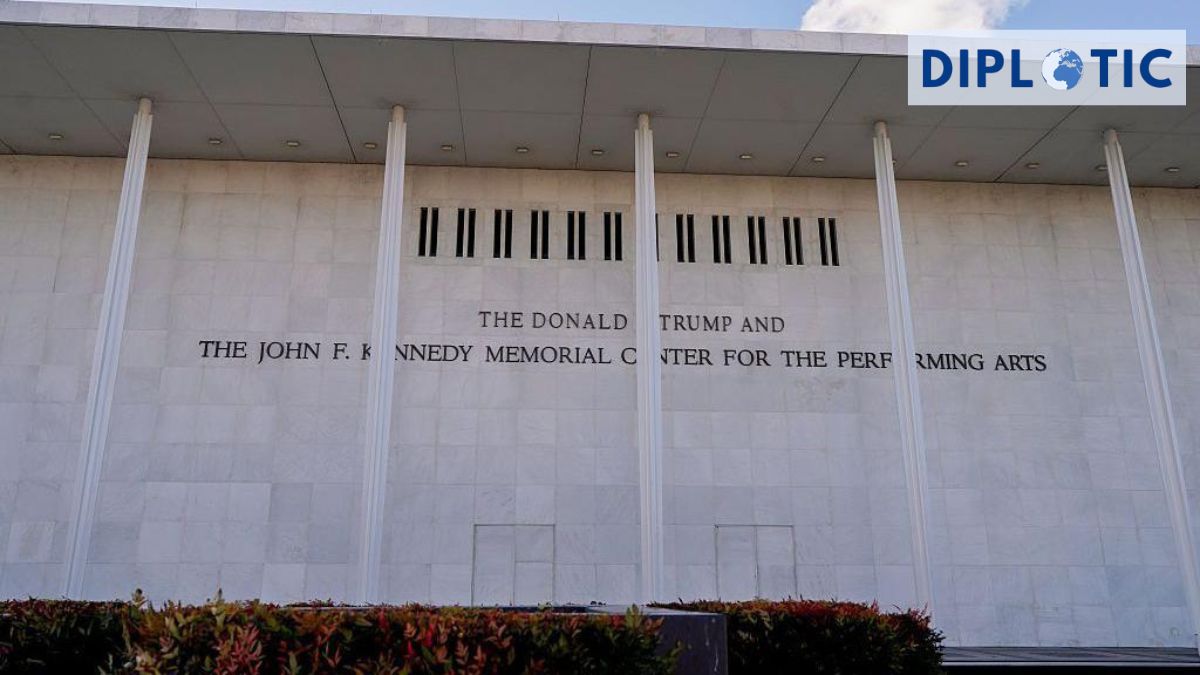
The Kennedy Center is preparing a $1 million lawsuit after a prominent jazz musician canceled his annual performance in protest of the newly renamed “Trump Kennedy Center.” How a cultural institution become the center of a national political and legal storm?
The Kennedy Center for the Performing Arts, long considered America’s most prestigious cultural institution, is now at the center of an intensifying political, legal, and artistic controversy. The center has announced plans to file a $1 million lawsuit against jazz musician Chuck Redd, who abruptly canceled his traditional Christmas Eve performance following the renaming of the iconic venue to include President Donald Trump’s name.
The decision has sparked widespread debate about artistic freedom, political expression, and the role of public institutions in an increasingly polarized America.
Why Chuck Redd Canceled His Performance
Chuck Redd, an internationally recognized jazz drummer and vibraphonist, had hosted the Kennedy Center’s annual Christmas Jazz Jam for many years. His sudden withdrawal stunned both patrons and staff.
Redd told The Associated Press that his decision came shortly after he noticed Trump’s name added to the building and its official website. The center’s exterior now reads:
“The Donald J. Trump and The John F. Kennedy Memorial Center for the Performing Arts.”
Redd stated that the name change prompted him to cancel what had become a long-standing holiday tradition, signaling that his choice was directly linked to the political symbolism attached to the newly renamed institution.
Kennedy Center Responds With Legal Threats
In response, the Kennedy Center’s leadership took a firm and confrontational stance. Spokesperson Roma Daravi confirmed that the center plans to file a $1 million lawsuit against Redd after the holidays.
In a statement sent to NPR, Daravi accused the musician of abandoning his responsibility as a public artist.
“Any artist cancelling their show at the Trump Kennedy Center over political differences isn’t courageous or principled—they are selfish, intolerant, and have failed to meet the basic duty of a public artist: to perform for all people.”
Kennedy Center President Richard Grenell further escalated the rhetoric in a sharply worded letter sent to Redd, calling the cancellation a “political stunt” and accusing him of yielding to pressure from left-leaning activists.
More Artists Join the Boycott Movement
Redd is far from alone. Since President Trump replaced the Kennedy Center board and became chairman, several prominent artists and productions have distanced themselves from the venue.
Notable cancellations include:
Hamilton, which withdrew its 2026 run
Actor and producer Issa Rae, who canceled her scheduled appearance
Folk musician Rhiannon Giddens, who relocated her concert to another Washington venue
This growing list of artist withdrawals has transformed what was once an administrative change into a highly visible national cultural dispute.
A Name Change That Sparked a Legal Battle
The renaming of the Kennedy Center has not only divided artists but also drawn legal challenges from lawmakers. Ohio Representative Joyce Beatty, an ex-officio board member, has filed a lawsuit in U.S. District Court arguing that renaming a memorial honoring President John F. Kennedy requires congressional approval.
Her lawsuit seeks to have the board’s decision declared null and void, setting up a second legal battle that could determine the future branding of the nation’s premier arts venue.
Free Expression vs. Institutional Authority
The conflict highlights a deeper question: Can artists refuse to perform on political grounds, and can public institutions penalize them for doing so?
Supporters of Redd argue that artistic freedom includes the right to withdraw participation from venues whose political symbolism conflicts with personal values. Critics counter that publicly funded institutions like the Kennedy Center must remain accessible to all, and that performers have contractual and ethical obligations to their audiences.
The Kennedy Center maintains that its mission remains bipartisan and inclusive.
“Art is a shared cultural experience meant to unite, not exclude,” Daravi said. “Great art transcends politics.”
What This Means for American Arts Institutions
The Kennedy Center controversy is now shaping national conversations about:
- Political neutrality in public arts institutions
- Freedom of artistic expression
- The legal limits of performance contracts
- The impact of political branding on cultural spaces
As America’s cultural flagship, the Kennedy Center’s decisions reverberate across museums, theaters, and performance halls nationwide. How courts respond to both lawsuits may redefine the boundaries between politics and public art for years to come.
A Turning Point for the Kennedy Center
Once seen as a unifying symbol of American culture, the Kennedy Center now faces unprecedented scrutiny. With legal battles looming, artist boycotts growing, and public opinion sharply divided, the institution stands at a historic crossroads.
Whether this moment becomes a catalyst for reform or a warning sign for cultural institutions navigating political identities remains to be seen. But one thing is certain: the intersection of art and politics has never been more visible, or more volatile, in America’s cultural heart.




