

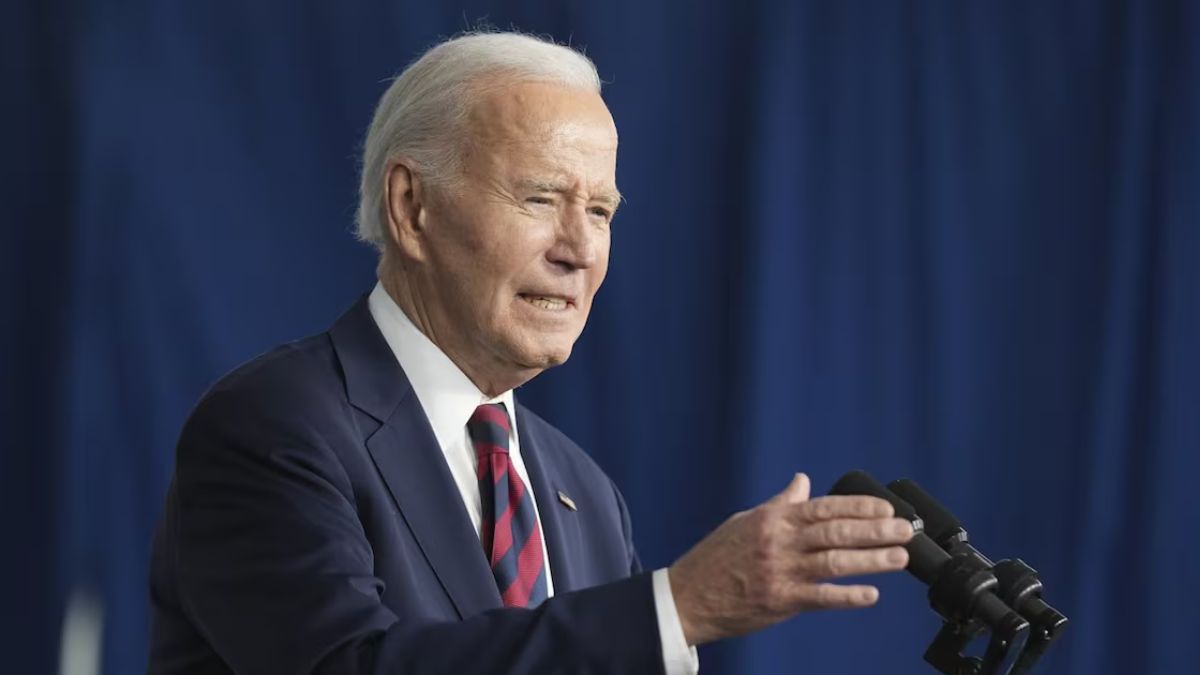
On September 10, 2025, a 3,000-word excerpt from Kamala Harris’s forthcoming memoir 107 Days, published by The Atlantic, sent shockwaves through U.S. political circles. In it, the former vice-president delivers a stinging critique of Joe Biden’s decision to seek a second term, labeling it “recklessness” that prioritized personal ambition over national stakes. The book, set for release on September 23, marks Harris’s boldest break from her former boss, exposing tensions within the Democratic Party’s 2020-2024 leadership. As Harris prepares for a 15-city book tour, including stops in the UK and Canada, her reflections raise deeper questions about loyalty, power, and the party’s missteps in a polarized era. This investigation traces the historical context of Biden’s re-election bid, dissects Harris’s claims of being sidelined, and explores the broader implications for Democratic strategy, revealing a fractured partnership that could shape 2028’s political landscape.
The roots of this rift lie in the Democratic Party’s navigation of power and age. Biden, who turned 81 in 2023, entered the presidency as a transitional figure, promising stability after Trump’s first term. His 2020 campaign, bolstered by Harris as a running mate to bridge generational and racial divides, leaned on decades of Senate and vice-presidential experience. As detailed in accounts of Biden’s political career here, his 2020 victory over Trump restored Democratic control, but whispers of his age—73 at candidacy—dogged him. By 2023, polls showed 70% of Americans, including 50% of Democrats, per Gallup, opposed a second term due to health concerns. Biden’s insistence on running, backed by First Lady Jill Biden, ignored these signals, echoing historical cases like Woodrow Wilson’s 1916 re-election amid health declines, which strained his presidency. Harris, positioned as a loyal deputy, faced a dilemma: challenging Biden risked accusations of disloyalty, yet silence tied her to a faltering campaign. Her memoir’s claim—“It’s Joe and Jill’s decision”—reflects a party mantra that stifled dissent. Biden’s June 2024 debate against Trump, marked by verbal stumbles and confusion, crystallized these fears, forcing his withdrawal and thrusting Harris into a 107-day campaign she lost. The parallels to 1988, when George H.W. Bush distanced himself from Reagan’s shadow to win, highlight Harris’s challenge: loyalty constrained her, but breaking free now risks alienating Biden loyalists.
Harris’s Narrative: Sidelined or Misunderstood?
Harris’s memoir paints a picture of a vice-president marginalized by Biden’s inner circle, a claim that resonates with her supporters but reveals strategic miscalculations. She details securing $10 billion in private investments for Latin America to curb migration, a role assigned by Biden in 2021. Yet, Republicans branded her the “border czar,” a caricature that stuck as illegal crossings hit 2.5 million in 2023, per CBP data. Harris argues the White House communications team failed to clarify her diplomatic focus or tout her successes, leaving her vulnerable to GOP attacks. “No one helped me push back,” she writes, exposing a disconnect in Biden’s operation. This echoes historical tensions, like Al Gore’s struggle to define his vice-presidential role under Clinton, where policy wins were overshadowed by political narratives. Harris’s Texas trip post-hurricane in July 2024, where she felt overshadowed by Biden’s 11-minute speech mentioning her only after nine minutes, underscores her frustration. The White House’s silence on her claims, as the BBC notes, suggests either tacit agreement or reluctance to fuel a public spat.
Yet, Harris’s narrative invites scrutiny. Her reluctance to confront Biden directly—“It would come off as self-serving”—avoids accountability for not pushing harder within the administration. The migration issue, while complex, saw measurable progress: crossings dropped 20% by mid-2024, per DHS, yet Harris’s team failed to amplify this. Her campaign’s 107-day sprint, hampered by Biden’s late exit, struggled to redefine her image, with only 46% of voters viewing her favorably, per AP polls. Critics argue she leaned too heavily on Biden’s record, unable to carve a distinct identity. The memoir’s candor—calling Biden’s age-driven stumbles a liability—breaks from the loyalty expected of vice-presidents, risking comparisons to Mike Pence’s post-Trump critiques, which alienated GOP bases. Harris’s charge of “recklessness” may resonate with Democrats frustrated by the 2024 loss, but it sidesteps her own role in a campaign that raised $1 billion yet failed to counter Trump’s populist surge. The party’s internal contradictions—pushing unity while sidelining diverse voices—mirror 1968, when Hubert Humphrey’s loyalty to Lyndon Johnson cost him against Nixon.
Future Stakes: A Democratic Reckoning or Harris’s Redemption?
The fallout from Harris’s memoir extends beyond personal grievances, signaling a broader reckoning for the Democratic Party. Her critique of Biden’s “ego” and “ambition” taps into voter frustration: a 2024 Pew survey found 60% of Democrats wanted a younger nominee. By framing Biden’s re-election as a misstep, Harris positions herself for 2028, but at a cost. Alienating Biden’s base—older, working-class voters in states like Pennsylvania—could weaken her against rising stars like Gavin Newsom. Her book tour, hitting global cities, aims to rebrand her as a visionary, but international audiences may question her domestic impact, as seen in Canada’s 2025 skepticism of U.S. leadership, per Global Affairs Canada. The memoir’s focus on being sidelined risks reinforcing GOP narratives of her as ineffective, a trap Al Gore avoided by emphasizing policy wins post-2000.
Geopolitically, Harris’s critique reflects a U.S. inward turn, with implications for allies. Biden’s foreign policy, from Ukraine aid to Gaza talks, leaned on his experience, but Harris’s silence on these in the excerpt suggests a domestic focus that may limit her global appeal. Economically, the 2024 loss tied to inflation—3.2% despite Fed cuts—underscores the stakes of Democratic infighting. If Harris leverages her memoir to unify younger voters, she could reshape the party, much like Obama did post-2004. But failure risks a repeat of 2016, when Clinton’s loss fractured Democrats. The World Bank’s analysis of U.S. political stability highlights the risks of polarization, with trust in governance at 30-year lows. Harris’s “recklessness” charge, while bold, exposes her own gamble: can she redefine her legacy, or will her candor deepen the party’s divide, handing Republicans an edge in a volatile era?




