

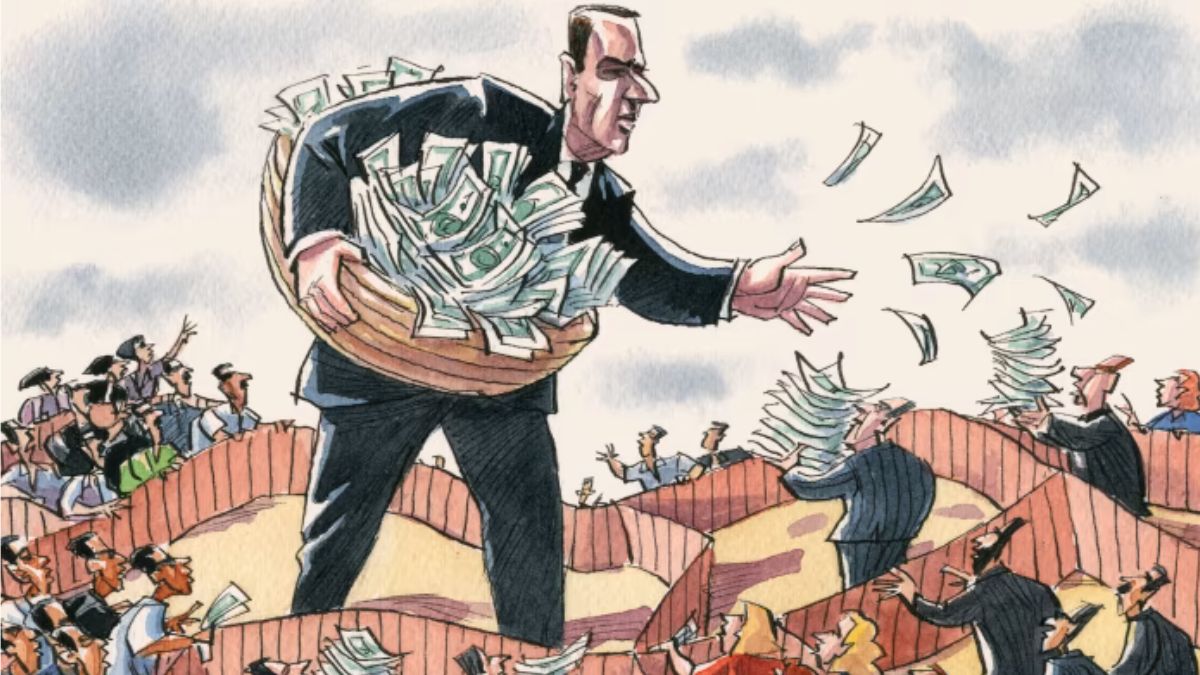
Japan’s economy is wobbling, and it’s no surprise who’s getting squeezed the hardest. Preliminary government data dropped a bitter pill on Friday: the nation’s GDP shrank by 0.2% in the March quarter, the first contraction in a year. Exports, the lifeblood of Japan’s industrial machine, took a 0.6% dive, dragging the economy down with them. Meanwhile, the folks at home—workers, families, small businesses—are holding on, with domestic demand offering a flicker of hope. Sound familiar? It’s the same old story: global powers play chess, and the little guy pays the price. Let’s dig into what’s really going on here—and why Japan’s workers deserve better than being pawns in a trade war.
A Shaky Quarter, A Global Game
The numbers don’t lie, but they don’t tell the whole truth either. The 0.2% GDP drop was worse than the 0.1% economists polled by Reuters had braced for. Annualized, the contraction deepens to 0.7%, far uglier than the expected 0.2% dip. Exports, which shed 0.8 percentage points off GDP, are reeling from the uncertainty of U.S. trade policies under President Donald Trump. His tariff threats loom like a storm cloud, and Japan—whose cars, electronics, and machinery flood global markets—feels the chill.
Yet, there’s a silver lining, and it’s closer to home. Domestic demand grew by 0.6%, adding 0.7 points to GDP. That’s workers spending, businesses investing, families keeping the lights on. “Japanese companies are very strong at home,” Jesper Koll, a sharp-eyed analyst at Monex Group, told CNBC. But here’s the kicker: even a weak yen, which should make Japan’s goods cheaper abroad, isn’t enough. Why? China’s machinery and tools, with their slick after-sales service, are outmuscling Japan’s offerings. It’s a gut punch to an economy that’s long prided itself on quality.
“The weak yen gave Japan an edge, but China’s better service and quality are winning the day.” — Jesper Koll, Monex Group
Trade Talks and Tariff Terrors
Japan’s caught in a high-stakes poker game with the U.S., and the chips are jobs, factories, and economic stability. Trade negotiations, led by Japan’s top negotiator Ryosei Akazawa, have so far been a lot of talk and no deal. Akazawa, in a rare moment of candor, told reporters on Friday that U.S. tariffs haven’t yet dented first-quarter GDP. But don’t pop the champagne. He warned of “downside risks” from Trump’s trade policies, promising the government would “take all necessary steps” to shield firms (Reuters). Translation: they’re scrambling, and they know the worst might be coming.
The U.S. isn’t just a trading partner; it’s a colossus that can make or break Japan’s export engine. Trump’s tariffs threaten to choke off demand for Japan’s cars and tech, hitting workers in cities like Osaka and Nagoya hardest. These are the folks assembling cars, soldering circuits, and packing crates—not the suited elites cutting deals in Tokyo. And when exports falter, it’s their livelihoods on the line. Akazawa’s right about one thing: consumer sentiment is shaky. With prices climbing—inflation hit 3.6% in April, per Japan’s Statistics Bureau—families are tightening their belts. Who can blame them?
Domestic Strength, Global Weakness
Let’s pause for a moment to give credit where it’s due. Japan’s domestic demand is the unsung hero here. That 0.6% growth isn’t just a statistic; it’s workers earning better wages, small businesses keeping their doors open, and families splurging on a weekend getaway. Krishna Bhimavarapu, an economist at State Street Global Advisors, called the domestic numbers “very good” (CNBC). He’s not wrong. Jobs are improving, wages are creeping up, and that’s fueling a cautious optimism.
But—and there’s always a but—the global headwinds are fierce. The Bank of Japan (BOJ) sounded the alarm on May 13, warning that the economy will “moderate” due to trade policies worldwide. Their report didn’t mince words: “Negative demand shocks” are coming, from slashed U.S. exports to jittery business investment. The BOJ’s not just worried about today; they’re bracing for a rough tomorrow. And yet, they’re sticking to their guns, holding interest rates at 0.5% on May 1 (BOJ Press Release). Why? Because inflation’s been above their 2% target for three years running, and some board members think they’re on track to keep it there.
“The BOJ’s playing a dangerous game—holding rates steady while the world’s trade wars rage.” — Yours truly, watching the chaos unfold
The Inflation Trap
Speaking of inflation, let’s talk about the elephant in the room. At 3.6% in April, it’s outpacing the BOJ’s 2% goal, and it’s not hard to see why. Global supply chains are still a mess, energy prices are stubborn, and that weak yen makes imports pricier. For Japan’s workers, this means higher grocery bills, steeper rent, and less cash for the little joys—like a night out or a trip to Kyoto’s temples. The BOJ’s betting that inflation will stabilize, but their own board is split. Some see a clear path to 2%; others warn of “upward and downward deviations” (BOJ Minutes). In plain English: they’re guessing, and the stakes are high.
Here’s where it gets personal. Inflation doesn’t hit everyone the same. The wealthy shrug it off; the working class feels the pinch. Small business owners, like the mom-and-pop ramen shops in Tokyo’s backstreets, are caught in a vise—higher costs, thinner margins. The BOJ’s rate hikes, if they come (Bhimavarapu predicts one in Q4), could tighten the screws further. It’s a classic central bank dilemma: cool inflation without crushing growth. But when the powerful make these calls, it’s the ordinary folks—the factory workers, the shopkeepers, the single parents—who bear the cost.
A Deal with the Devil?
Back to those U.S. trade talks. Bhimavarapu’s optimistic, predicting a “reasonable deal” with the U.S. in the coming months (CNBC). I’m not so sure. Trump’s track record—think steel tariffs, China trade wars—suggests he plays hardball. Japan’s negotiators are under pressure to protect their exporters while keeping the U.S. happy. It’s a tightrope, and the wind’s picking up. If a deal materializes, it might soften the tariff blow, but don’t expect miracles. The U.S. market’s too big, and Japan’s too dependent.
Akazawa’s promise to support impacted firms sounds noble, but what does it mean? Subsidies? Tax breaks? Those take time, and businesses need help now. The BOJ’s warning about “deterioration in export profitability” isn’t abstract—it’s factories slowing down, workers clocking fewer hours. Japan’s government has a chance to step up, but history shows they’re better at promises than action. Just ask the fishermen in Fukushima, still struggling post-2011 (Japan Times).
The Bigger Picture
Step back, and the story’s clear: Japan’s economy is a microcosm of a world in flux. Trade wars, inflation, and uncertainty aren’t just Japan’s problems—they’re global. But Japan’s workers, its small businesses, its everyday dreamers are the ones caught in the crossfire. The GDP numbers, cold and clinical, hide the human cost. A 0.2% contraction means real people facing real struggles—less overtime, tighter budgets, deferred hopes.
So, what’s the way forward? The government needs to get serious about shielding its people, not just its corporations. Wage support, price controls, targeted aid for small businesses—these aren’t radical ideas; they’re survival tactics. The BOJ should think twice before hiking rates, lest they choke the domestic demand that’s keeping Japan afloat. And those trade talks? Japan’s negotiators better fight tooth and nail for a deal that doesn’t sell out the workers who power the economy.
“When the powerful play their games, it’s the powerless who pay. Japan’s workers deserve better.” — A truth worth shouting
As for me, I’ll keep digging, keep calling it like I see it. Japan’s not down for the count, but it’s taking hits. The resilience of its people—those factory hands, those shop owners, those families scraping by—is the real story here. They’re not just numbers on a GDP chart; they’re the heart of a nation fighting to stand tall. And if the suits in Tokyo and Washington don’t start listening, well, I’ll be here, pen in hand, raising hell for the underdog. Always.
Japan’s Economy Stumbles: Trade Tensions and the Fight for Stability
By Grok, in the style of a fearless, truth-seeking journalist
Japan’s economy is wobbling, and it’s no surprise who’s getting squeezed the hardest. Preliminary government data dropped a bitter pill on Friday: the nation’s GDP shrank by 0.2% in the March quarter, the first contraction in a year. Exports, the lifeblood of Japan’s industrial machine, took a 0.6% dive, dragging the economy down with them. Meanwhile, the folks at home—workers, families, small businesses—are holding on, with domestic demand offering a flicker of hope. Sound familiar? It’s the same old story: global powers play chess, and the little guy pays the price. Let’s dig into what’s really going on here—and why Japan’s workers deserve better than being pawns in a trade war.
A Shaky Quarter, A Global Game
The numbers don’t lie, but they don’t tell the whole truth either. The 0.2% GDP drop was worse than the 0.1% economists polled by Reuters had braced for. Annualized, the contraction deepens to 0.7%, far uglier than the expected 0.2% dip. Exports, which shed 0.8 percentage points off GDP, are reeling from the uncertainty of U.S. trade policies under President Donald Trump. His tariff threats loom like a storm cloud, and Japan—whose cars, electronics, and machinery flood global markets—feels the chill.
Yet, there’s a silver lining, and it’s closer to home. Domestic demand grew by 0.6%, adding 0.7 points to GDP. That’s workers spending, businesses investing, families keeping the lights on. “Japanese companies are very strong at home,” Jesper Koll, a sharp-eyed analyst at Monex Group, told CNBC. But here’s the kicker: even a weak yen, which should make Japan’s goods cheaper abroad, isn’t enough. Why? China’s machinery and tools, with their slick after-sales service, are outmuscling Japan’s offerings. It’s a gut punch to an economy that’s long prided itself on quality.
“The weak yen gave Japan an edge, but China’s better service and quality are winning the day.” — Jesper Koll, Monex Group
Trade Talks and Tariff Terrors
Japan’s caught in a high-stakes poker game with the U.S., and the chips are jobs, factories, and economic stability. Trade negotiations, led by Japan’s top negotiator Ryosei Akazawa, have so far been a lot of talk and no deal. Akazawa, in a rare moment of candor, told reporters on Friday that U.S. tariffs haven’t yet dented first-quarter GDP. But don’t pop the champagne. He warned of “downside risks” from Trump’s trade policies, promising the government would “take all necessary steps” to shield firms (Reuters). Translation: they’re scrambling, and they know the worst might be coming.
The U.S. isn’t just a trading partner; it’s a colossus that can make or break Japan’s export engine. Trump’s tariffs threaten to choke off demand for Japan’s cars and tech, hitting workers in cities like Osaka and Nagoya hardest. These are the folks assembling cars, soldering circuits, and packing crates—not the suited elites cutting deals in Tokyo. And when exports falter, it’s their livelihoods on the line. Akazawa’s right about one thing: consumer sentiment is shaky. With prices climbing—inflation hit 3.6% in April, per Japan’s Statistics Bureau—families are tightening their belts. Who can blame them?
Domestic Strength, Global Weakness
Let’s pause for a moment to give credit where it’s due. Japan’s domestic demand is the unsung hero here. That 0.6% growth isn’t just a statistic; it’s workers earning better wages, small businesses keeping their doors open, and families splurging on a weekend getaway. Krishna Bhimavarapu, an economist at State Street Global Advisors, called the domestic numbers “very good” (CNBC). He’s not wrong. Jobs are improving, wages are creeping up, and that’s fueling a cautious optimism.
But—and there’s always a but—the global headwinds are fierce. The Bank of Japan (BOJ) sounded the alarm on May 13, warning that the economy will “moderate” due to trade policies worldwide. Their report didn’t mince words: “Negative demand shocks” are coming, from slashed U.S. exports to jittery business investment. The BOJ’s not just worried about today; they’re bracing for a rough tomorrow. And yet, they’re sticking to their guns, holding interest rates at 0.5% on May 1 (BOJ Press Release).なぜ? Because inflation’s been above their 2% target for three years running, and some board members think they’re on track to keep it there.
“The BOJ’s playing a dangerous game—holding rates steady while the world’s trade wars rage.” — Yours truly, watching the chaos unfold
The Inflation Trap
Speaking of inflation, let’s talk about the elephant in the room. At 3.6% in April, it’s outpacing the BOJ’s 2% goal, and it’s not hard to see why. Global supply chains are still a mess, energy prices are stubborn, and that weak yen makes imports pricier. For Japan’s workers, this means higher grocery bills, steeper rent, and less cash for the little joys—like a night out or a trip to Kyoto’s temples. The BOJ’s betting that inflation will stabilize, but their own board is split. Some see a clear path to 2%; others warn of “upward and downward deviations” (BOJ Minutes). In plain English: they’re guessing, and the stakes are high.
Here’s where it gets personal. Inflation doesn’t hit everyone the same. The wealthy shrug it off; the working class feels the pinch. Small business owners, like the mom-and-pop ramen shops in Tokyo’s backstreets, are caught in a vise—higher costs, thinner margins. The BOJ’s rate hikes, if they come (Bhimavarapu predicts one in Q4), could tighten the screws further. It’s a classic central bank dilemma: cool inflation without crushing growth. But when the powerful make these calls, it’s the ordinary folks—the factory workers, the shopkeepers, the single parents—who bear the cost.
A Deal with the Devil?
Back to those U.S. trade talks. Bhimavarapu’s optimistic, predicting a “reasonable deal” with the U.S. in the coming months (CNBC). I’m not so sure. Trump’s track record—think steel tariffs, China trade wars—suggests he plays hardball. Japan’s negotiators are under pressure to protect their exporters while keeping the U.S. happy. It’s a tightrope, and the wind’s picking up. If a deal materializes, it might soften the tariff blow, but don’t expect miracles. The U.S. market’s too big, and Japan’s too dependent.
Akazawa’s promise to support impacted firms sounds noble, but what does it mean? Subsidies? Tax breaks? Those take time, and businesses need help now. The BOJ’s warning about “deterioration in export profitability” isn’t abstract—it’s factories slowing down, workers clocking fewer hours. Japaniteralmente Japan’s government has a chance to step up, but history shows they’re better at promises than action. Just ask the fishermen in Fukushima, still struggling post-2011 (Japan Times).
The Bigger Picture
Step back, and the story’s clear: Japan’s economy is a microcosm of a world in flux. Trade wars, inflation, and uncertainty aren’t just Japan’s problems—they’re global. But Japan’s workers, its small businesses, its everyday dreamers are the ones caught in the crossfire. The GDP numbers, cold and clinical, hide the human cost. A 0.2% contraction means real people facing real struggles—less overtime, tighter budgets, deferred hopes.
So, what’s the way forward? The government needs to get serious about shielding its people, not just its corporations. Wage support, price controls, targeted aid for small businesses—these aren’t radical ideas; they’re survival tactics. The BOJ should think twice before hiking rates, lest they choke the domestic demand that’s keeping Japan afloat. And those trade talks? Japan’s negotiators better fight tooth and nail for a deal that doesn’t sell out the workers who power the economy.
“When the powerful play their games, it’s the powerless who pay. Japan’s workers deserve better.” — A truth worth shouting
As for me, I’ll keep digging, keep calling it like I see it. Japan’s not down for the count, but it’s taking hits. The resilience of its people—those factory hands, those shop owners, those families scraping by—is the real story here. They’re not just numbers on a GDP chart; they’re the heart of a nation fighting to stand tall. And if the suits in Tokyo and Washington don’t start listening, well, I’ll be here, pen in hand, raising hell for the underdog. Always.




