


On January 31, 2026, a post from the official X account of Dr. Shafiqur Rahman, Amir of Bangladesh Jamaat-e-Islami, sparked widespread debate. The message, which discussed women’s roles in society and drew from traditional views, quickly drew criticism for its tone and implications. Hours later, the party claimed the account had been hacked, and the post was not from Rahman. The recovery happened fast, raising eyebrows about whether this was a real security breach or a way to distance the leader from controversy. This incident comes amid Jamaat’s efforts to rebuild its image ahead of February elections. It invites questions about accountability in digital spaces, where claims of hacks often serve as shields. As social media shapes public opinion, understanding the facts behind this event could reveal more about political strategies in Bangladesh’s charged atmosphere.
What Sparked the Controversy Over the X Post?
The post from Dr. Shafiqur Rahman’s verified X account addressed women’s participation in public life, emphasizing traditional family roles and cautioning against what it called excessive exposure to modern influences. Posted in the afternoon of January 31, it spread rapidly, drawing sharp responses from women’s rights groups, youth activists, and opposition voices.
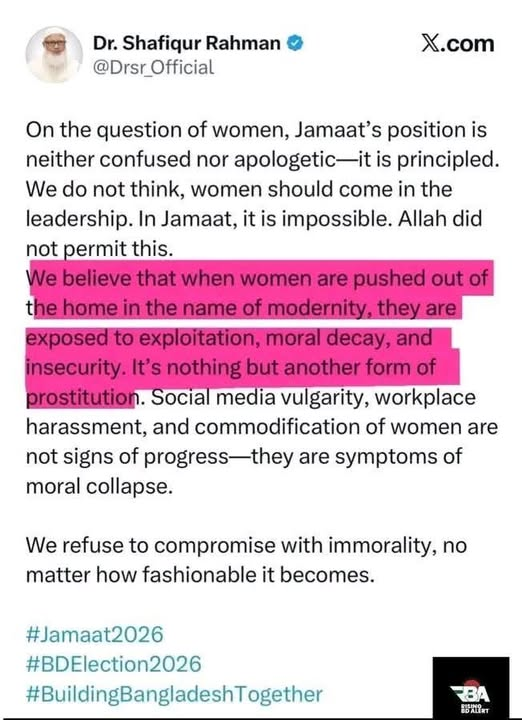
Within hours, the account posted a clarification, stating it had been compromised by hackers. The original message was deleted, and Jamaat issued a statement denying Rahman’s involvement. They described the recovery as swift action by their team. This shift turned attention from the content to the security claim. Yet details were sparse: no evidence of the hack was shared publicly, and the timeline seemed unusually short for such incidents. The event echoes past cases where public figures blame hacks for unpopular views, raising doubts about authenticity.
How Did the Hack Narrative Unfold and What Questions Did It Raise?
The hack claim emerged around three to four hours after the original post. Jamaat’s media team announced that unauthorized access had occurred, allowing someone to publish the message without Rahman’s knowledge. They said their cyber experts regained control quickly and removed the content. The party emphasized that Rahman had no role and called the post a deliberate attempt to defame him.
This explanation aimed to end the backlash, but it opened new lines of inquiry. Recovery from a true hack typically involves steps like two-factor authentication resets, identity verification, and platform support. These processes often take 24 to 48 hours, or longer, based on standard procedures from platforms like X. A full breach, where hackers gain total control, makes quick fixes even harder. Jamaat’s timeline of minutes to hours seemed implausible to many observers.
The party’s structure added to the skepticism. Jamaat has a well-organized cyber unit, active not just in Bangladesh but in places like Malaysia, Singapore, and Vietnam. This team monitors and secures top leaders’ accounts around the clock, using advanced tools for protection. For the Amir’s official page—a key communication tool—to fall victim so easily struck experts as unlikely. No details emerged about how the breach happened, such as phishing or weak passwords. Instead, the focus stayed on denial, without proof like logs or reports from X.
This unfolding narrative shifted debate from women’s issues to digital security. It also highlighted how quickly online incidents can escalate in politics. With elections close, the hack story could serve to rally supporters by portraying Rahman as a target of sabotage. Yet without transparency, it fueled theories that the claim was a tactic to avoid accountability for the views expressed.
Why Do Experts Doubt the Credibility of the Hack Story?
Cybersecurity specialists have pointed out flaws in Jamaat’s explanation. Recovering a hacked account in minutes is rare, especially if hackers changed passwords or enabled extra security. Standard recovery involves contacting the platform, providing proof of ownership, and waiting for review. In high-profile cases, this can drag on. Jamaat’s rapid fix suggests perhaps no full hack occurred, or internal access allowed quick changes.
The party’s strong cyber capabilities make a breach even less likely. Their team uses top-level safeguards, including constant monitoring and backups. For a leader like Rahman, accounts operate under strict protocols to prevent mishaps. Experts argue that if a hack did happen, Jamaat would share evidence to build sympathy and expose attackers. The lack of details—such as IP traces or breach methods—fuels suspicion.
Broader patterns support these doubts. In Bangladesh politics, hack claims often follow controversial posts. They provide an easy out without admitting error. Here, the post’s content aligned with some conservative views within Jamaat, making the denial seem convenient. Analysts note that deleting the message without archiving it for investigation adds to the opacity. If it was a hack, preserving evidence would help prosecute culprits.




