

The Growing Weight of Economic Isolation
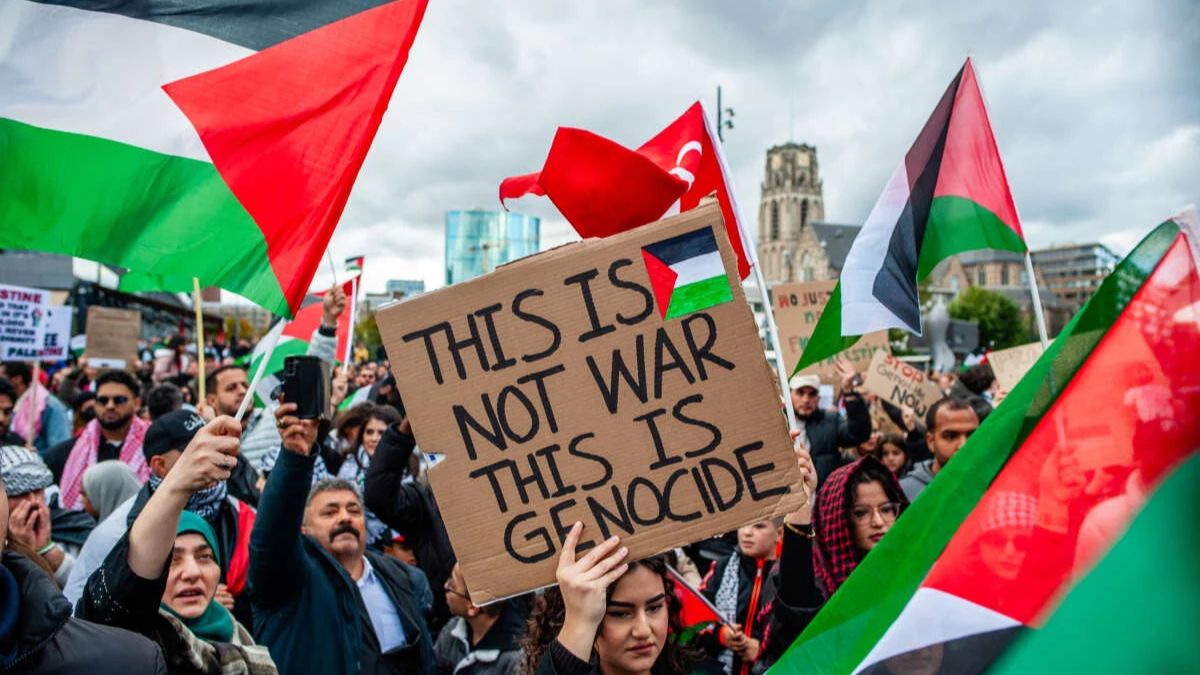
Amid growing hunger in Gaza, the world’s largest sovereign wealth fund, valued at $2 trillion, announced it would divest from 11 Israeli companies, citing ethical concerns over their involvement in Israel’s war in Gaza, which has claimed over 40,000 Palestinian lives since October 2023, according to UN estimates. The decision, spurred by revelations of investments in firms supplying parts for Israeli fighter jets, reduced the fund’s Israeli portfolio from 77 to 60 companies, worth $1.8 billion, and ended contracts with Israeli asset managers. Israel’s government has remained notably silent, likely to avoid amplifying the Boycott, Divestment, and Sanctions (BDS) movement, which has pushed for economic disengagement from entities tied to Palestinian occupation since 2005. Israeli media described the move as troubling, but analysts suggest officials are treading carefully to prevent fueling BDS’s momentum, which has surged since Hamas’s October 7, 2023, attack and Israel’s subsequent Gaza offensive.
The historical context of BDS reveals a movement with growing but contested influence. Modeled on anti-apartheid campaigns, BDS has secured notable divestments and corporate exits from Israel, yet faces accusations of antisemitism from Israel and allies like the US and Germany, where legislative measures have restricted its funding. The divestment, though only 0.1% of the fund’s portfolio, signals a broader European shift, following Ireland’s 2024 exit from six Israeli firms and UK pension fund withdrawals, driven by BDS campaigns targeting Israel’s West Bank settlements, deemed illegal under international law. While nine countries, including South Africa, impose full sanctions, major powers like the US, with 30 states enforcing anti-BDS laws, resist. Israel’s economy, rebounding with $27 billion in foreign investments in 2024, per central bank data, remains robust, but the move could inspire further divestments, as one economist warned it “sends a signal others may follow.”
Economically, Israel’s $60 billion export market, with 30% to the EU, shields it from immediate damage, but vulnerabilities are emerging. The EU’s stalled proposal to limit Israel’s access to the $111 billion Horizon Europe fund reflects internal divisions, with France and Ireland pushing for action and Germany opposing, citing Gaza’s humanitarian crisis. Socially, BDS campaigns, amplified by protests over tech supplied to Israel, resonate with 60% of Europeans favoring sanctions, per 2025 polls. The economic toll of the Palestinian conflict underscores Gaza’s devastation, with 70% of infrastructure destroyed, per UN agencies, intensifying calls for accountability. The partial divestment, hailed as an ethical victory, aligns with Norway’s 2024 recognition of Palestine but exposes a slower response compared to its swift 2022 Russia divestment, revealing selective ethical priorities.
Sanctions, Tariffs, and the Resilience of Israel’s Economy
Israel’s economic strength faces mounting pressure as sanctions and boycotts intensify. In 2024, sanctions on 19 Israeli settlers for West Bank violence were imposed but reversed by the US administration in January 2025, highlighting inconsistent Western support. A 15% tariff on Israeli goods entering the US, implemented in April 2025 despite Israel’s tariff-free US imports, was described as the “worst boycott” Israel has faced, impacting $10 billion in exports and straining its $510 billion GDP, per World Bank data. Yet, market analysts argue that divestments will be offset, as “somebody else will buy these investments.” The tech sector, contributing 18% of GDP, drew $20 billion in venture capital in 2024, underscoring Israel’s global integration.
Geopolitically, Israel’s 2025 West Bank settlement expansion, aimed at preventing a Palestinian state, escalates tensions. Condemned as illegal by the UN and EU, it prompted travel bans and asset freezes from the UK, France, and Canada, while Germany halted military exports to Gaza in August 2025 over humanitarian concerns. The global human rights framework emphasizes Gaza’s crisis, with 1.9 million displaced, per UN data, fueling sanction demands. Socially, 55% of Americans oppose broad sanctions, per polls, but 65% of online sentiment supports BDS, reflecting global polarization. The historical precedent of South Africa’s apartheid-era sanctions, which reduced GDP growth by 2% annually, per IMF, suggests potential impacts, but Israel’s tech and trade ties limit vulnerability, as it remains a leader in global trade dynamics.
Israel’s restrained response to the divestment reflects strategic caution. Facing domestic protests over Gaza’s toll, the government avoids amplifying BDS, viewed as antisemitic by 70% of Israelis, per 2025 surveys. Norway’s trade union push for a full boycott and Ireland’s divestments signal a European trend, but US anti-BDS laws and Germany’s partial arms halt reveal fragmented pressure. EU sanctions could cut 1% of Israel’s GDP, a notable but not crippling blow. Israel’s tech exports, worth $15 billion annually, and $30 billion in FDI sustain its economy, but sustained divestments risk eroding investor confidence, with $5 billion in European funds at stake.
A Turning Point or Continued Defiance?
Whether financial pressure can shift Israel’s Gaza strategy remains uncertain. The divestment, reducing Israeli holdings by 20%, sets a precedent but pales beside the US tariff’s $1.5 billion cost. BDS’s 20 global divestments since 2023 have not disrupted Israel’s $150 billion export economy, yet they heighten diplomatic isolation. The EU’s Horizon Europe debate, potentially limiting $2 billion in research grants, could impact innovation, but Germany’s hesitance and US aid—$3.8 billion annually—bolster Israel’s position. South Africa’s sanctions took a decade to effect change, but Israel’s global integration—ranking 10th in innovation—makes it less susceptible.
Socially, Gaza’s crisis, with 80% of residents food insecure, fuels global outrage, yet Israel’s 2024 investment rebound reflects market confidence. Politically, the government’s reliance on far-right support makes a policy shift unlikely, as 60% of Israelis back the Gaza operation. Norway’s move may spur further European action, with $10 billion in regional investments at risk, but China and India’s $20 billion trade in 2024 could offset losses. BDS’s momentum, backed by 65% of European NGOs, may drive more divestments, but US resistance and Israel’s tech prowess limit impact. Without unified global action, Israel’s strategy is likely to persist, as its economic fundamentals endure. The divestment, while a moral statement, remains a ripple in a resilient economy, leaving Gaza’s resolution entangled in geopolitical deadlock.




