

The recent declaration by the military of Pakistan has raised an urgent question: is the Afghan Taliban (the Taliban) no longer just a regional problem, but a global threat? In a press briefing in late November 2025, the spokesman of the Pakistani military argued that the Taliban’s rule in Afghanistan is now endangering not only neighbouring countries but the wider world. This shift in framing has stirred fresh concern, prompting us to examine what lies behind this warning — and whether the international community should take it seriously.
What changed: From domestic Taliban to worldwide danger
After the Taliban seized control of Afghanistan in August 2021, many in the international community remained cautiously hopeful that the group might moderate. Instead, over the past four years, events on the ground have painted a very different picture. Earlier this week, the spokesman for the Pakistani military, Inter-Services Public Relations (ISPR), Lieutenant General Ahmed Sharif Chaudhry, said the Taliban-led regime has become “a threat not just to Pakistan but to the entire region and the world.”
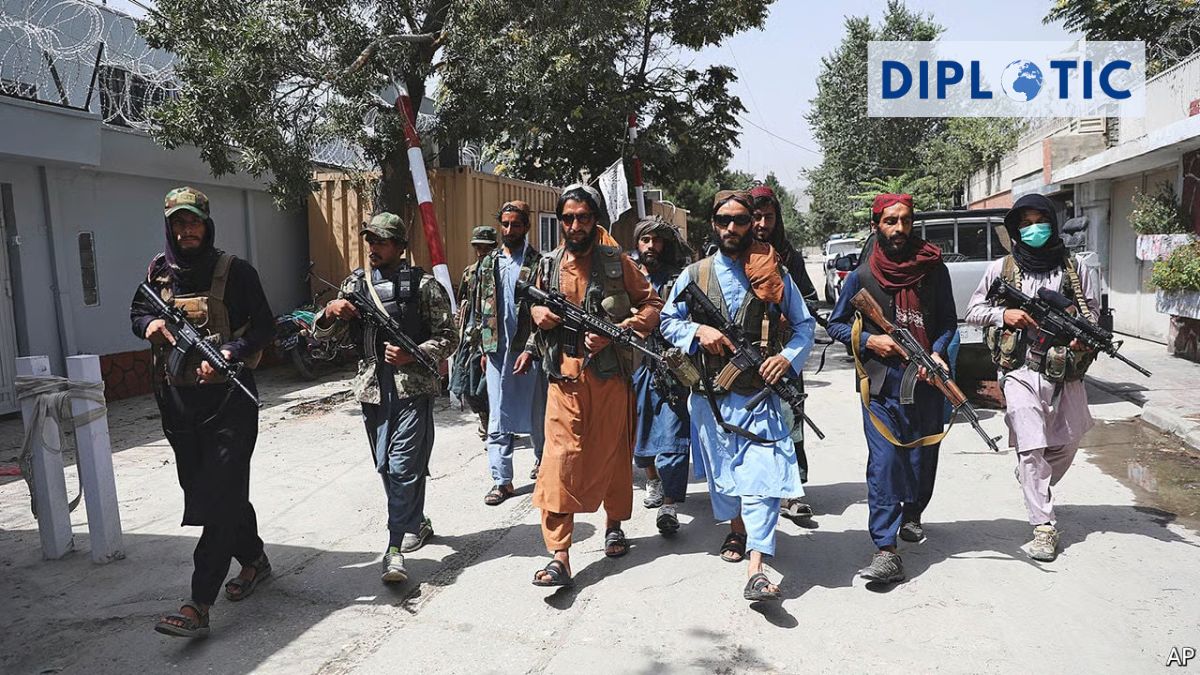
Chaudhry pointed out one major reason for alarm: weapons abandoned by the former foreign military presence. When their forces withdrew, they left behind more than $7.2 billion worth of American military equipment. According to Pakistan’s military, these weapons are now being used by terrorist groups operating from Afghan soil—including organizations such as Al‑Qaeda, Islamic State Khorasan (ISIS-K), and others.
Beyond the weaponry, Chaudhry asserted that Afghanistan under the Taliban remains a safe haven for militant networks. According to his briefing, Pakistan submitted what it describes as “irrefutable evidence” of terror centers inside Afghan territory, including leadership hubs for extremist groups.
This recent shift in language from “regional instability” to “global threat” reflects growing frustration in Islamabad. The message is stark: what happens inside Afghanistan can no longer be contained behind borders. And for many watching, this could be a warning signal for the world.
What this means for neighboring states—and beyond
For nations bordering Afghanistan, the implications are immediate and serious. Pakistan has long been on the frontline of cross-border militant infiltration, smuggling, and violence. According to ISPR data shared in November 2025, Pakistani security forces have carried out 4,910 intelligence-based operations (IBOs) since early November alone, targeting militants and destroying hideouts.
Over the course of 2025, authorities say they conducted more than 67,000 IBOs nationwide, killing around 1,873 terrorists, some of whom were reportedly Afghan nationals. This scale of violence illustrates the depth of concern: security in Pakistan is under constant stress as militants allegedly flow in from across the border.
But it is not only neighbouring states that may be affected. Critics argue that extremist groups in Afghanistan could regain strength, rebuild networks, and exploit weapons and funding to launch operations far beyond the region. International terrorist financing networks, refugee flows, and illicit arms sales all these factors can ripple outward, especially when local governments remain weak or complicit.
In fact, some voices warn that the threat from Afghan-based militants is already transnational. According to a recent article calling for global accountability, several regional powers and international institutions have flagged Afghanistan as a launching ground for transnational terrorism from ISIS-K camps to affiliates of Al-Qaeda.
If this trend continues, the world may face renewed waves of extremist violence not limited to South Asia but potentially reaching Europe, the Middle East, Central Asia, and beyond. The consequences would be far-reaching: rising militant recruitment, increased refugee flows, and perhaps a spike in global terror incidents.
Why the Taliban’s promise of stability remains unfulfilled
When the Taliban took over in 2021, there were hopes their rule might bring stability. The group had engaged in diplomatic negotiations, including the Doha Agreement of 2020, which included commitments not to allow Afghan territory to be used for terrorism.
Yet, four years later, many of those promises remain unkept. According to ISPR, Afghanistan still harbors terrorist groups, allowing them to operate, coordinate attacks, and move across borders. The military representative called on the Taliban regime to stop facilitating the militants under a verifiable mechanism and warned that Pakistan cannot allow “blood and business” to go together.
Part of the problem is the absence of a strong administrative structure in many border areas of Afghanistan. Some regions remain effectively ungoverned, making them ideal sanctuaries for militants. The ISPR described a “political-terror-crime nexus” controlling these border zones, suggesting that the problem is not merely disorganization but a deliberate convergence of criminal and extremist networks.
Moreover, international agencies have repeatedly warned that former U.S. equipment, abandoned after withdrawal, has slipped into the hands of these groups giving them enhanced firepower, mobility, and lethality. The result: what was once a fragile, fragmented threat has the potential to become a coordinated network with global reach.
What the international community needs to ask and do next
If the warnings from Pakistan are to be taken seriously, the international community must revisit its assumptions about Afghanistan’s stability. First aid and diplomatic engagement must be conditioned on concrete steps to dismantle militant sanctuaries and prevent Afghanistan from remaining a hub for extremist groups. International pressure must go beyond rhetoric with real accountability, inspection, and verification of compliance.
Second, neighboring countries and global powers should coordinate on border security, intelligence sharing, and counter-terrorism efforts. The risk is not just limited to South Asia: today’s cross-border militants could tomorrow strike far-flung regions. Robust surveillance, funding tracing, and a crackdown on terror financing are urgently needed.
Third, policies towards refugees, asylum seekers, and migration must be balanced with security safeguards but also avoid stigmatizing entire populations. As decades of conflict have displaced millions, blanket suspicion could deepen instability, not resolve it. Effective vetting and integration policies need to be paired with international cooperation and human rights safeguards.
Finally, the world should consider imposing targeted sanctions against entities, networks, or individuals found to be supporting terrorist activities from Afghan soil including financial backers, arms traffickers, and extremist ideologues. Without consequences, the vacuum in Afghanistan may keep fueling cycles of violence.
What this moment tells us and why it matters
The recent alarm raised by Pakistan’s military is a stark reminder: the situation in Afghanistan cannot be seen as a domestic issue any longer. In 2025, the Taliban regime’s refusal or inability to uproot terrorism coupled with the proliferation of weapons and extremist networks, is increasingly viewed as a threat to global security. What happens in Kabul does not stay in Kabul.
If the international community fails to act, Afghanistan risks becoming a permanent base for global militancy. But if states unite with intelligence, diplomacy, and firm policies, there remains a chance to prevent further deterioration. The world must not treat this as a distant problem. It is a shared challenge, demanding shared responsibility.
In the end, history may look back on this moment as a turning point: either when the world woke up and acted or when it failed and watched a new global menace grow.




