

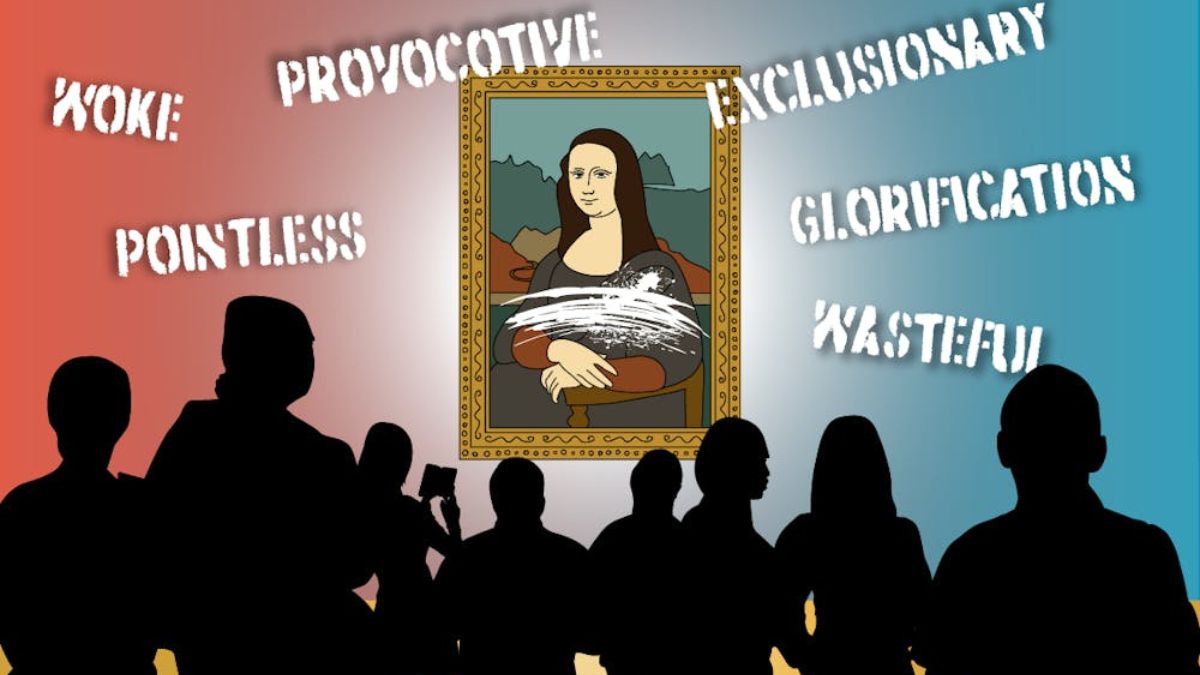
In recent times, the idea that “all art is political” has gone extremely viral, particularly among scholars, artists, and social media personalities. The general argument is that every medium of creative expression must be shaped by the power structures, identity constructs, and ideological systems that characterize our reality. True, it is that art often intersects with political life, and this general claim warrants closer, more deliberate examination. To call all art political may too reductively minimize the wide range of purposes, meanings, and experience that art can offer — and, ironically, may impose ideological dominance over art that would prefer otherwise.
How Art and Politics Intersect — and When They Don’t
Art and politics have been forever intertwined as long as human beings have been communicating visually and emotionally. Art has often served as a mirror to society, reflecting its achievements, failures, struggles, and hopes. From Diego Rivera’s politically charged murals to Picasso’s Guernica, artists have utilized their mediums to speak forcefully about war, oppression, and injustice. Even subtler works, like Hokusai’s famous The Great Wave off Kanagawa, have been interpreted through political lenses. Some scholars suggest the looming, overwhelming wave symbolizes Japan’s anxiety toward foreign encroachment during a time of national isolation. In this way, even natural imagery can, intentionally or not, carry political weight. It’s essential to understand that historical context. Art does not occur in a vacuum. It’s shaped by the economic, cultural, and political currents of the time — and sometimes actually defies them.
The Danger of Overgeneralizing
But to insist that all art is political — flat out — dilutes the precision and detail of both the artist’s intention and the audience’s perception. Not every brush stroke, melody, or sculpture is meant to be a political message, and not every audience member sees it as one. Eric Wayne, artist and critic, warns against the impulse to view all art through a single political lens. In his view, to state that “all art is political” risks becoming an ideological bludgeon, called upon to advance some points of view and shut down others. It holds in higher regard work with directly political content rather than work attentive to beauty, feeling, private memory, or metaphysical wonder. This mindset creates a tendency towards an intellectual hierarchy wherein only “political” art is taken seriously, is worth anything, or is enlightened — and art that exists merely to be beautiful, comforting, or abstract is trivial, naive.
Art Does More Than Make a Statement
Beyond political commentary, art does a million other things. It can provide emotional healing, spiritual reflection, beauty for its own sake, or personal catharsis. Claude Monet’s Water Lilies series, painted during a time of social upheaval in France, are not about revolution or war, but about the quiet, almost meditative beauty of a garden pond. Similarly, many paintings of Indigenous, religious, and folk art through history are based on community tradition, spiritual discipline, or celebration of the everyday — political rebellion is far from a necessary ingredient. By suggesting all such paintings are politically oriented at root is to be narrow in scope of meaning and dismiss the rich tapestry of human experience expressed.
Looking at Art Through a Wider Lens
Of course, it is never possible to exclude art completely from its social context. Even choosing to create “apolitical” work in a period of war might be considered political by some. But intention and interpretation are not the same thing. We must make room for a number of truths: that some artists create with political motivations, others with personal or aesthetic ones, and most with reasons that blend, and intersect,these categories. Audiences, too, bring their own experiences and meanings, sometimes finding political meaning where the artist may not have intended. Rather than attempting to squeeze all art into a single political category, we should celebrate its incredible diversity — the personal and the public, the revolutionary and the reflective, the loud and the quiet, the rebellious and the serene.
Conclusion: Let Art Be More Than a Statement
Ultimately, announcing “all art is political” risks shrinking a rich, multifaceted phenomenon into a single-minded tool. It risks giving rise to an unjustified sense of superiority, as if political art is the only worthwhile art, and all else somehow inferior. Art is political. Art is personal. Art is spiritual. Art is emotional. Art is occasionally simply beautiful for the sake of being beautiful. And all these realities can co-exist without eliminating one another. If we truly cherish art, we should allow it — and its creators — the freedom to be rich, complicated, and deeply human.




