

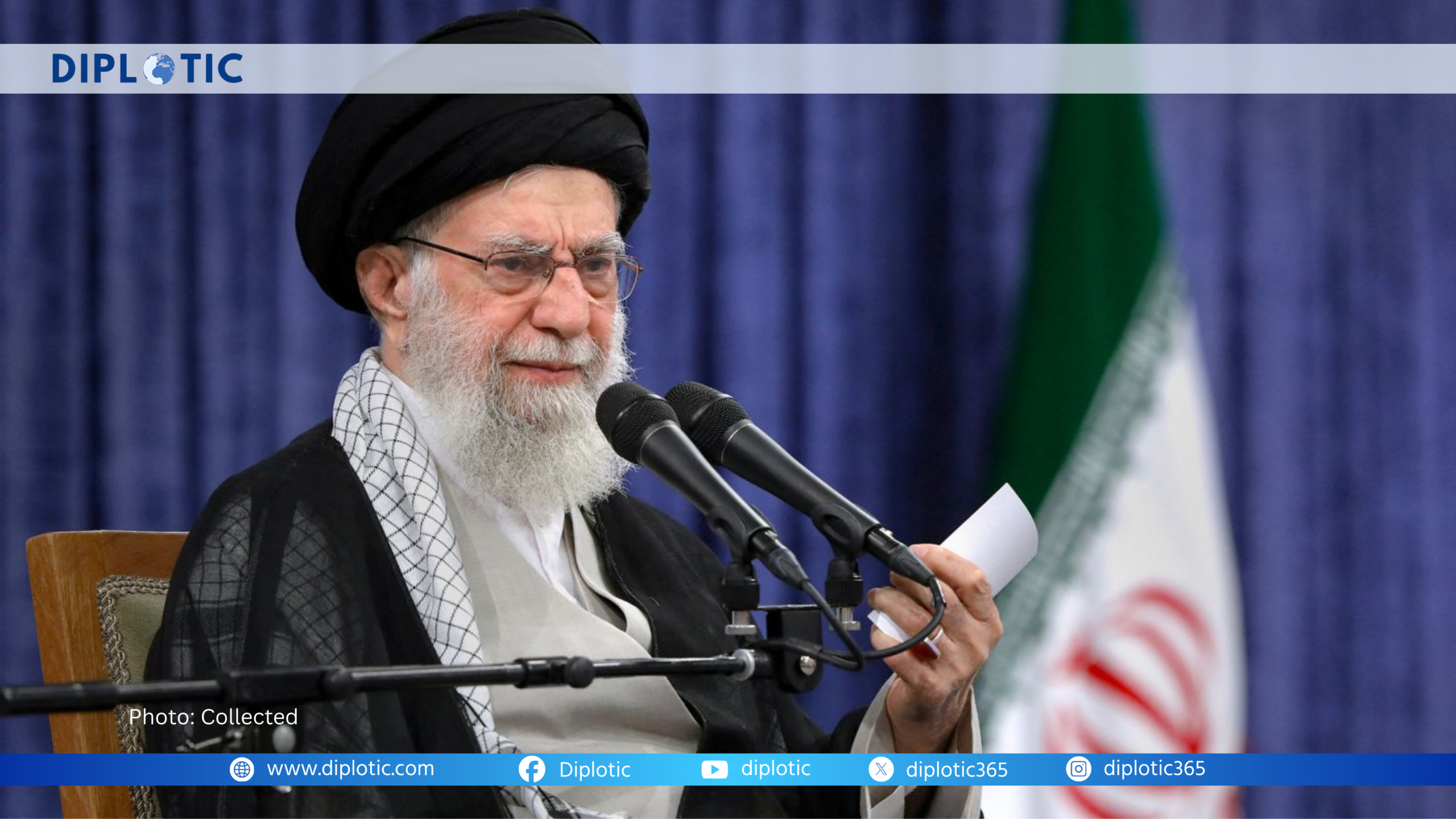
Iran is once again at a moment where power looks firm on the surface but fragile underneath. The recent wave of protests has slowed after a harsh security crackdown, yet the forces that triggered public anger remain unresolved. Supreme Leader Ayatollah Ali Khamenei now faces a classic Catch-22. To restore economic stability, Iran needs relief from sanctions and reduced regional tension. To get that relief, Tehran would need to change policies that the current leadership sees as essential to its survival. This contradiction defines Iran’s present dilemma. Control has been reasserted, but confidence has not returned. Inflation near 40 percent, a weakened currency, and widespread distrust continue to shape daily life for millions of Iranians. The state can silence streets for a time, but it cannot easily silence economic reality.
What makes this moment different is how domestic pressure and foreign pressure now reinforce each other. Blaming unrest on outside forces may rally loyalists, but it does little to convince citizens who struggle to afford basic goods. At the same time, foreign governments openly discuss Iran’s internal weaknesses in ways that heighten the leadership’s sense of siege. The result is a leadership boxed in by its own narrative, forced to project strength while quietly needing the very actors it condemns.
Control Restored, but at What Cost to Legitimacy?
The Iranian state has shown that it still possesses strong coercive capacity. Security forces moved quickly to suppress protests, and officials claim thousands of arrests. State media has framed the unrest as a foreign-backed conspiracy, stressing the presence of “armed rioters” and links to militant groups. From the government’s point of view, this explanation justifies force and reinforces the idea that the country is under attack rather than facing an internal crisis.
Yet this approach carries risks. By emphasizing foreign infiltration, the leadership indirectly admits that it cannot fully secure its streets or borders. Analysts have pointed out that such claims undermine the image of state competence. If outside actors can allegedly move so freely inside Iran, the public may question the regime’s ability to protect them. Moreover, repeated use of the foreign plot narrative does not explain why protests continue to reappear across different regions and social groups.
The economic background is impossible to ignore. High inflation, job insecurity, and declining purchasing power affect nearly every household. These problems are structural, rooted in years of mismanagement, corruption, and sanctions. Force can disperse crowds, but it cannot stabilize prices or restore savings wiped out by currency collapse. Each crackdown may buy time, but it also deepens resentment and fear.
Important dates loom ahead, including the anniversary of the 1979 revolution and traditional mourning periods. These moments often carry symbolic weight and can become rallying points. Even if protests do not erupt immediately, the underlying tension remains. The leadership’s challenge is not just preventing demonstrations, but rebuilding enough legitimacy to reduce the desire for them. So far, there is little sign of such a strategy.
The Economy as the Regime’s Weakest Link
Iran’s economic crisis is the core issue tying all others together. Inflation close to 40 percent erodes wages and pensions. The national currency has lost much of its value, making imports expensive and savings unreliable. Young people face limited job prospects, while older generations see decades of work devalued. These pressures cut across political and ideological lines.
Sanctions play a major role, restricting oil exports, financial transactions, and access to technology. Iranian leaders argue that sanctions are economic warfare, and there is truth to that claim. However, sanctions alone do not explain the depth of the crisis. Poor governance, lack of transparency, and the dominance of state-linked networks have also weakened productivity and trust.
This is where the Catch-22 becomes clear. Meaningful economic recovery likely requires sanctions relief. That, in turn, requires negotiations with the United States and its partners. But talks would demand concessions on issues Tehran considers strategic, such as its nuclear program, missile development, and regional alliances. Making those concessions could anger hardline supporters and weaken the ideological foundations of the Islamic Republic.
Without relief, however, the economy will continue to stagnate. Any successor to Mr. Khamenei would inherit the same constraints. The leadership must choose between gradual erosion from within or risky change from without. So far, it has chosen delay and repression, a strategy that postpones decisions but raises future costs.
Foreign Pressure, Regional Tensions, and the Fear of Escalation
Iran’s internal unrest unfolds against a tense regional backdrop. The presence of US military forces in nearby waters, combined with repeated warnings from Washington, adds to Tehran’s sense of vulnerability. President Donald Trump has signaled that severe repression or mass executions could trigger intervention. Whether such threats are intended as deterrence or leverage, they shape Iranian calculations.
Israel’s posture further complicates matters. Israeli officials and media have openly discussed operations inside Iran and expressed support for regime change. Statements suggesting that foreign intelligence services have contacts on the ground feed Tehran’s fears of a coordinated strategy to exploit unrest. Even if such claims are exaggerated, they resonate strongly within the Iranian security mindset.
At the same time, militant activity among some ethnic minority groups has increased. Kurdish and Baloch regions have seen clashes involving armed organizations with long-standing grievances against Tehran. These groups often deny seeking secession, but their actions raise alarms about territorial integrity. Iranian leaders frequently warn that unrest could lead to fragmentation similar to conflicts seen elsewhere in the region.
This fear of disintegration is powerful. It allows the state to frame repression as a defense of national unity rather than a suppression of dissent. Yet it also shows how fragile that unity has become. External actors discussing regime change or fragmentation may believe they are applying pressure, but such rhetoric often strengthens hardliners and weakens moderate voices within Iran.
Negotiation Without Trust: The Supreme Leader’s Final Dilemma
Ultimately, Iran’s leadership needs some form of accommodation with the outside world to stabilize the country. It needs reduced sanctions, calmer borders, and limits on regional escalation. Yet trust is almost nonexistent. From Tehran’s perspective, past agreements did not protect it from renewed pressure. From Washington’s perspective, Iranian commitments have often been partial or reversible.
Any potential deal would require Iran to address nuclear enrichment levels, missile capabilities, and support for allied groups in the region. These demands touch the core of Iran’s security doctrine. Accepting them risks internal backlash. Rejecting them prolongs isolation. This is the trap facing Mr. Khamenei.
Time does not necessarily favor the status quo. Demographics, economic decay, and regional shifts all add pressure. While repression can hold the system together in the short term, it does not offer a vision for the future. The leadership’s greatest challenge may be admitting that survival now depends less on defiance and more on adaptation.
Iran stands at a crossroads shaped by its own history. The choices made in the coming months and years will determine whether the current system slowly hardens into stagnation or cautiously opens paths to recovery. For now, the Supreme Leader remains caught between opposing necessities, ruling a country that is quiet on the streets but restless beneath the surface.




