

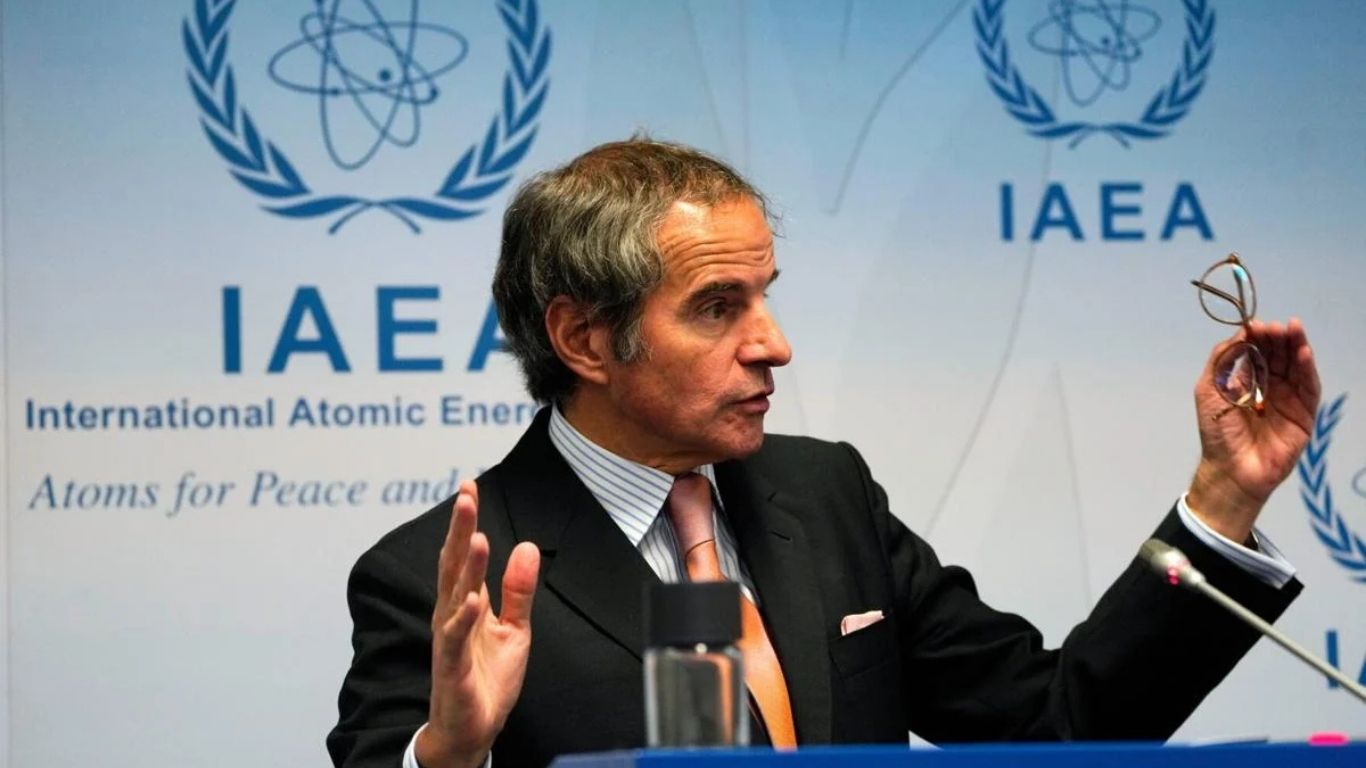
UN Watchdog Warns US Strikes Failed to Cripple Tehran’s Uranium Program. The head of the United Nations’ nuclear watchdog has issued a stark warning: Iran retains the capacity to restart uranium enrichment within months, despite recent US military strikes that targeted key Iranian nuclear facilities. This assessment from Rafael Grossi, Director General of the International Atomic Energy Agency (IAEA), directly contradicts claims by President Donald Trump that the US attacks set Tehran’s nuclear ambitions back by decades.
US Strikes Deliver “Severe but Not Total” Damage
Grossi’s remarks, made during a CBS interview, align with early findings from the Pentagon’s Defense Intelligence Agency and other US intelligence sources. These assessments indicate that the strikes targeting the Fordow, Natanz, and Isfahan nuclear sites inflicted serious but not comprehensive damage. The core infrastructure and Iran’s stockpile of enriched uranium remain largely intact, meaning the program has only been delayed by a matter of months, not years.
“They can have, in a matter of months, a few cascades of centrifuges spinning and producing enriched uranium, or less than that. Frankly speaking, one cannot claim that everything has disappeared and there is nothing there,” Grossi said.
Political Fallout: Iran Moves to Limit Oversight
In response to the strikes and perceived lack of international condemnation, Iran’s parliament has passed a bill to suspend cooperation with the IAEA. This legislation, pending final approval, would halt inspections, reporting, and oversight activities under the Nuclear Non-Proliferation Treaty (NPT), significantly reducing transparency at a critical time. Iranian officials have also signaled they may reconsider the country’s membership in the NPT altogether, raising fears of a deeper nuclear crisis.
“The Atomic Energy Organization of Iran will cease its collaboration with the Agency until the safety of the nuclear facilities is assured and will advance more rapidly with the nation’s peaceful nuclear endeavors,” said Parliament Speaker Mohammad Bagher Ghalibaf.
Contradictory Claims and Unanswered Questions
President Trump has repeatedly insisted that the US strikes “completely and totally obliterated” Iran’s nuclear program. However, multiple intelligence reports and statements from both Democratic and Republican lawmakers suggest a more limited impact. While some Republican senators described the strikes as a “major blow,” others acknowledged that Iran’s nuclear capabilities have only been set back by “a handful of months”.
The IAEA, for its part, has emphasized the need for continued access and transparency, noting that traces of uranium were found at undeclared sites in Iran, questions about which remain unanswered. Grossi cautioned that without international oversight, the risk of nuclear proliferation in the region could rise sharply.
The Road Ahead: Rising Tensions and the Shadow of Escalation
As Iran boldly threatens to abandon international nuclear agreements and the United States doubles down on its uncompromising approach, the world stands on the brink of a new and unpredictable chapter in Middle Eastern security. The stakes have never been higher. With oversight hanging by a thread and diplomatic channels under immense strain, the risk of miscalculation or unintended escalation grows by the day.
Global leaders and policymakers are holding their breath, acutely aware that the next moves by Tehran and Washington could either ignite a dangerous nuclear standoff or open the door to renewed dialogue and de-escalation. The international community faces a critical test: Can creative diplomacy and unified pressure steer both sides away from the edge, or will the region plunge into a fresh nuclear crisis with unpredictable and far-reaching consequences?
In this climate of uncertainty, every decision matters. The world is watching, hoping that wisdom and restraint will prevail over confrontation and chaos.
Key Takeaways:
- Iran can likely restart uranium enrichment within months, despite US strikes.
- US intelligence assessments contradict President Trump’s claims of “obliteration,” indicating only a short-term setback.
- Iran’s parliament has moved to suspend cooperation with the IAEA, and may reconsider NPT membership, sharply reducing oversight.
- The IAEA warns that reduced transparency increases global nuclear risks, and urges renewed diplomatic engagement.
As tensions escalate and oversight diminishes, the world faces renewed uncertainty over Iran’s nuclear future.




