
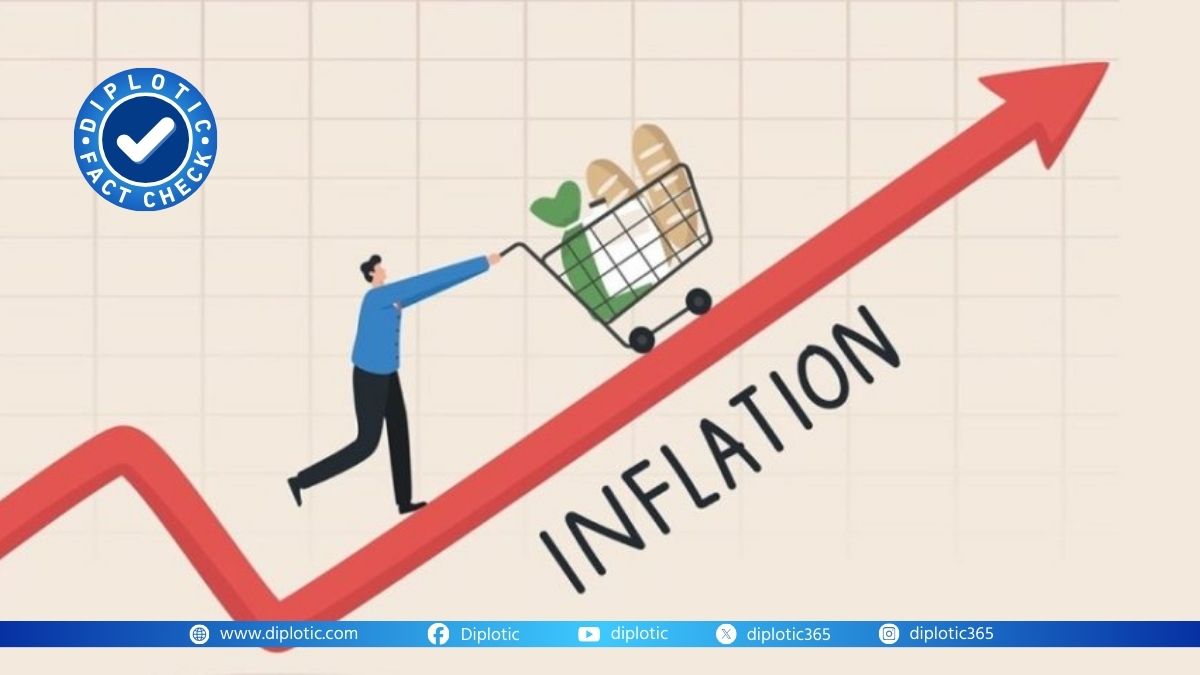
The global economy has been on a turbulent ride in recent years. A period of rapid price increases, known as inflation, squeezed household budgets and dominated political debates. Now, as inflation rates in many countries begin to fall, a new debate is emerging: why is this happening? A common and reassuring claim is that this improvement is a direct result of skilled government management. But how accurate is this picture? A closer investigation reveals a more complex story, where global forces and delayed policy effects play a role just as significant, if not more so, than short-term political decisions.
This investigation will examine several key claims about the nature of falling inflation, separating political narrative from economic reality to provide a clearer understanding of the forces that truly shape our financial well-being.
Claim 1: “Inflation is falling because governments are managing the economy better.”
This claim sits at the center of the current political discussion. It suggests that deliberate and effective policy actions by sitting governments are the primary driver behind the cooling of inflation.
The Investigation:
To evaluate this, we must first understand what caused the recent inflation surge. The roots lie in a perfect storm of global events: the COVID-19 pandemic disrupted supply chains and factory output worldwide. Following this, as economies reopened, consumer demand surged, outpacing the slow recovery of supply. The war in Ukraine then further disrupted supplies of key commodities like energy and grain, pushing their prices dramatically higher. These were not problems created by any single nation’s domestic policy; they were global shocks.
The primary tool governments and central banks use to fight inflation is interest rate policy. By raising interest rates, they make borrowing money more expensive. This, in theory, cools down spending and investment, slowing the economy and reducing the upward pressure on prices. This is exactly what central banks around the world have done aggressively over the past two years.
However, there is a critical time lag between the action of raising interest rates and seeing its full effect on inflation. It can take 12 to 18 months for the impact to fully filter through the economy. The current decline in inflation coincides with interest rate decisions made a year or more ago. Therefore, while current government policy is associated with the decline, it is more accurate to say we are witnessing the delayed result of past policies, combined with the easing of the initial global shocks. Supply chains have largely normalized, and energy prices have retreated from their peaks, factors largely outside any finance minister’s direct control.
Verdict: Misleading.
This claim oversimplifies a multifaceted issue. While government policy, particularly interest rate hikes, has contributed to cooling demand, attributing the fall in inflation primarily to “better management” ignores the significant role of the natural easing of global commodity cycles and supply chain repairs. It takes credit for global trends and the delayed effects of earlier, often politically painful, decisions.
Claim 2: “Central banks have complete control over inflation.”
This belief endows financial institutions, like the U.S. Federal Reserve or the European Central Bank, with near-absolute power to set price levels.
The Investigation:
Central banks are powerful institutions, but their control is not absolute. They primarily manage demand-pull inflation—when prices rise because consumers and businesses have too much money chasing too few goods. They do this by making money more expensive to borrow, as previously explained.
However, they have much less control over cost-push inflation. This occurs when the cost of producing goods rises, forcing businesses to increase prices. The recent spike was a classic example of cost-push inflation: soaring prices for oil, gas, shipping, and wheat. A central bank cannot lower the world price of oil by raising interest rates. In fact, if they raise rates too high in response to a cost-push shock, they risk plunging the economy into a deep recession without fully solving the root cause of the price spike.
This reveals a deep trade-off at the heart of economic policy: the balance between controlling inflation and maintaining employment. High interest rates can tame inflation but also slow business growth and lead to job losses. The power of a central bank is thus a blunt instrument, effective for one type of problem but poorly suited for another, and always wielded at a potential cost to economic vitality.
Verdict: False.
Central banks are influential actors, but their tools are designed for a specific type of inflation. They were largely powerless to prevent the global cost-push inflation of 2021-2022 and are now using their primary tool—interest rates—with significant time delays and potential negative side effects for economic growth and employment.
Claim 3: “If inflation is falling, the cost of living crisis is over.”
On the surface, this seems logical. If the rate of price increases is slowing, financial pressure should ease.
The Investigation:
This claim confuses the rate of change with the absolute level. Imagine climbing a hill. Inflation is the speed at which you are climbing. Falling inflation means you are slowing your pace—you are still moving uphill, just more slowly. You are not going back down.
This is the situation for most consumers. Prices for most goods and services are not falling (a phenomenon known as deflation, which is generally considered harmful). They are simply rising at a slower pace. The high price levels reached during the peak of inflation have become the new baseline. Wages have struggled to keep up with the cumulative price increases of the last few years. Therefore, even with a lower inflation rate, the purchasing power of an average household’s income remains significantly eroded compared to before the crisis. The “cost of living crisis” is not just about the pace of new increases, but the sustained high cost of existence.
Verdict: Misleading.
While falling inflation is a positive development, it does not mean prices are returning to their old levels. The financial strain for many households and businesses remains acute because the cumulative price increases of the last few years have permanently raised the cost of living.
Claim 4: “Government spending during the pandemic is solely to blame for the inflation.”
This is a common counter-claim, arguing that the massive financial support governments provided to citizens and businesses during lockdowns overheated the economy and caused the inflation.
The Investigation:
There is no doubt that large-scale government stimulus—direct payments, business loans, and furlough schemes—played a role. By putting money directly into people’s pockets, it boosted consumer demand at a time when supply was constrained, contributing to demand-pull inflation.
However, to assign sole blame is to ignore the rest of the story. As outlined earlier, even without stimulus checks, the world would have faced major inflation due to supply chain collapse and the energy crisis. Countries with varying levels of fiscal stimulus all experienced inflation, though the magnitude differed.
This presents a profound ethical and strategic dilemma. At the time, the alternative to massive government spending was potentially a deep economic depression and widespread social unrest. The support was widely seen as a necessary emergency measure to prevent economic collapse. The subsequent inflation can be viewed, in part, as a trade-off—the unintended consequence of a policy that successfully averted a more immediate disaster. This highlights the difficulty of economic decision-making: policies are made with incomplete information and often involve choosing between bad and worse outcomes.
Verdict: Misleading.
Government spending was a contributing factor that amplified demand, but it was not the sole cause. It interacted with severe global supply shocks to create the inflationary crisis. Isolating one factor ignores the complex interplay of global events and the emergency context in which the spending was approved.
Conclusion: A Narrative of Convenience
The fact-checking reveals a consistent pattern: the popular narratives surrounding inflation are often oversimplified. The reality is less politically convenient and more economically complex.
The fall of inflation is not a simple story of a government successfully fixing a problem. It is a story about the delayed impact of painful medicine (interest rate hikes) finally taking effect, combined with the gradual resolution of global disruptions. To claim full credit is to ignore the role of the global economic cycle and the inherent time lags in policy.
The deeper implication is that this oversimplification risks creating a dangerous complacency. If the public believes the problem is solved because the inflation rate is down, they may not be prepared for the potential side effects of the cure—namely, a slowed economy and higher unemployment. Furthermore, it distracts from the more enduring problem: the high cost of living that remains. The real challenge for policymakers now is not just to stabilize prices, but to navigate a return to sustainable growth without reigniting inflation, a task that requires an honest acknowledgment of the limits of their power and the vast influence of the global stage.